U.S. will rejoin Gavi as Ebola outbreaks spread in Africa
Rubio said the U.S. will re-engage with Gavi as Ebola spreads in Congo and Uganda, a crisis-driven shift with stakes for vaccine access.

The United States is moving back toward Gavi as Ebola spreads in central Africa, a sign that global health policy may be shifting under the pressure of a fast-moving outbreak. Secretary of State Marco Rubio told the Senate Foreign Relations Committee that Washington’s decision to re-engage with the vaccine alliance had been made a few weeks earlier, after the Trump administration pulled funding last year.
The timing is telling. Gavi is at the center of immunization work in some of the world’s poorest countries, helping governments buy vaccines and supporting outbreak response when dangerous diseases emerge. Its role has become especially urgent during the Bundibugyo ebolavirus outbreak in the Democratic Republic of the Congo and Uganda, where the World Health Organization says the virus was confirmed in May 2026 in a difficult setting marked by humanitarian crisis, insecurity and a remote, densely populated area.
Gavi announced on May 29 that it would make up to $50 million available through its First Response Fund for the outbreak. Of that amount, $40 million is earmarked for accelerated access to investigational doses and, eventually, approved vaccines, while $10 million is set aside for immediate outbreak response and for protecting routine immunization services in affected countries. That split shows how the response is being built around both emergency containment and longer-term vaccine access.
The outbreak has already prompted major international alarms. The Democratic Republic of the Congo declared its 17th Ebola outbreak on May 15, and Uganda confirmed an imported case from the DRC the same day. The World Health Organization declared the outbreak a Public Health Emergency of International Concern on May 17, and the Africa Centres for Disease Control and Prevention followed on May 18 by declaring a Public Health Emergency of Continental Security.
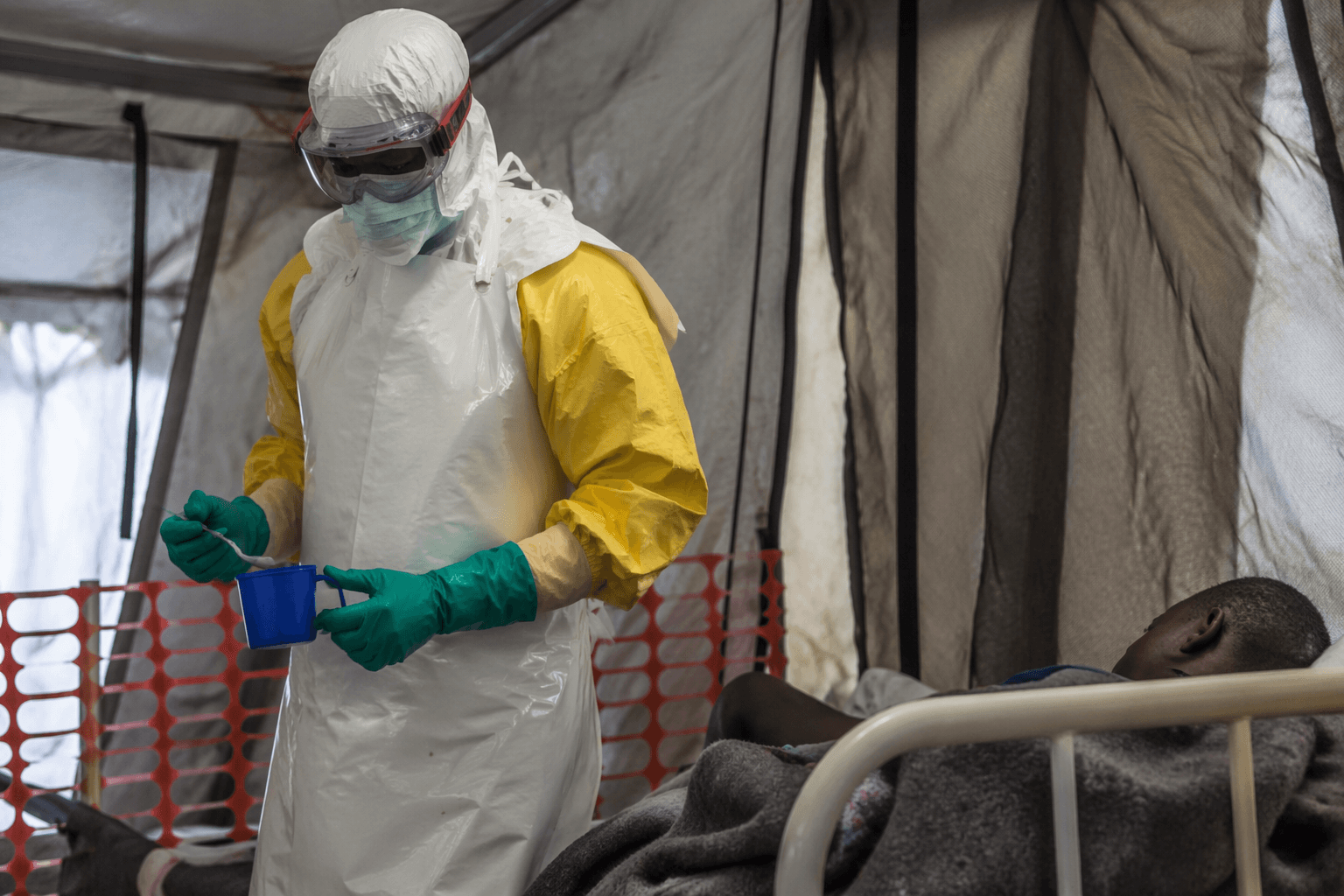
Bundibugyo virus is especially troubling because there is no licensed vaccine or specific therapeutic for it, even though promising candidates are under test. WHO says past Bundibugyo outbreaks have carried case fatality rates of 30% to 50%, a reminder of how quickly the disease can turn deadly when detection and response lag.
Rubio’s comments also point to a wider political reckoning. The Senate Foreign Relations Committee said on May 4 that $600 million appropriated in fiscal years 2025 and 2026 had not been used to replenish the U.S. pledge to Gavi. Re-engagement now suggests Washington is trying to undo, or at least soften, the effects of that cut as Ebola pressure rises.
Whether this becomes a one-off emergency move or a broader reversal will matter far beyond this outbreak. For health officials in Africa and donors in Washington, the test is whether vaccine diplomacy can move fast enough to matter before an outbreak outruns it.
This article was produced by Prism’s automated news system from verified source data, official records, and press releases, then run through automated quality and moderation checks before publishing. The system is built and supervised by the people who set the standards it runs under. Read our full AI policy.
Know something we missed? Have a correction or additional information?
Submit a Tip