USMCA enters first mandatory review as 2036 expiration looms
The first mandatory USMCA review opened as Washington, Mexico City and Ottawa confront a 2036 sunset that could unsettle $1.8 trillion to $2 trillion in trade.
The United States Trade Representative opened the first mandatory review of the USMCA on July 1, setting off a process that could keep the pact in force while still clouding cross-border investment plans. Under Article 34.7, the three governments must decide whether to extend the agreement for another 16 years, and if they do not, it shifts to annual reviews before a possible July 1, 2036 termination.
The review has already moved into formal consultation. The Office of the United States Trade Representative opened a public comment process ahead of the deadline and scheduled a public hearing for November 17, 2026, while also consulting Congress as required under U.S. law. USTR held an earlier public hearing from December 3 to December 5, 2025, in preparation for the review, underscoring how deeply the process reaches into American trade policy, not just diplomacy.
Washington and Mexico City began bilateral review talks on March 5, 2026, with U.S. Trade Representative Jamieson Greer and Mexico’s economy minister Marcelo Ebrard leading the discussions. USTR said the initial agenda centered on rules of origin, economic security and North American supply-chain security. In a May 27, 2026 announcement, the office said later rounds would also cover agriculture, steel and aluminum, and a level playing field for manufacturers, farmers, ranchers, workers and service suppliers.
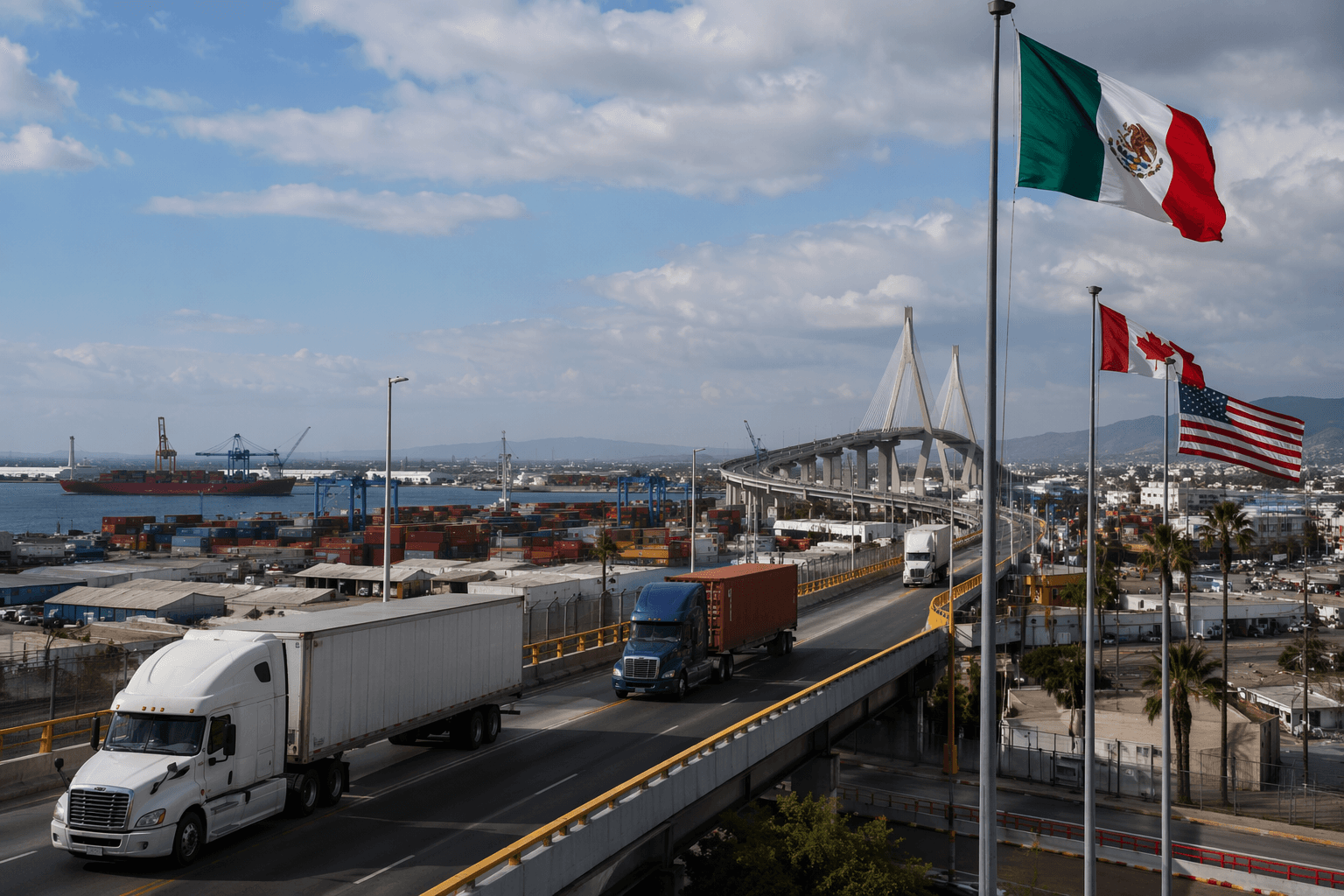
The stakes are large because the agreement anchors trade across the continent. Recent policy analyses put annual trade among the United States, Mexico and Canada at roughly $1.8 trillion to $2 trillion, a scale that touches factories, farm exporters, trucking networks and ports on both sides of the border. That is why even a deal that remains legally intact can still rattle markets: businesses making long-term decisions about plants, inventories and logistics have to plan around the possibility that the rules governing North American commerce could be revisited every year if no extension is approved now.
The Congressional Research Service has described the USMCA review clause as the first sunset-style provision in a U.S. free trade agreement, a feature that gives the three governments leverage while also injecting a new layer of uncertainty into a pact designed to stabilize regional commerce. If the 2026 review fails to produce an extension, the region will spend the next decade operating under a trade agreement that remains alive, but no longer secure.
This article was produced by Prism’s automated news system from verified source data, official records, and press releases, then run through automated quality and moderation checks before publishing. The system is built and supervised by the people who set the standards it runs under. Read our full AI policy.
Did this article answer your question?