Vance-led U.S. talks with Iran end without breakthrough in Islamabad
After 21 hours in Islamabad, J.D. Vance left Iran talks empty-handed, pushing Trump toward tougher sanctions, fresh military risk and a fragile ceasefire.
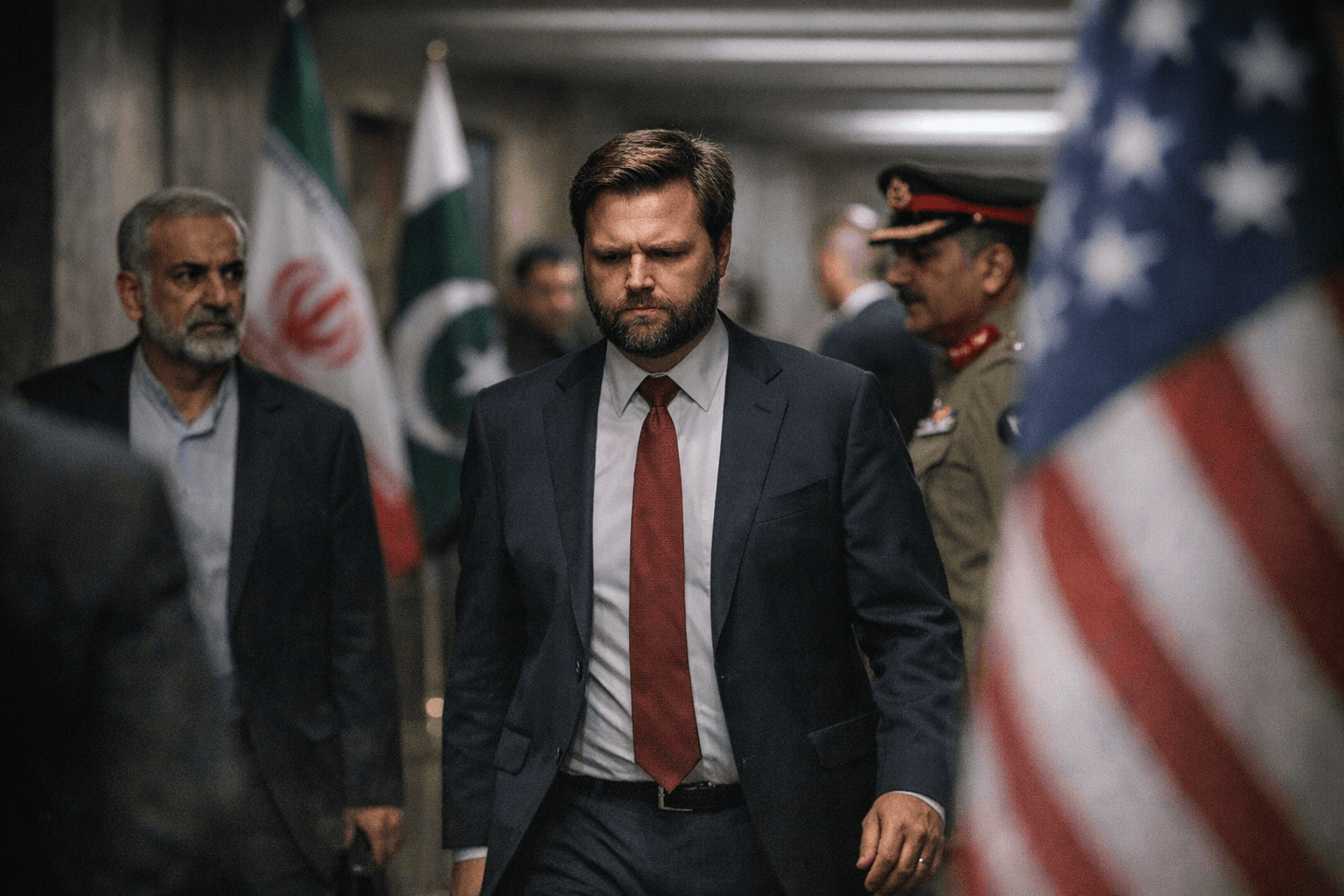
The marathon talks in Islamabad ended with no breakthrough, leaving the Trump administration to choose among three hard paths: tighten pressure on Tehran, return to military escalation, or keep talking while a fragile ceasefire hangs by a thread. Vice President J.D. Vance said the U.S. and Iranian delegations had spent about 21 hours in face-to-face negotiations and still had not closed the gap on the central demand, a long-term Iranian commitment not to pursue a nuclear weapon.
Vance said, "we have not reached an agreement," and later cast the outcome as "bad news for Iran, much more than ... for the United States." The Iranian side, led by Parliament Speaker Mohammad Baqer Ghalibaf, said the discussions were intensive but broke down over "two or three important issues." Tehran’s foreign ministry called the U.S. position "excessive," underscoring how little room remains after months of indirect contacts in Muscat and Rome in 2025 and now the first high-level direct U.S.-Iran meeting since 1979.
The immediate question is whether Washington responds with more coercion or more time. If the White House chooses sanctions, it can try to squeeze Iran further by isolating its banking system and freezing assets, but that would do little to resolve the nuclear standoff on its own. If it chooses force, the risks are immediate: the six-week war that began with U.S. and Israeli strikes on Feb. 28 has already killed thousands across the region, and another round of attacks could widen the conflict again.
The ceasefire itself is the next test. Pakistan brokered the temporary two-week truce on April 7 and hosted the Islamabad talks as Prime Minister Shehbaz Sharif and Foreign Minister Ishaq Dar pressed both sides to keep it alive. Without a deal, the U.S. may try to extend the pause through more mediation or technical exchanges, but that buys time rather than certainty. It also leaves Washington exposed to accusations that diplomacy is stalling while threats on the ground continue.
Regional allies are already reading the failure as a warning. Israeli leaders have insisted that enriched nuclear material must be removed from Iran, with or without an agreement, while Gulf states and shipping interests are watching the Strait of Hormuz, where disruptions have already cut millions of barrels a day from regional supply. The U.S. Energy Information Administration estimated about 7.5 million barrels a day of crude was shut in during March, and Brent crude surged above $100 and briefly neared $128 in early April.
The deeper problem is familiar. The 2015 nuclear deal once offered inspections and limits; the U.S. withdrawal in 2018 shattered that framework and left today’s talks centered on verification, enrichment, and the meaning of a binding commitment. After Islamabad, the choices are narrower, the military risk is higher, and the market impact is already visible.
Know something we missed? Have a correction or additional information?
Submit a Tip