Vance to Lead US Delegation in Talks With Iran Officials in Pakistan
JD Vance headed to Islamabad for the highest-level U.S.-Iran meeting since 1979, flanked by Witkoff and Kushner as a fragile two-week ceasefire tested both sides' resolve.
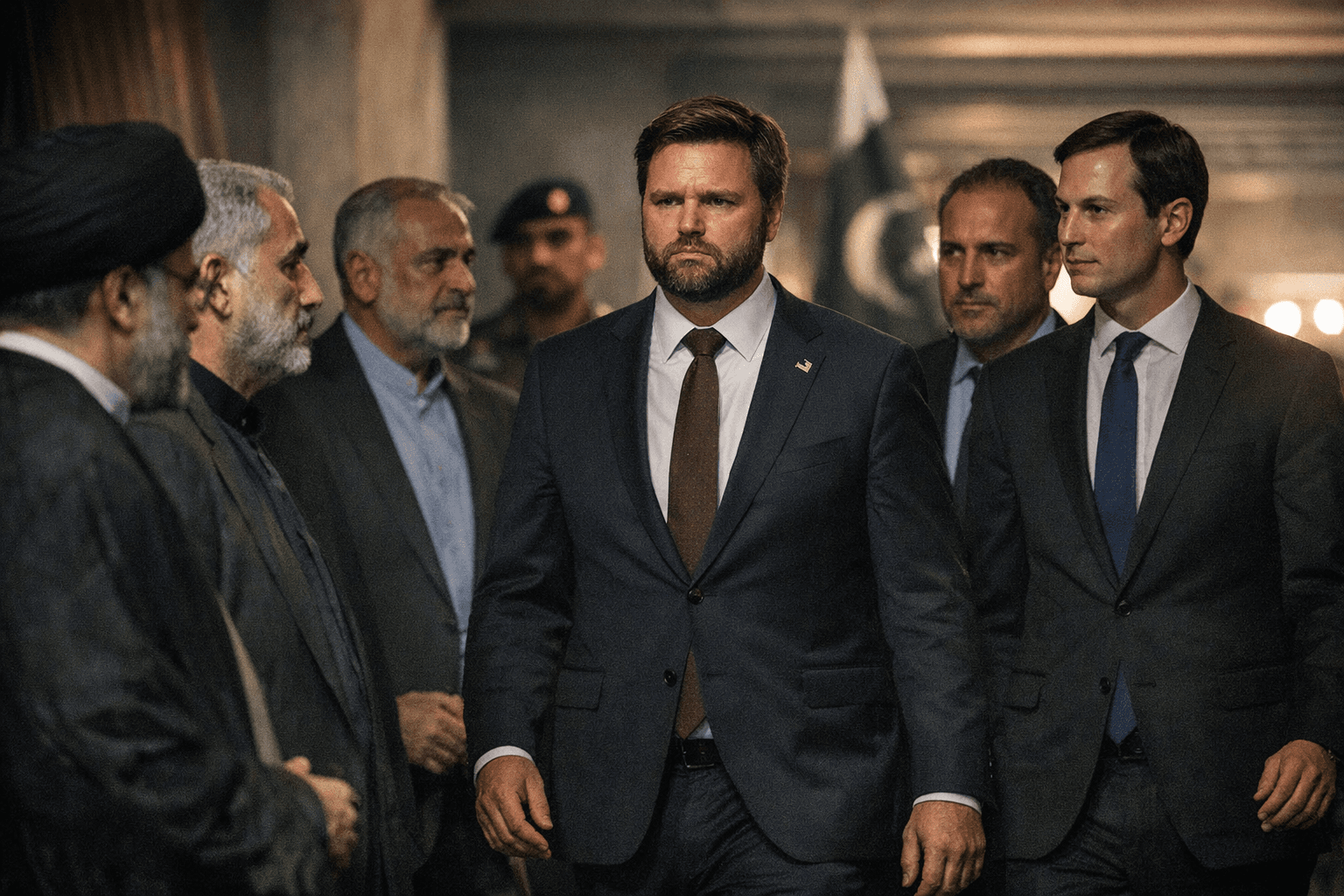
The White House dispatched Vice President JD Vance to Islamabad to lead the American delegation into the highest-level direct engagement between the United States and Iran since the 1979 Islamic Revolution, as a fragile two-week ceasefire brokered through Pakistan held its precarious footing heading into Saturday's opening round of talks.
White House Press Secretary Karoline Leavitt confirmed Wednesday that Vance would head Trump's Iran negotiating team for talks beginning Saturday morning local time in Islamabad. Special envoy Steve Witkoff and Trump's son-in-law Jared Kushner were also part of the team. The composition reflects a deliberate dual-track structure: Vance provides political authority and a face Tehran actually wants across the table, while Witkoff and Kushner supply the diplomatic continuity of three earlier indirect rounds in Geneva and Muscat.
Iranian Parliament Speaker Mohammad Bagher Ghalibaf, a former Revolutionary Guards commander, and Foreign Minister Abbas Araghchi are expected to lead the Iranian delegation. Tehran's choice of Ghalibaf, a man who built his career inside the IRGC, signals that any agreement must pass muster with Iran's military establishment before it can hold.
Iran came anchored to a 10-point proposal that includes affirming its continued control over the Strait of Hormuz, the acceptance of uranium enrichment, and the lifting of all primary sanctions. Washington's counter-position is sharper: Witkoff stated publicly that the U.S. requires Iran to halt all uranium enrichment entirely, a demand that goes further than previous rounds of talks in Muscat and Geneva.
Lebanon is the fault line most likely to determine whether Islamabad produces a framework or a breakdown. The White House specified that Lebanon was not part of the ceasefire framework, a position Araghchi rejected by posting on X: "The world sees the massacres in Lebanon." Pakistani officials had cautioned that nothing was certain until delegations actually arrived.
Pakistan's Army Chief Field Marshal Asim Munir had spoken with Vance, Witkoff, and Araghchi as part of an intensive mediation effort Pakistan has led since late March. Islamabad hosted foreign ministers from Turkey, Saudi Arabia, and Egypt on March 29 in a coordinated push to end hostilities, following an earlier consultation in Riyadh on March 19. Egypt and Pakistan are formally serving as ceasefire guarantors. Islamabad declared a strict security lockdown and sealed key entry points into the capital as delegations converged.
Iranian officials are skeptical about further engagement with Witkoff and Kushner, pointing to earlier negotiations in Muscat and Geneva. CNN, quoting regional sources, said Iran viewed Vance as more sympathetic to ending the conflict than other U.S. officials, making his inclusion the clearest early indicator of Tehran's willingness to actually negotiate.
Vance called the ceasefire "fragile" even as some attacks continued in the region. The Strait of Hormuz remained largely closed as of Thursday, falling short of a key U.S. condition for the ceasefire's validity. Trump confirmed that all U.S. ships, aircraft, and military personnel would remain positioned around Iran until a full agreement was reached, leaving the American leverage intact but the clock running.
The two-phase framework Pakistan proposed, an immediate halt to hostilities followed by formal negotiations on sanctions, nuclear enrichment, and regional influence, applies what mediators call ripeness theory: the recognition that parties enter negotiations not when they want to, but when the costs of continued conflict exceed the costs of compromise. Whether Islamabad produces that compromise or simply documents how far apart the two sides remain will be visible within days, in whether Iran reopens the strait on schedule and whether any joint communiqué emerges that both Tehran and Washington can read as a win.
This article was produced by Prism’s automated news system from verified source data, official records, and press releases, then run through automated quality and moderation checks before publishing. The system is built and supervised by the people who set the standards it runs under. Read our full AI policy.
Did this article answer your question?