Vance Visit to Hungary Shows US and Russia Both Back Orban
Vance landed in Budapest five days before Hungary votes, placing Washington visibly alongside Moscow in backing an embattled Orban against his strongest challenger in 16 years.
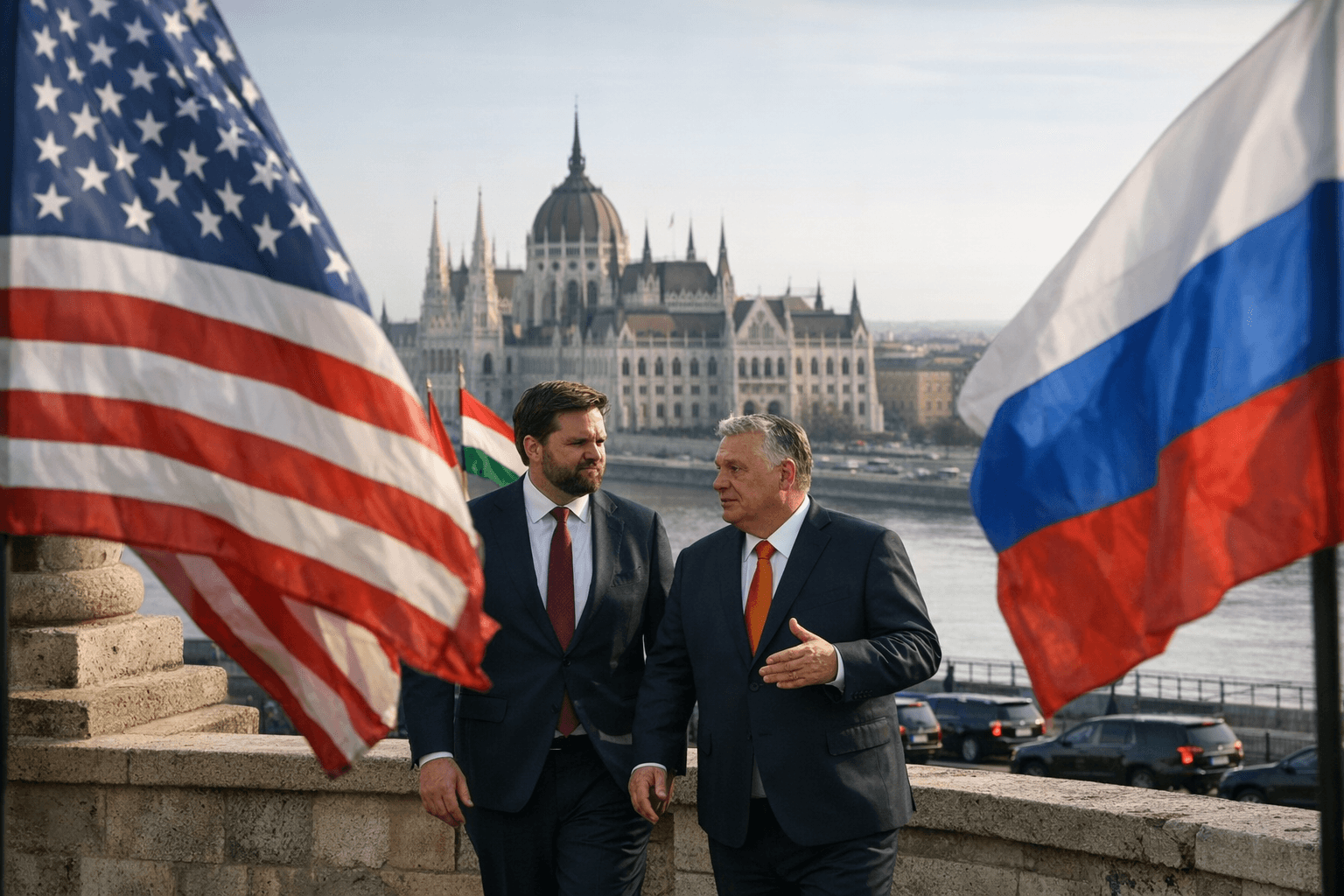
Vice President JD Vance arrived in Budapest Tuesday to bolster support for Prime Minister Viktor Orban, whose Fidesz party faces its most difficult election in over a decade. The White House announced the visit last week, confirming Vance would hold two days of bilateral meetings. His wife, Usha Vance, made the trip with him. The visit comes days before the April 12 elections, where polls indicate Orban is on track toward a potential defeat after 16 years in power.
Hungary's April 12 election is exposing a rare geopolitical convergence: the U.S. and Russia are both intervening to try to keep Orban in power, while the EU and Ukraine are eager to see him gone. Orban's center-right challenger, Peter Magyar, has channeled voter anger over corruption and a struggling economy into the most serious threat to Orban's rule in years. Magyar's Tisza party leads Orban's Fidesz by up to 19 points in independent polls, though a gerrymandered electoral map means even that gap may not deliver a parliamentary majority to the opposition.
The American campaign to shore up Orban has been methodical. Vance's Tuesday visit followed Secretary of State Marco Rubio's own trip to Hungary in February, during which Rubio lauded Hungary-U.S. relations and the two countries signed a civilian nuclear cooperation agreement. Hungary's nuclear sector has been closely linked to Russia, with which Orban's government has maintained close ties despite pressure from European allies. Trump, meanwhile, posted a full-throated endorsement on Truth Social, declaring: "VIKTOR ORBÁN WILL NEVER LET THE GREAT PEOPLE OF HUNGARY DOWN. I AM WITH HIM ALL THE WAY!"
Washington has treated Orban's survival as a strategic priority, with Trump's national security strategy openly calling for "cultivating resistance" in Europe by empowering nationalist forces like Orban's. Vance arrived in Budapest with a clear mission: boost Orban as an indispensable U.S. ally in the fight against migration and the liberal European order. Orban's political director, Balazs Orban, greeted the White House's announcement with four exclamation marks and three emojis on social media.
Russia's support has been less visible but considerably more alarming. The Kremlin approved a plan to support Orban's Fidesz party through a covert social media campaign, drafted by the Kremlin-linked Social Design Agency, spreading pro-Orban messages, memes, infographics, and short videos disguised as content created by local Hungarian users. A unit of Russia's foreign intelligence service, the SVR, also sounded the alarm over Orban's plummeting poll numbers and proposed what operatives called "the Gamechanger": staging a fake assassination attempt against Orban to shift the election's emotional terrain away from economic grievances and toward state security.
With covert Russian and overt U.S. support for Fidesz, polling that shows Tisza ahead provides only a partial view of the forces shaping this campaign. The European Parliament has described Orban's consolidated system as an "electoral autocracy," a characterization that sits awkwardly against the Trump administration's framing of Hungary as a model for nationalist governance.
For European capitals and NATO allies, Vance's arrival rewrites the diplomatic context. A vice presidential visit to a sitting leader days before a contested vote is not bilateral routine; it is a public declaration of preferred outcome. That Washington and Moscow now share one in Budapest is the most consequential detail of this week's trip.
This article was produced by Prism’s automated news system from verified source data, official records, and press releases, then run through automated quality and moderation checks before publishing. The system is built and supervised by the people who set the standards it runs under. Read our full AI policy.
Did this article answer your question?


