Vatican seals St. Peter’s Holy Door, entombs keys for next Jubilee
Vatican officials sealed St. Peter’s Holy Door and entombed the door’s key and commemorative items, formally closing the Jubilee of Hope until the next jubilee.
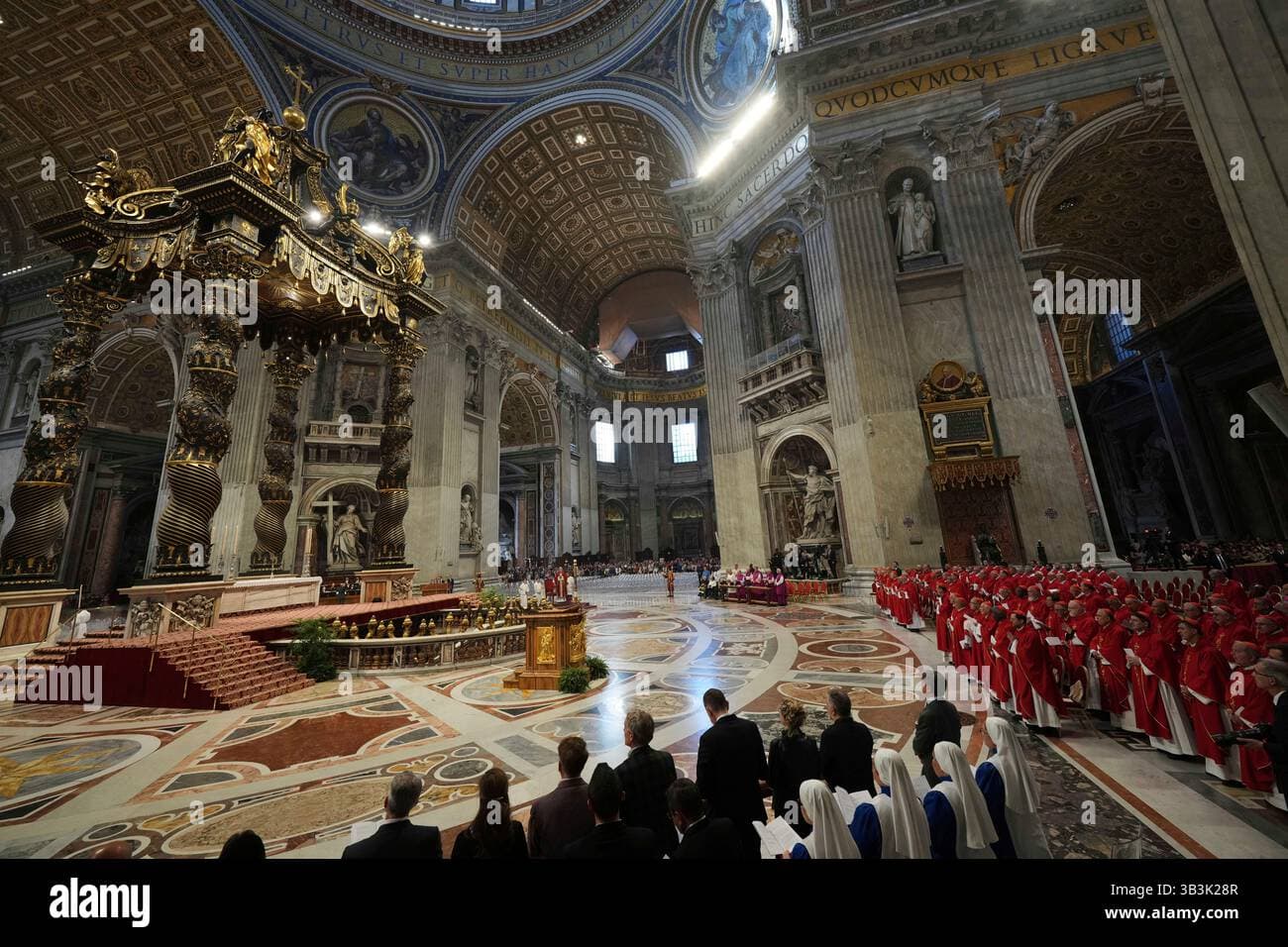
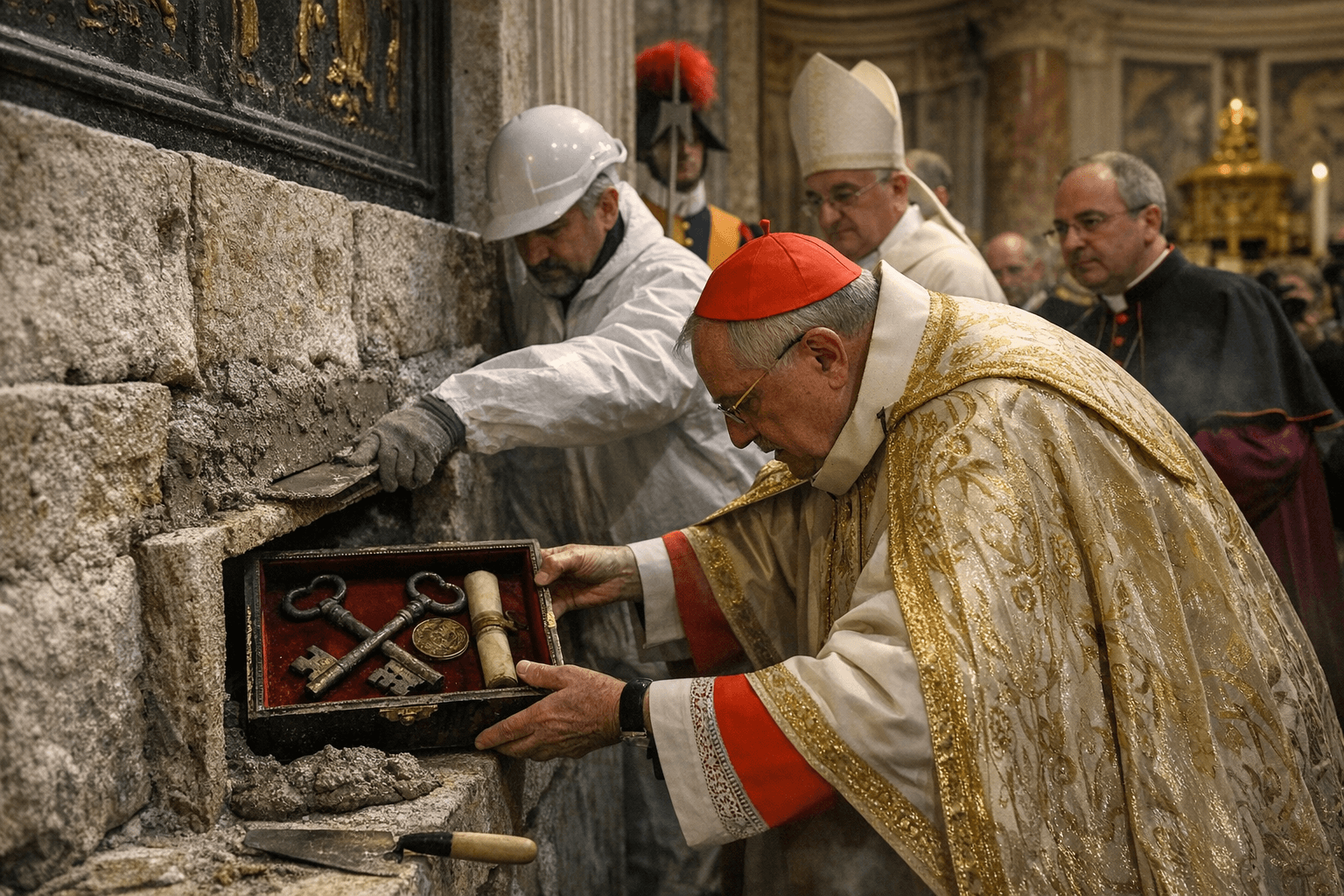
The Holy Door of St. Peter’s Basilica was sealed in a private, centuries-old ritual known as la muratura, bringing the Jubilee of Hope to a formal close and placing the year’s physical record behind the basilica wall until the next jubilee. The rite, presided over by Mauro Gambetti, archpriest of St. Peter’s, culminated in the embedding of a metal capsule containing the door’s key, official parchments and jubilee medals.
Vatican media released footage of the work on Jan. 17, showing the so-called sanpietrini, the Fabric of St. Peter’s maintenance staff of carpenters, cabinetmakers and electricians, rebuilding the interior wall with roughly 3,200 bricks to seal the entrance. A traditional bronze box, referred to historically as the capsis, was sealed inside a lead container before being placed into the masonry, ensuring the artifacts will remain preserved until the Holy Door is reopened at the next jubilee.
Items deposited in the capsule include the key of the Holy Door, the official parchment certifying the door’s opening and closing, a collection of commemorative medals and coins minted during the holy year, and the official document recording the closing. Reports identify medals among the deposit as issues from the late pontificate of Pope Francis, who proclaimed the Jubilee and died in 2025, and from Pope Leo XIV, who formally closed the Holy Door. The capsule also reportedly contains medals marking the period between the 2016 Jubilee of Mercy and the 2025 Holy Year and a medal issued during the 2025 sede vacante.
The masonry sealing at St. Peter’s followed the formal closing of the Holy Door by Pope Leo XIV on Jan. 6, which ended the Jubilee of Hope on the liturgical calendar while Vatican officials said the spiritual fruits of the year would endure. The ritual at St. Peter’s was the final of four such closures across Rome in the week preceding the rite: St. Mary Major was sealed on Jan. 13, St. John Lateran on Jan. 14, and St. Paul Outside the Walls on Jan. 15.
Beyond its symbolic weight, the ceremony has practical and economic dimensions. The Jubilee, which opened on Christmas Eve 2024, drew tens of millions of pilgrims to Rome, producing measurable short-term boosts to the city’s hospitality, transport and retail sectors. The entombed coins and medals form part of the Vatican’s numismatic record and represent both historical documentation and a stream of souvenir and collector demand that accompanies major papal events. The work of the sanpietrini reflects the ongoing capital and maintenance demands of preserving the papal basilicas, a recurrent cost tied to the cyclical nature of jubilee celebrations that ordinarily recur every 25 years.
Vatican officials stressed that sealing the Holy Door is an archival act as much as a ceremonial one: it physically preserves the artifacts of an extraordinary year while signaling a return to ordinary liturgical rhythms. St. Peter’s Basilica will continue to welcome pilgrims and visitors even with the Holy Door closed, and the entombed key and capsule will remain in place until they are reopened in the next jubilee ceremony, maintaining a tangible link between successive eras of Catholic pilgrimage and governance.
This article was produced by Prism’s automated news system from verified source data, official records, and press releases, then run through automated quality and moderation checks before publishing. The system is built and supervised by the people who set the standards it runs under. Read our full AI policy.
Did this article answer your question?