Venezuela frees detainees after disputed election, counts remain contested
Venezuela’s government says it released 99 people detained after unrest following the disputed July 28, 2024 presidential vote, framing the move as a sign of commitment to peace and dialogue. Rights groups and opposition coalitions dispute the tally and say the partial releases fail to address what they call the broader problem of arbitrary detention and the need for a general amnesty.
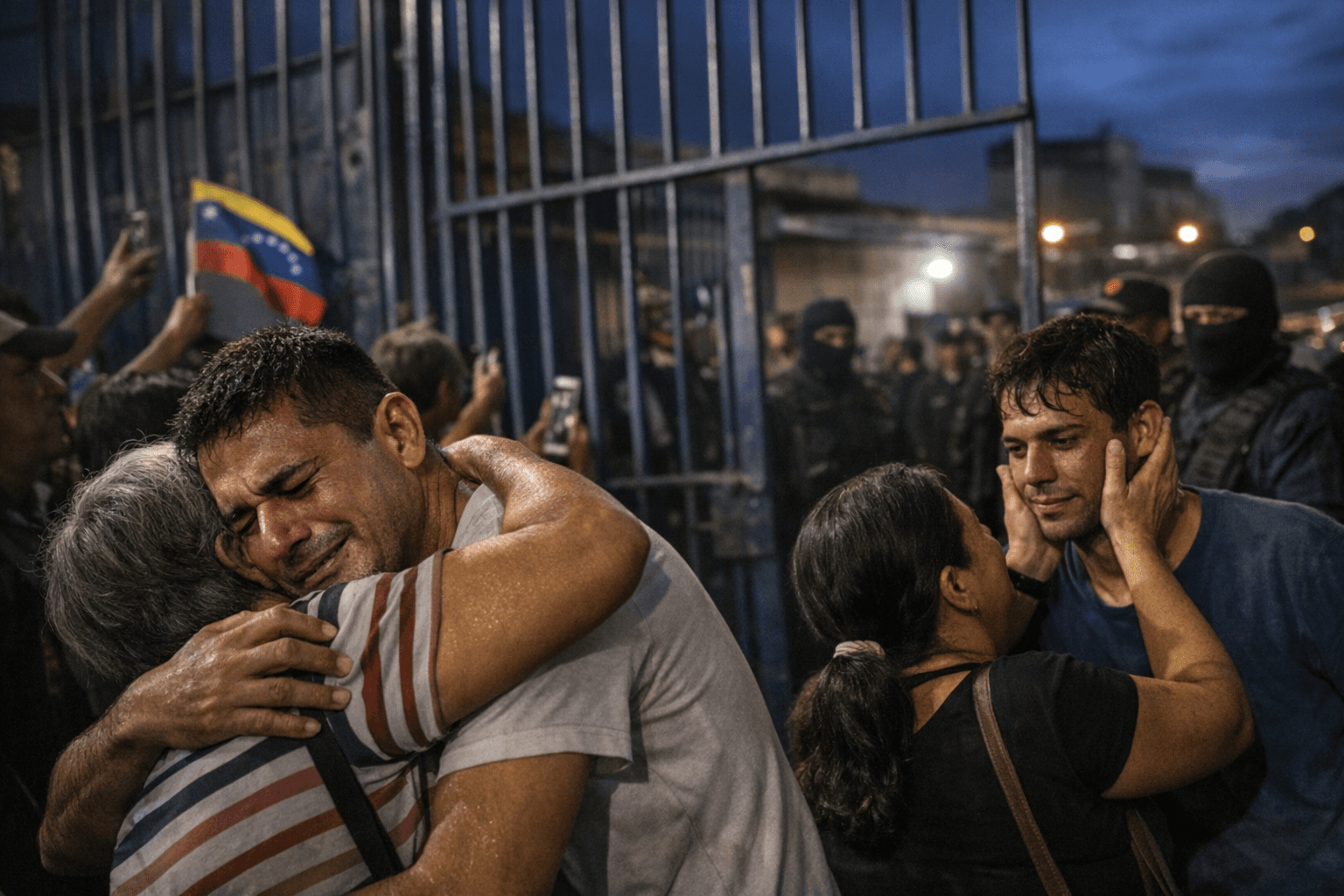
Venezuela announced on Friday that 99 people detained in the crackdown after last year’s contested presidential election were released following individual case reviews. The Ministry of Penitentiary Services said the measures were taken after the national government and the justice system "have decided to evaluate each case individually and, in accordance with the law," calling the releases a "concrete expression of the State’s commitment to peace, dialogue and justice."
The government statement, however, sits alongside sharply divergent accounts from opposition groups and human rights organizations, which reported substantially smaller numbers. A coalition of opposition and civic groups said only 13 people jailed in the post election arrests were freed. Other human rights organizations put the figure higher, reporting at least 60 detainees released on Christmas Day. No independent, fully verified list of names has been published with the ministry’s announcement, leaving reconciliation of the counts unresolved and fueling skepticism in Caracas and abroad.
The arrests followed mass demonstrations after President Nicolás Maduro secured a third term on July 28, 2024, in a vote widely criticized by his opponents and many international observers. Authorities detained roughly 2,400 people during the immediate crackdown, of whom nearly 2,000 have reportedly since been released, while hundreds remain in custody, rights groups say. Legal monitoring organizations list hundreds of people as still imprisoned for political reasons, with Foro Penal reporting at least 902 detainees and Justicia Encuentro y Perdón recording 1,085 cases in its database. Justicia Encuentro y Perdón called the partial release "clearly insufficient" and argued that "freedom cannot be granted as a prerogative, but must be a right, and it must be restored to all those who have been arbitrarily arrested."
Family members and activists have pressed for broader measures. The Committee for the Freedom of Political Prisoners credited pressure from victims, civic campaigns and international institutions for securing releases, saying the freed detainees were emancipated "as a result of pressure by victims, organizations, citizen campaigns and international institutions." The committee warned that many of those released had "physically and psychologically deteriorated" and were returning home with "open wounds."
The Christmas Day releases are the latest in a pattern of periodic clemency measures and exchanges that have included an August move last year and other December releases in Chavista prisons. They come against a backdrop of diplomatic maneuvering that has at times involved third countries. A recent prison exchange involving Venezuela, the United States and El Salvador, for example, saw the Venezuelan government free several Americans in return for the transfer of Venezuelan deportees who had been held in harsh conditions in an El Salvadorian facility, illustrating the transnational dimensions of Venezuela’s detention politics.
International human rights bodies and foreign governments have urged Caracas to publish transparent lists, provide full legal explanations and consider a general amnesty to resolve the matter comprehensively. Legal experts say selective releases done under opaque procedures risk deepening mistrust and do little to address allegations of arbitrary arrests. For families seeking certainty, the immediate task remains verification, and for the international community the question is whether piecemeal gestures will produce lasting change or merely postpone a larger reckoning with Venezuela’s justice system.
This article was produced by Prism’s automated news system from verified source data, official records, and press releases, then run through automated quality and moderation checks before publishing. The system is built and supervised by the people who set the standards it runs under. Read our full AI policy.
Did this article answer your question?