Venezuela Holds Referendum on Essequibo, Regional Tensions Escalate
Venezuela is holding a nationwide referendum today on steps to assert sovereignty over the oil and mineral rich Essequibo territory, a move that has deepened diplomatic strains in the region and drawn legal scrutiny at the International Court of Justice. The vote’s uncertain legal effect, contested turnout reports, and subsequent orders to state companies about licensing raise the prospect of sanctions and economic ripple effects for energy markets and regional trade.

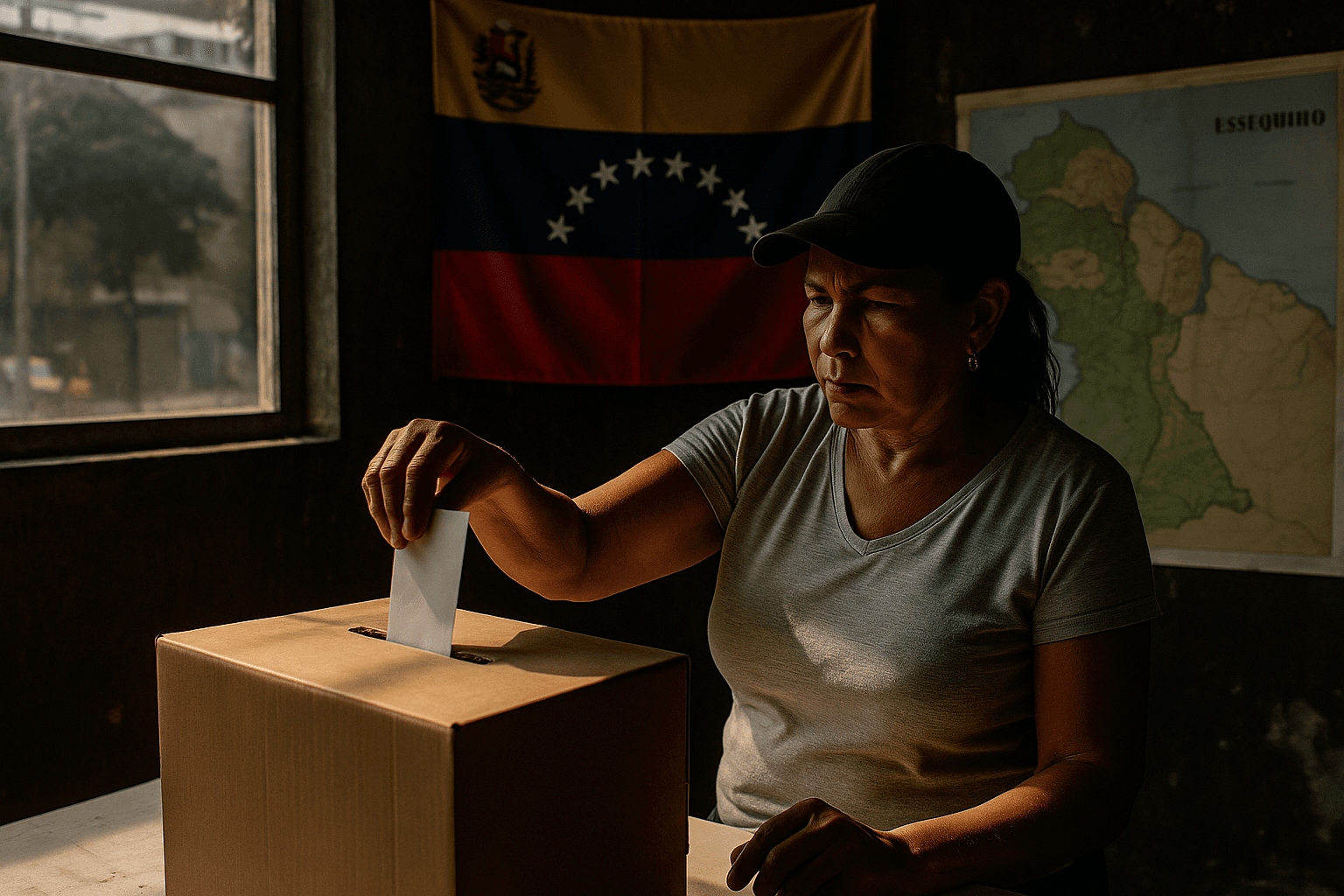
Venezuela is holding a nationwide referendum today asking citizens whether the government should take measures to assert sovereignty over the Essequibo territory, a vast area administered by Guyana but long claimed by Caracas. The plebiscite occurs as the International Court of Justice continues to consider Guyana’s request for provisional measures aimed at preventing actions that might alter the status quo on the ground.
Essequibo encompasses roughly two thirds of Guyana’s land area and has become a focal point because of significant oil and mineral prospects found offshore and onshore in the wider region. The referendum’s organizers and Venezuelan officials present it as a political mandate, but the legal and practical effect of the vote is widely disputed by international governments and legal scholars. Reports from international media and regional governments say turnout and the results are being contested, complicating Caracas’s effort to claim an unequivocal domestic endorsement.
Guyana has responded by mobilizing diplomatic support from the United States, Brazil, the United Kingdom and Caribbean partners. Those governments and regional leaders have called for de escalation and reliance on legal channels, while urging restraint from all parties. At the ICJ, Guyana is seeking measures that would prevent unilateral steps perceived as altering control or administration in the disputed zone, and court proceedings are continuing amid heightened tensions.
In the hours following the referendum Caracas has issued further instructions to state controlled enterprises regarding licensing in the disputed area, a move that analysts say could be intended to translate political momentum into economic leverage. That sequence is raising the prospect of targeted international responses, including sanctions or restrictions on Venezuelan entities, if actions escalate. Markets and companies with exposure to the region are monitoring developments closely, mindful that legal rulings or diplomatic measures could affect exploration, licensing and investment flows.
The economic stake is substantial. Guyana’s economy has been transformed over the past decade by offshore oil discoveries, making the country an important new node in global energy markets and heightening the strategic value of the surrounding maritime and land zones. For Venezuela, the Essequibo claim ties into longstanding national narratives about territorial integrity and resource sovereignty, while offering potential access to resources at a moment when its own energy sector faces international pressure and domestic challenges.
Policy implications are immediate and long term. In the short term governments face the task of preventing military or paramilitary escalation, preserving commercial shipping and project operations, and calibrating sanctions or diplomatic pressure so as not to destabilize regional markets. Over the longer term the dispute underscores a broader trend in resource rich regions where legal arbitration, geopolitical alignments and resource nationalism interact to shape investment decisions and regional cooperation.
As the ICJ process continues, the international community will judge whether the referendum and subsequent administrative steps amount to lawful assertion of claims or to actions that require concerted diplomatic and potentially coercive responses. For investors and neighboring states the central question is whether the dispute can be contained within courts and diplomacy, or whether it will produce economic disruption across an increasingly strategic corridor of South America.
This article was produced by Prism’s automated news system from verified source data, official records, and press releases, then run through automated quality and moderation checks before publishing. The system is built and supervised by the people who set the standards it runs under. Read our full AI policy.
Know something we missed? Have a correction or additional information?
Submit a Tip