Venezuela presses Essequibo claim as Hague court hears border case
Venezuela sent Delcy Rodríguez to The Hague as judges weighed a border claim over Essequibo, a 160,000-square-kilometer region rich in oil, gold and other resources.
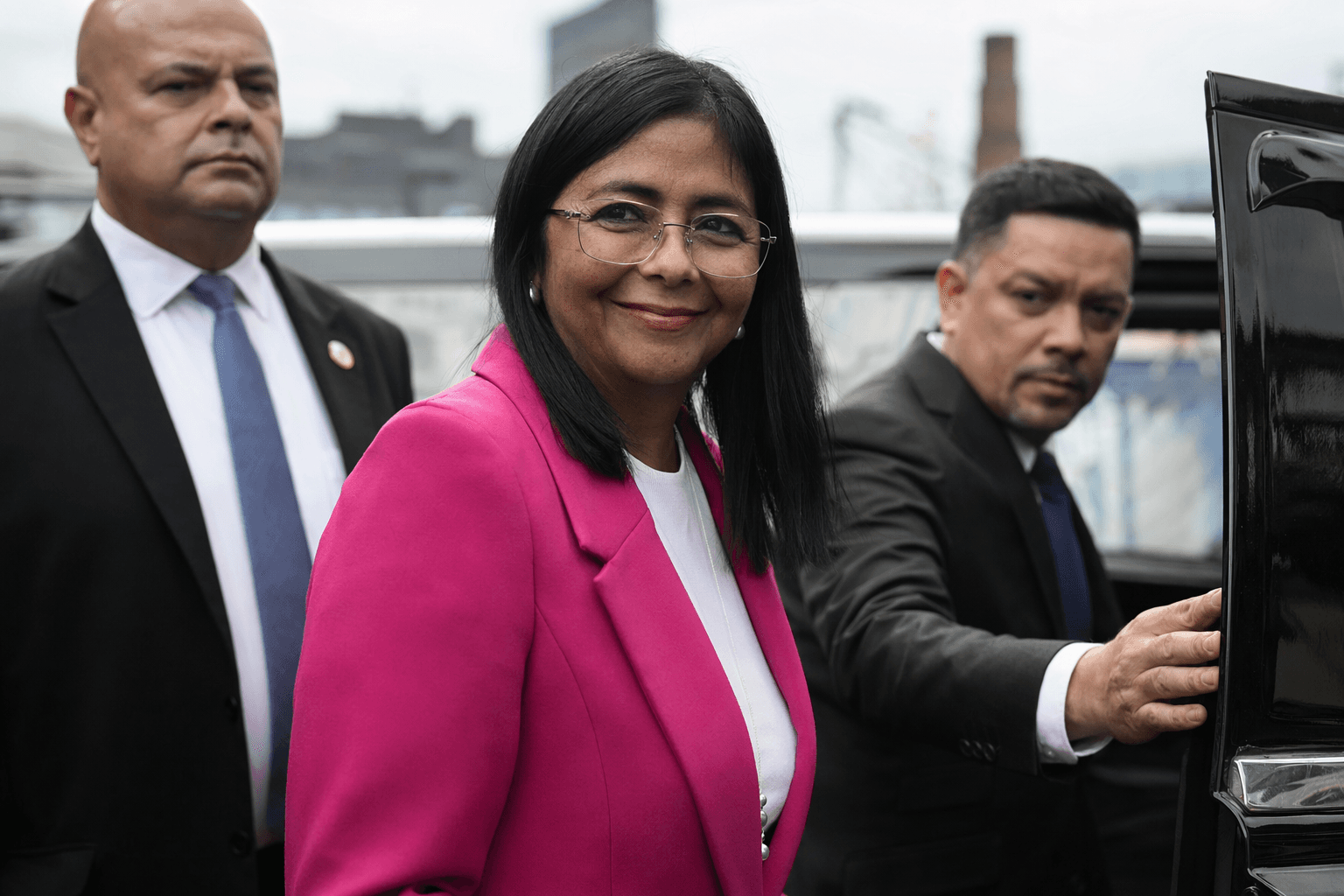
Delcy Rodríguez flew to the Netherlands to press Venezuela’s claim to Essequibo as judges at the International Court of Justice weighed one of South America’s most combustible border disputes, a case tied to territory, offshore oil and the balance of power in northern South America.
The case, formally titled Arbitral Award of 3 October 1899, concerns a vast strip of western Guyana that covers about 160,000 square kilometers, or roughly 62,000 square miles. Guyana says Venezuela’s claim reaches about 70% of its territory, making the dispute not just a line on a map but a challenge to the country’s sovereignty, security and development.
Public hearings on the merits opened at the Peace Palace in The Hague on May 4, 2026, and were scheduled through May 11. Guyana is asking the court to confirm that the 1899 boundary ruling remains binding. Venezuela argues the dispute was effectively reset by the 1966 Geneva Agreement and continues to insist the territory is historically Venezuelan. The court ruled in 2020 that it could hear Guyana’s case despite Venezuela’s objections to jurisdiction.
After landing at Amsterdam’s Schiphol Airport, Rodríguez said Venezuela had “demonstrated at every historical stage what our territory has meant since we were born as a Republic.” In televised remarks, she said she had traveled “to defend our homeland.” Venezuelan officials have repeatedly said they do not recognize the court’s jurisdiction in the dispute, even as they appeared before it.
Guyana’s foreign minister, Hugh Hilton Todd, opened the hearings by calling the dispute “a blight on our existence as a sovereign state from the beginning.” He told judges the controversy had an “existential” quality for Guyana and said Venezuela’s claim threatened peace, security and development. The government in Georgetown says the 1899 award settled the border and that the Geneva Agreement provides the path toward a final and binding resolution.
The stakes have sharpened with Guyana’s energy boom. ExxonMobil reported record production in Guyana of more than 900,000 gross barrels of oil per day in the first quarter of 2026, while local reporting cited offshore output averaging about 914,000 barrels per day. With gold, diamonds, timber and oil in the mix, the case has become more than a legal test. It is a contest over resources, regional stability and the legal order that will shape this frontier for years to come.
This article was produced by Prism’s automated news system from verified source data, official records, and press releases, then run through automated quality and moderation checks before publishing. The system is built and supervised by the people who set the standards it runs under. Read our full AI policy.
Did this article answer your question?


