Venezuelan weaver Margarita Mora preserves ancestral techniques in modern textiles
Margarita Mora still dyes, spins, and weaves by hand in the Mérida highlands, turning one old loom into a defense against cultural loss.
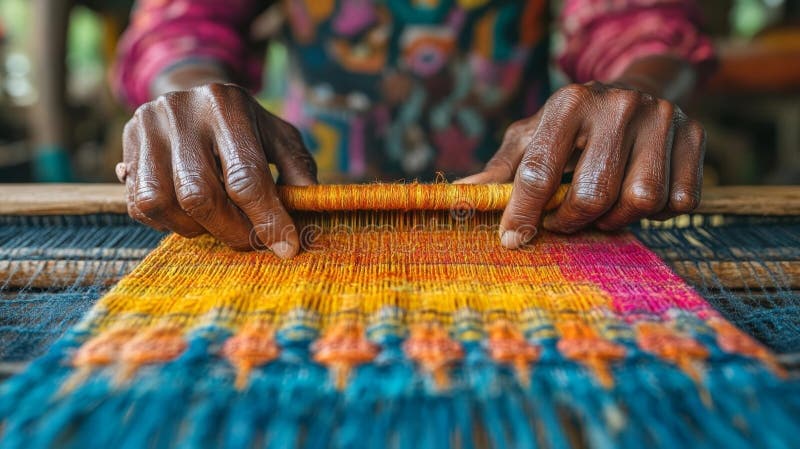
Margarita Mora Castillo keeps an old economy alive with wool, bark, roots, and patience. In the Mérida highlands, where electric machines now dominate much of textile production, the 91-year-old weaver still works the way she learned as a child, carrying ancestral Indigenous and Spanish techniques into ruanas, blankets, furniture tapestries, and gloves.
A craft rooted in childhood
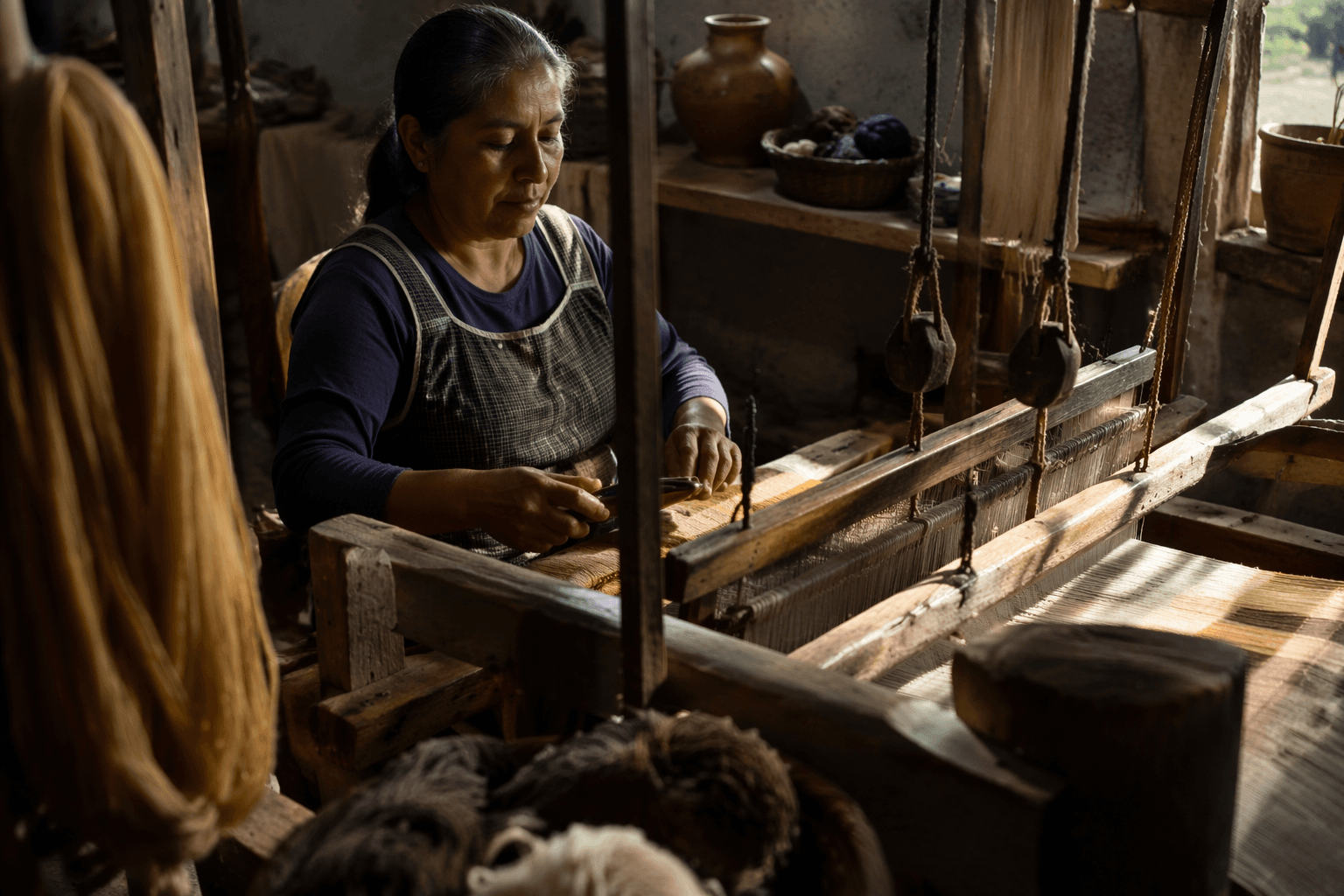
Mora was born in Mitivivó in 1935, the daughter of Bernardo Mora and Rita Isabel Castillo, both farmworkers. Her relationship with sheep and weaving began early, first as a child raised around animals and later as a young girl drawn to the loom itself. One account places that first encounter at age five, in 1940, when she saw a loom that would shape the rest of her life; at 20, she bought that same loom from the woman who had used it before her.
That object has become more than a tool. It is a link between generations, a reminder that in the Venezuelan Andes, craft knowledge has often moved through households, neighbors, and women’s hands rather than through schools or factories. Mora learned the trade in Mucuchíes, and what she preserves is not a romantic relic but a working method adapted to the realities of mountain life.
The full chain of wool work
What sets Mora apart is that she does everything herself. She does not begin at the loom and stop there. She handles the full sequence of wool work: shearing, washing, carding, spinning, dyeing, and weaving. Each stage carries its own labor and skill, and each stage matters if the final textile is going to hold the texture, color, and durability her work is known for.
Her dyes come from the land around her, using materials such as tree bark, roots, and eucalyptus. That choice is practical as well as cultural. Natural dyes connect her textiles to local ecosystems and older knowledge systems, while also giving each piece the muted, earthy palette associated with hand-dyed mountain cloth. The result is not only functional but visibly handmade, with the irregularities and character that machine production tends to erase.
What Mora makes, and why it still sells
Mora’s body of work is broad enough to show the range of traditional weaving in the region. She makes ruanas, the thick Andean outer garments designed for warmth, along with blankets, tapestries for furniture, and gloves. Those items are both utilitarian and expressive, the kind of objects that can be used every day while also signaling identity, place, and continuity.
That balance is part of why her work still resonates as contemporary design. These textiles are not museum pieces. They are usable objects shaped by a living tradition, proof that heritage does not have to mean stasis. In Mora’s hands, a ruana can be at once a mountain garment, a cultural statement, and a product that must compete in a shrinking market.
Pressure from crisis, pandemic, and ecological decline
The survival of that market has become harder. Mora’s production has been affected by Venezuela’s economic crisis, the COVID-19 pandemic, and the deterioration of the ecosystems that supply her raw materials. When the economy weakens, buyers disappear and travel slows. When the pandemic arrives, tourism and informal sales suffer. When mountain ecosystems degrade, the plants and fibers that support natural dyeing and other stages of production become harder to find.
That is why her work now carries a second burden. It is not only about preserving technique; it is about preserving the conditions that let technique survive. In 2022, she was still hoping that a ruana she was finishing would sell to a tourist, a small reminder that even the most accomplished artisan still depends on a functioning local economy. Handwork can endure only if there are people able and willing to pay for what machines cannot replicate.
Why this is bigger than one artisan
Mora’s story is also inseparable from the status of Indigenous heritage in Venezuela more broadly. The country’s 1999 constitution defines it as multiethnic, pluricultural, and multilingual, and Indigenous languages are official under that framework. Venezuela has also adopted the UN Declaration on the Rights of Indigenous Peoples and ratified ILO Convention 169, formal recognition that stands alongside persistent gaps in practice.
Those gaps are substantial. Indigenous communities still face unresolved land demarcation, illegal mining, and environmental degradation. Venezuela’s Indigenous population is estimated at 2.8 percent of the national population, though some organizations place the figure at more than 1.5 million people. Legal recognition has not resolved the central problem: who controls the land, who benefits from it, and whether the ecosystems that sustain cultural life will survive long enough for traditions to continue.
A national pattern of women keeping textiles alive
Mora’s persistence also fits a wider pattern seen elsewhere in Venezuela, especially in Wayúu weaving in the Guajira peninsula. The United Nations describes that practice as centuries old, women-led, and a major source of income. It identifies the Wayúu as the largest Indigenous group in Venezuela, one of the country’s 44 Indigenous groups, and shows how weaving functions not only as heritage but as an economic lifeline.
That larger context matters because it underscores what is at risk. When textiles move from hand production to machine production, the loss is not just aesthetic. It can mean the erosion of local knowledge, weaker links between women’s work and household income, and the fading of techniques that encode memory, place, and identity. Mora’s loom, still in use after decades, stands against that disappearance.
Her work endures because it is useful, beautiful, and stubbornly local. It carries the weight of a family history, a regional craft tradition, and a national struggle over whether modern Venezuela will leave room for the knowledge embedded in handmade cloth.
This article was produced by Prism’s automated news system from verified source data, official records, and press releases, then run through automated quality and moderation checks before publishing. The system is built and supervised by the people who set the standards it runs under. Read our full AI policy.
Know something we missed? Have a correction or additional information?
Submit a Tip