Vietnam tightens control and turns toward China’s governance model
To Lam now holds Vietnam’s top party and state posts, and he is set to meet Xi Jinping on April 15 as Hanoi deepens control over data, policing and regulation.
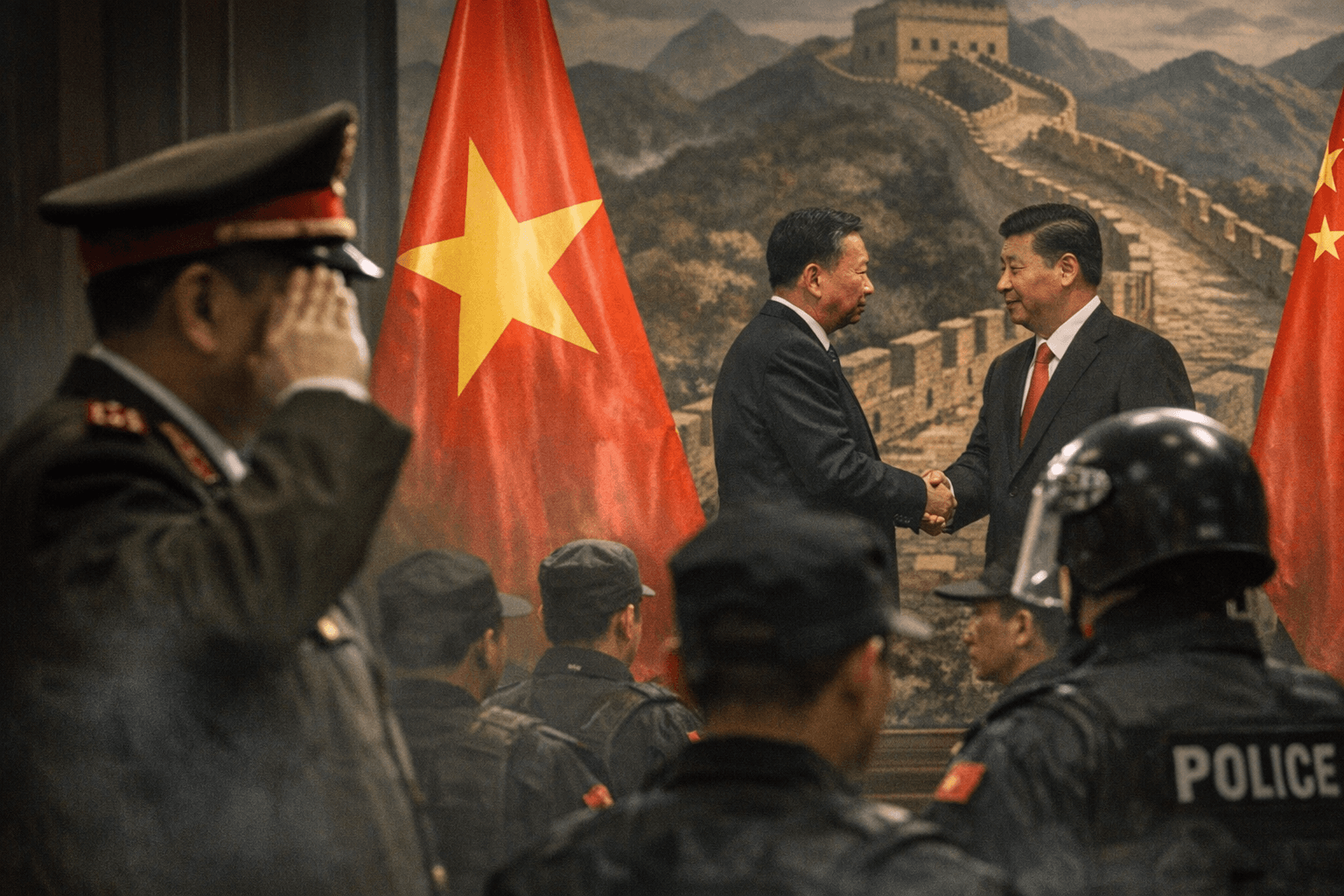
Vietnam is moving closer to China’s style of governance, with a tighter security state, expanding digital controls and a leadership reshuffle that concentrates more power in the hands of To Lam. His rise marks a sharp break from Vietnam’s long preference for collective rule and signals a more centralized model at a time when Hanoi is seeking stability, faster decision-making and firmer control over information.
The National Assembly unanimously elected To Lam state president on April 7, with all 495 deputies present voting in favor. That same day, he took the oath of office, formally uniting two of Vietnam’s most powerful posts in one person. To Lam, a former public-security chief, now stands at the center of a system that has traditionally spread authority more broadly across the party leadership.
That concentration of power has an obvious parallel in Beijing. To Lam is scheduled to meet Xi Jinping on April 15 on his first overseas trip since becoming state president, and the agenda is expected to include technology, energy, security cooperation and sensitive infrastructure. The trip also underscores how Vietnam, which has spent decades balancing ties with China and the West, is leaning more openly toward Beijing as security figures close to the public-security apparatus gain influence in Hanoi.
The shift is visible in policy as well as politics. Draft documents show Vietnam plans to establish state-run data-trading exchanges overseen by the Ministry of Public Security, a move that would give the state a stronger hand in collecting, directing and using data. The ministry held a public-security review meeting in Hanoi on April 3, part of a broader push that places policing, cyber oversight and digital governance closer to the center of economic management. That approach mirrors China’s centralized model, where information is treated not just as a market asset but as a strategic tool of state power.
Vietnam and China have swung between conflict and cooperation for centuries, and that history makes warmer ties politically delicate. Yet the current direction is clear: Hanoi is borrowing selectively from Beijing’s playbook without formally copying its political system. For businesses, that could mean clearer rules in some sectors and tighter controls in others. For rights advocates, it points to wider surveillance and less room for dissent. For foreign governments, it suggests a Vietnam that is determined to preserve autonomy while adopting the governance tools of its larger neighbor.
This article was produced by Prism’s automated news system from verified source data, official records, and press releases, then run through automated quality and moderation checks before publishing. The system is built and supervised by the people who set the standards it runs under. Read our full AI policy.
Did this article answer your question?


