Vietnam’s Communist Party opens congress to shape next five years
Vietnam's ruling party convened a tightly secured congress in Hanoi to pick top leaders, reshape party organs and set economic priorities through 2030 and beyond.
Vietnam’s ruling Communist Party opened a tightly secured National Congress in Hanoi, convening roughly 1,588 delegates at the National Convention Center to choose the country’s leadership and set policy priorities for the next five years. Delegates paid tribute at the Ho Chi Minh mausoleum before moving into closed preparatory sessions, and photographs distributed by the party and media showed honor guards and heavy security around the venue.
The quinquennial congress, the party’s highest decision-making body, will elect about 200 members to the Central Committee. That committee then names a Politburo of some 17 to 19 members that determines the country’s top collective leadership and the cadres who will steer economic and foreign policy through 2030. Delegates alone vote at the congress; the process is strongly centralized and tightly choreographed, with the National Convention Center and surrounding areas subject to road closures and reports of mobile phone signal disruptions.
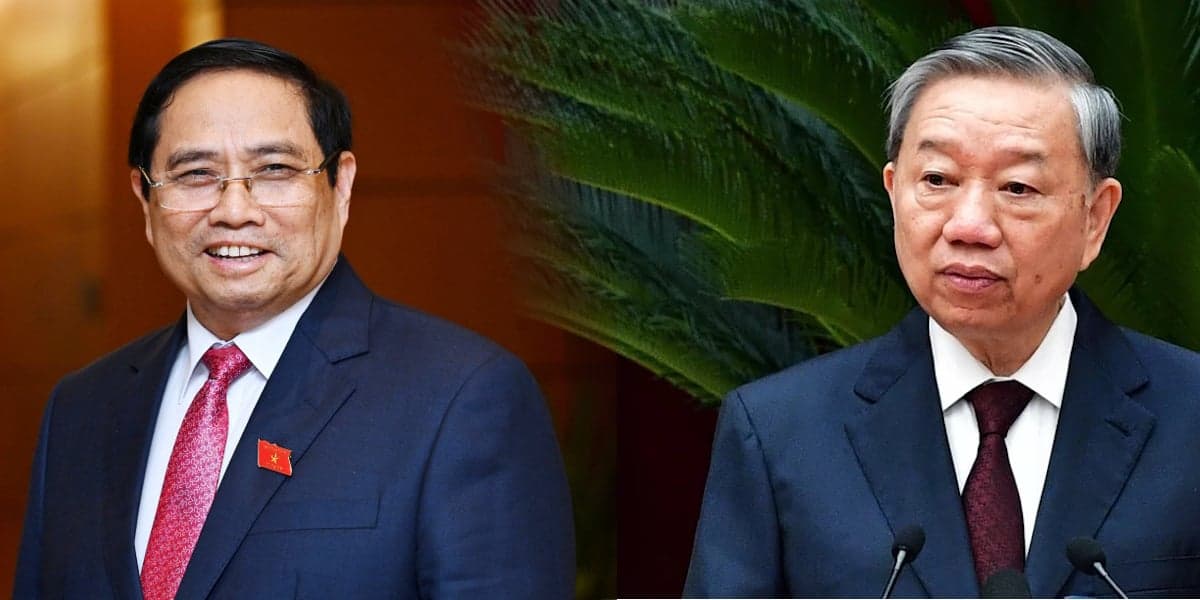
Attention is focused on General Secretary To Lam, who took the party’s top role less than two years ago and is widely expected to be confirmed to a full five-year term. Internal deliberations suggest he has sought to consolidate authority and, at least at some stages of the precongress discussions, considered combining the party general secretaryship with the state presidency. Observers say such a move would concentrate power in a single individual in a manner more commonly associated with political shifts in the region. Other internal discussions appear to have forced compromises; some of To Lam’s ambitions for formal office consolidation may have been scaled back as he traded off positions and policy priorities to secure broader backing.
The congress unfolds against the backdrop of robust economic performance in recent years, a key pillar of the party’s claim to legitimacy. Leadership debates will therefore have to balance factional dynamics, including conservative military elements that have reportedly resisted some of To Lam’s initiatives, with ambitions to maintain investment, expand trade, and accelerate the country’s long-term drive to reach high-income status by 2045. How the congress frames policies toward foreign investment and trade amid intensifying U.S.-China rivalry will be closely watched by investors and diplomats across the region.

Human rights organizations warned ahead of the meeting about the opaque, undemocratic nature of the selection process and the exclusion of non-party citizens from public discussion of candidates. Rights groups and independent outlets documented intensified repression in the run-up to the congress; several critics were detained, and the detention of blogger-activist Hoang Thi Hong Thai was noted by civil society observers. The security posture around the convention center emphasized the state’s priority on order and control during this politically sensitive transition.
Outcomes at the congress will ripple beyond Hanoi. The composition of the Central Committee and Politburo will determine not only personnel but policy direction on governance reforms, state-business relations, and geopolitical alignment. For a one-party state of roughly 100 million people and more than five million party members, the choices made inside the closed halls of the National Convention Center will shape Vietnam’s domestic compact and its role in a fragmented global economy for the remainder of the decade. Journalists and analysts will be watching final committee lists, the confirmation of To Lam, any formal endorsement to combine party and state posts, and the economic blueprint that emerges to 2030 and toward the 2045 target.
This article was produced by Prism’s automated news system from verified source data, official records, and press releases, then run through automated quality and moderation checks before publishing. The system is built and supervised by the people who set the standards it runs under. Read our full AI policy.
Did this article answer your question?


