Wall Street's 1929 crash warns of today's AI bubble fears
The same pattern keeps repeating: hype surges, reality bites, and only ideas that change the system survive the bust.
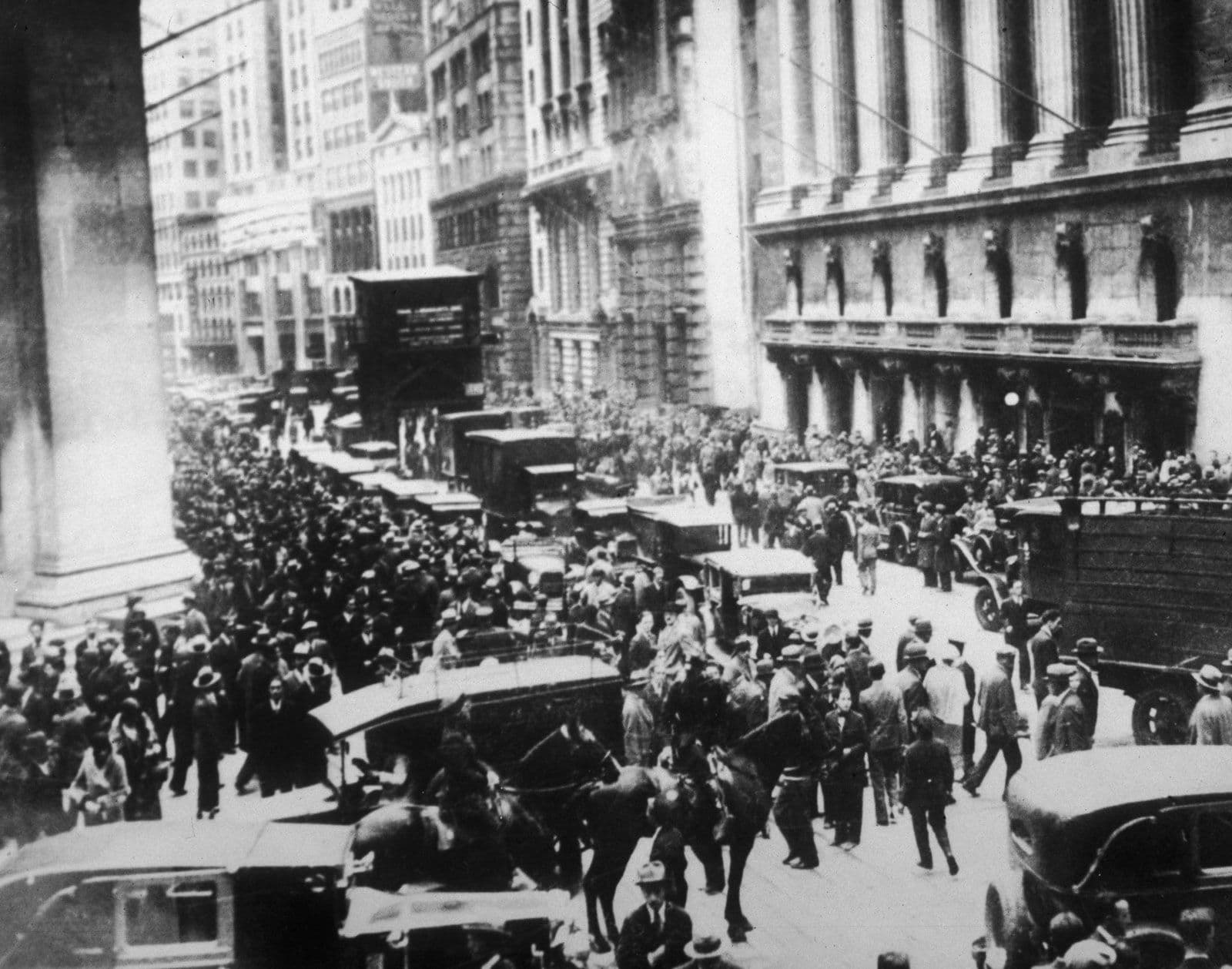
The crash that still explains market manias
The 1929 crash remains a durable warning because it was not just a bad day on Wall Street. It followed a six-fold rise in the Dow Jones Industrial Average, from 63 in August 1921 to 381 in September 1929, then a brutal reversal that erased confidence almost as fast as it had been built. On Black Monday, October 28, 1929, the Dow fell nearly 13 percent. On Black Tuesday, October 29, it dropped nearly 12 percent more, and by mid-November it had lost almost half its value. The index would not regain its pre-crash high until November 23, 1954.
That timeline matters because it shows how long it can take for a market to recover from a speculative excess. In the 60 Minutes conversation with Lesley Stahl and veteran financial journalist Andrew Ross Sorkin, the crash is treated less as a museum piece than as a live warning about the psychology that powers every boom: leverage, crowd belief, and the seductive claim that “this time is different.” Today, that warning is being read through the lens of AI-fueled optimism, where soaring tech valuations and sweeping claims about a new economic era echo the logic that helped inflate earlier bubbles.
The comparison is especially sharp because the crash was never only about prices. It was also about how people financed those prices, how easily borrowed money magnified risk, and how quickly confidence can become self-justifying. That is why the 1929 story still sits beside the late-1990s dot-com boom and the 2008 housing collapse in the modern cautionary canon. Each episode began with a plausible innovation story, then drifted into speculation, then forced investors and policymakers to relearn the difference between a transformative technology and a market that has outrun reality.
What a real breakthrough looks like when it is not just hype
The Lyme disease segment offers a very different kind of optimism, one grounded in biology rather than asset prices. At MIT’s Sculpting Evolution group, associate professor Kevin Esvelt and Tufts epidemiologist Sam Telford are working on a project called Mice Against Ticks. Its core idea is unusually direct: use CRISPR gene editing to insert antibodies into the DNA of wild white-footed mice so the animals become immune to Borrelia burgdorferi, the bacteria that causes Lyme disease.
The logic is ecological, not cosmetic. Scientists involved in the effort focus on the reservoir host, meaning the species that quietly maintains the pathogen in nature. In this case, that is the mouse, not deer or ticks alone. If the mice do not carry the infection, fewer ticks become infected, and fewer infected ticks are available to bite humans. The goal is a heritable immunization, a trait that passes from one generation of mice to the next and slowly breaks the transmission cycle.
Nantucket is central to the plan because Lyme disease has long been a major public health problem there, making it a practical place to test whether the approach can work in the real world. Researchers have already held public meetings with Nantucket residents before moving toward a controlled field trial on a private island. That sequence matters as much as the technology itself. In public health, especially when gene editing enters the picture, legitimacy depends on consent, transparency, and a clear explanation of what the intervention changes in the ecosystem and what it does not.
This is the rare kind of innovation story that is hard to confuse with speculation. It does not promise a magic leap to a new era. It offers a measurable mechanism, a defined biological target, and a concrete disease burden. In other words, it resembles real science at its best: a claim that can be tested, challenged, and, if successful, replicated.

Why piano education is a better test of innovation than marketing language
The same distinction shows up in the Payam Method, an unconventional piano curriculum built by Payam Khastkhodaei, a 32-year-old teacher in Bothell, Washington and the son of Iranian immigrants. Instead of starting with sheet music, the method begins with numbers, then moves students into games, original compositions, and 18 levels of instruction before gradually transitioning them to notation. The students span preschool through high school, which suggests the approach is designed to meet learners where they are rather than force them into a rigid sequence.
The numbers behind the method are striking. Lessons at Payam Music cost $75 to $100 each. Khastkhodaei says about 96 percent of his students reach diploma level in about four years, compared with a traditional estimate that only 1 percent to 2 percent reach that level over roughly 12 years. Those figures are the kind of evidence that can be checked against outcomes, not slogans. They suggest that the method may be succeeding because it reduces early friction, keeps motivation high, and builds technical skill through repeated play before formal notation enters the picture.
That emphasis on fun, creativity, tempo, style, and mood helps explain why the method has resonated with parents and students. It also explains why Hadi Partovi, co-founder and CEO of Code.org, is helping spread it. Partovi sees a parallel with how coding education scaled: not by assuming students would fall in love with complexity on contact, but by designing a path that makes the first steps legible and rewarding. In both cases, the breakthrough is not simply content. It is sequencing.

The common lesson: durable innovation changes the system underneath the story
Taken together, these three stories sketch a single thesis about modern life under conditions of exuberance. Financial bubbles inflate when a compelling story outruns the underlying math. Scientific advances endure when they alter the mechanism of transmission or resistance, not just the language around the problem. Educational methods spread when they measurably improve the path from beginner to fluency.
That is why the crash of 1929 still matters in an era of AI optimism. Markets can price a narrative long before they prove its usefulness. But in medicine and education, as in finance, the decisive test is whether the idea changes behavior, produces repeatable results, and survives contact with reality. The next boom will almost certainly arrive wrapped in confidence. The better question is whether it rewires the system or merely sells a better story.
This article was produced by Prism’s automated news system from verified source data, official records, and press releases, then run through automated quality and moderation checks before publishing. The system is built and supervised by the people who set the standards it runs under. Read our full AI policy.
Did this article answer your question?