Waltz Defends Trump Threat to Strike Iran Power Plants, Bridges
Waltz said bombing Iran’s power plants would not be a war crime, even as talks in Islamabad and a fragile ceasefire deadline loomed.
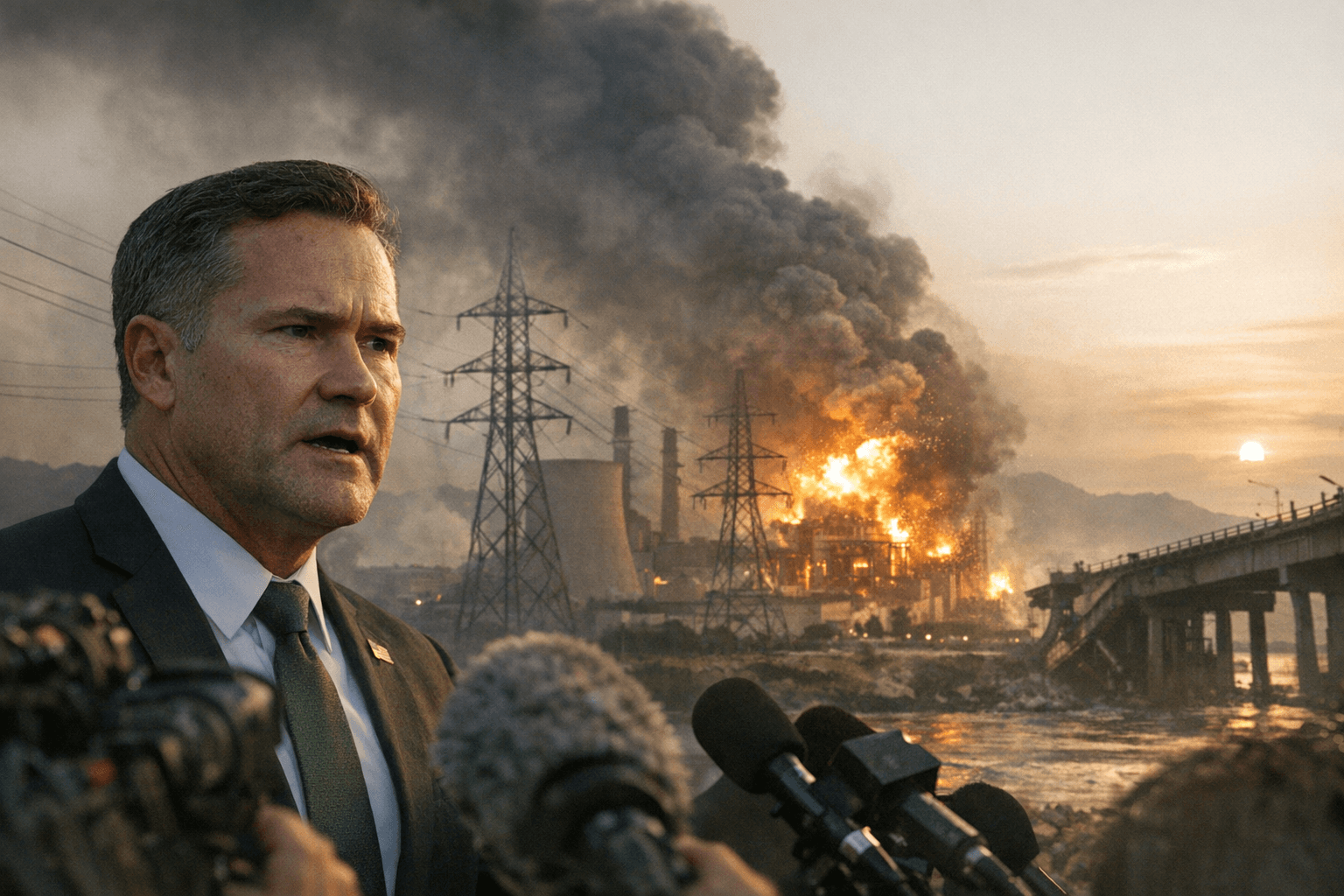
Mike Waltz defended Donald Trump’s threat to strike Iran’s power plants on ABC’s This Week, saying the United States could take the infrastructure out “relatively easily” because Iran’s air defenses had been “absolutely decimated.” Waltz also said the strikes would not be a war crime and repeated that “all options are on the table,” after Trump posted that the United States would “knock out every single Power Plant, and every single Bridge, in Iran” if Tehran rejected what he called a “very fair and reasonable DEAL,” adding, “NO MORE MR. NICE GUY.”
The exchange sharpened concerns about how far the administration is willing to go in translating political threats into military action. Under international humanitarian law, deliberately targeting civilian infrastructure can cross into war crime territory if the power plants or bridges are not being used for military purposes. Amnesty International said Trump’s threats against Iran’s energy and transport network could cause “large-scale civilian devastation” and have catastrophic consequences for more than 90 million people in Iran. That warning lands against the reality that electricity, transport and fuel systems are not abstract military assets, but the backbone of daily life for a country of that size.
The timing makes the threat more volatile. The administration was pushing for another round of in-person talks in Islamabad, Pakistan, on Monday, April 20, 2026, while the current ceasefire agreement was set to expire on Wednesday, April 22, 2026. Trump had already brushed aside criticism over the legality of striking civilian infrastructure, saying he was “not worried” about those concerns and arguing that Iran was committing war crimes instead. The result is a posture that mixes negotiation, coercion and open-ended military signaling at the very moment the truce is close to expiring.
That approach has also widened fears of a broader regional conflict, especially given the focus on Iran’s energy routes and the Strait of Hormuz. U.S. officials have framed the campaign as maximum pressure rather than trust-based diplomacy, and the State Department says sanctions on Iran date back to 1979, after the seizure of the U.S. Embassy in Tehran. In February 2026, the department sanctioned 15 entities, two individuals and 14 shadow-fleet vessels tied to Iranian petroleum trade. In March, Secretary of State Marco Rubio said the United States had “messages and some direct talks” with Iran, mainly through intermediaries, underscoring that diplomacy and threat escalation are moving in tandem.
This article was produced by Prism’s automated news system from verified source data, official records, and press releases, then run through automated quality and moderation checks before publishing. The system is built and supervised by the people who set the standards it runs under. Read our full AI policy.
Did this article answer your question?


