War Leaves Global Economies Shaken and Leaders With Few Options
The U.S.-Iran ceasefire brought relief, but Brent crude near $100, eurozone inflation past 4%, and a fractured NATO left allied leaders navigating a war they never sanctioned.

When the United States and Iran announced a two-week ceasefire on April 7, mediated by Pakistani Prime Minister Shehbaz Sharif and General Asim Munir, relief swept through foreign ministries from Berlin to Canberra. But the pause in fighting masked a harder reckoning: the six-week war that the United States and Israel launched against Iran in late February had already reshaped global energy markets, strained the Western alliance to near-breaking point, and left American partners scrambling to plan around a president whose next move no one could reliably predict.
Trump's own claims that the United States is insulated from the supply shocks of the war were difficult to square with realities on the ground. The closure of the Strait of Hormuz, which once carried roughly 20 million barrels of oil per day, roughly 20 percent of global consumption, triggered what analysts described as possibly the largest-ever supply disruption in the global oil market. Brent crude surged above $100 per barrel, up from roughly $65 when U.S.-Iran tensions began escalating. Gas prices in the United States hit $4 per gallon on March 31, for the first time since 2022.
The World Trade Organization warned that if oil and gas prices remain high for the rest of the year, it could reduce the forecasted 2026 growth in global GDP by 0.3 percent. Europe absorbed the most acute strain. Inflation was projected to peak at over 4 percent year-on-year in the eurozone. EU natural gas prices climbed to €48 per megawatt-hour as governments scrambled to source alternatives to supplies that had flowed through the strait.
The economic pain translated quickly into political turbulence. Trump did not consult his European and NATO allies before launching the war, but then demanded that they take responsibility for returning conditions to what they were before the conflict began. Allied leaders, analysts observed, were learning in the unpredictable age of Trump that they can no longer rely on U.S. security guarantees, since an American president appeared close to making them conditional on blanket support for his actions.
The backlash was swift and concrete. Spain closed its airspace to U.S. jets, and Italy denied U.S. military aircraft permission to land at a base in Sicily. British Prime Minister Keir Starmer told the nation: "This is not our war. We will not be drawn into the conflict." France drew a public rebuke from Trump, who called Paris "VERY UNHELPFUL" after it refused to cooperate with his coalition-building effort. A frustrated Trump, hosting Ireland's taoiseach at the White House on St. Patrick's Day, declared: "We don't need too much help. We don't need any help actually." Days later, he went further, threatening to withdraw the United States from NATO entirely after allies refused his call to help unblock the Strait of Hormuz.
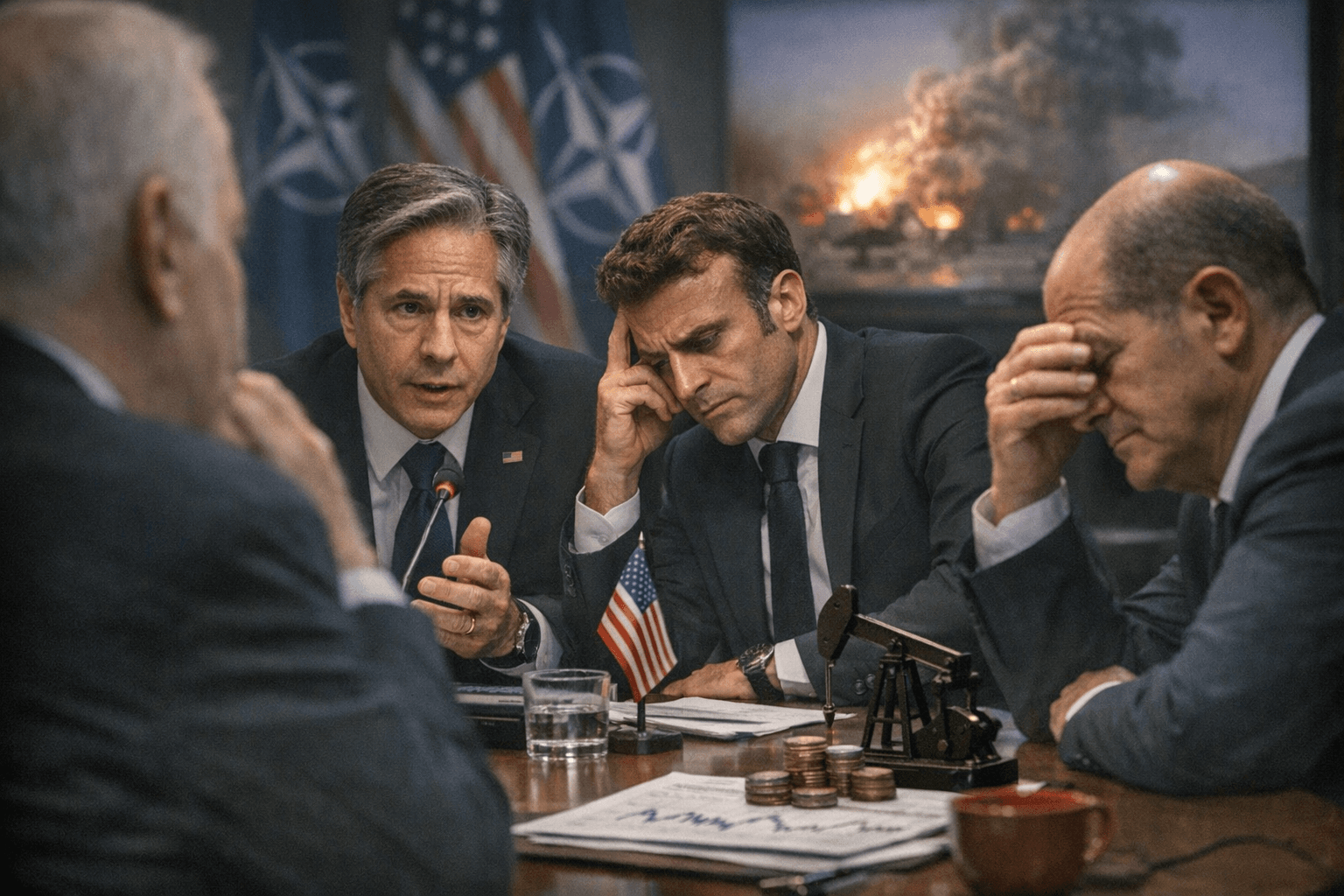
Secretary of State Marco Rubio called allies' response to the war "very disappointing" and hinted that Trump would "reexamine" U.S. commitments to them once it ended. For European capitals already unnerved by Trump's January threats to annex Greenland, the warning sharpened the calculation: how much distance to keep from Washington, and at what cost to their own security.
The war proved a strategic windfall for Moscow, which saw its oil revenues surge while Western attention was diverted from Ukraine. Russian officials and state media openly reveled in Trump's attacks on the alliance. Trump reportedly threatened to stop selling weapons to Ukraine as leverage against NATO allies who defied him, compounding pressure on European governments already stretched by defense commitments.
European leaders are now navigating what the Council on Foreign Relations framed as a structural question: whether to leverage the limited tools still available to them. A grouping of roughly forty countries convened by the United Kingdom to plan for securing the Strait of Hormuz after a ceasefire offered one model: constructive, clearly delineated engagement that signals burden-sharing without entanglement in the wider conflict. Coordination on sanctions, trade terms with Washington, and NATO posture remain the other pressure points where allied capitals retain real, if circumscribed, influence.
The two-week ceasefire buys time. It does not buy certainty. With inflation biting voters in Frankfurt, Rome, and Seoul, and a U.S. president who threatened, within a single news cycle, to "blow everything up" and then agreed to stand down, the governments most exposed to the fallout are building strategies designed to endure the next reversal, not just the current pause.
This article was produced by Prism’s automated news system from verified source data, official records, and press releases, then run through automated quality and moderation checks before publishing. The system is built and supervised by the people who set the standards it runs under. Read our full AI policy.
Did this article answer your question?


