WATCH: ‘GMA’ reveals name of baby African Penguin chick at New York Aquarium
Named after a curator who braved Hurricane Sandy, Walter the African penguin chick is a bright spot for a species down to roughly 19,800 wild adults.
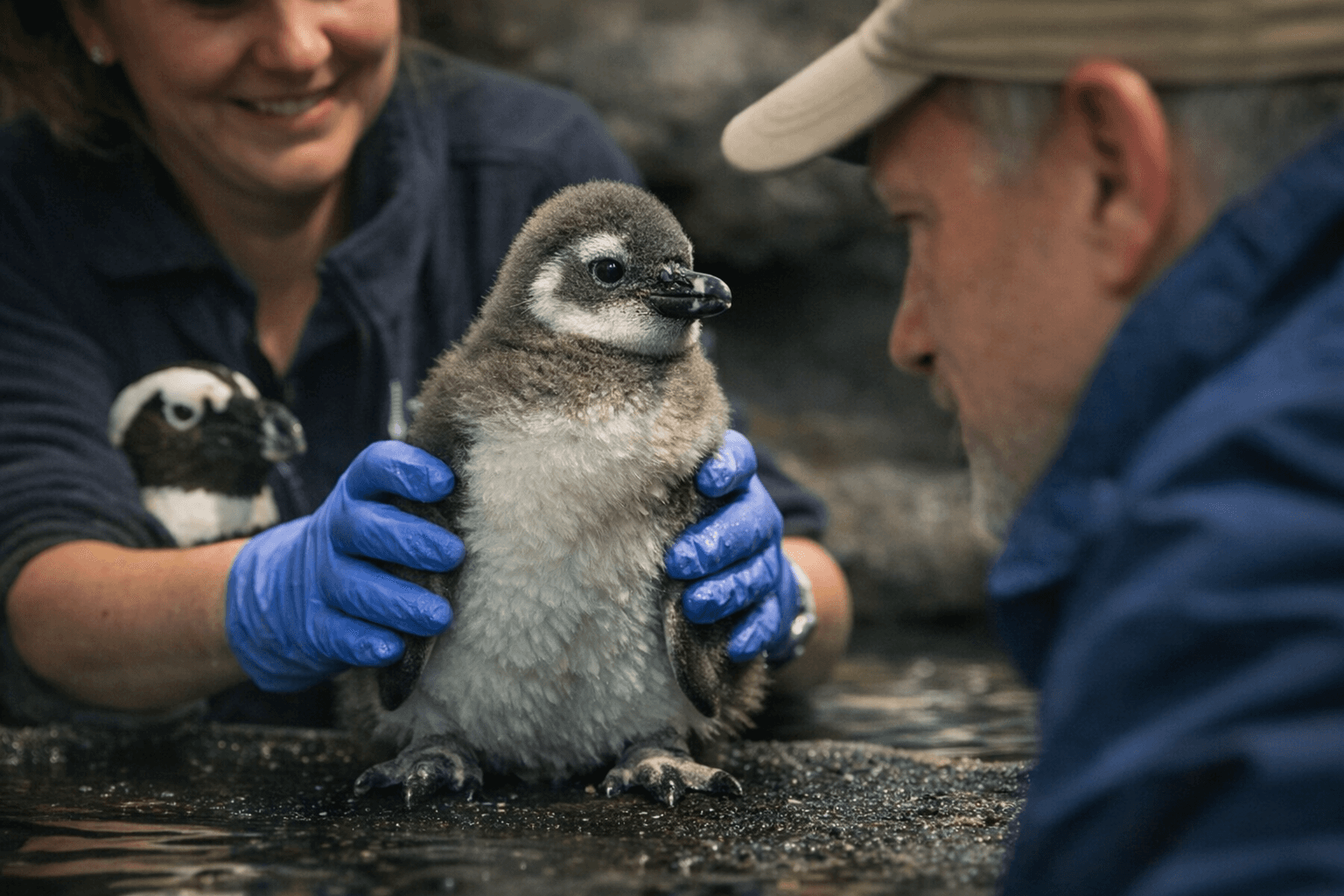
The naming felt personal. Walter, the African penguin chick born at the WCS New York Aquarium on December 4, 2025, takes his name from Hand Walter, a longtime aquarium curator and field scientist who stayed on-site during Hurricane Sandy in October 2012, helping protect both animals and staff as floodwaters overtook the Coney Island facility. Good Morning America made the name official, giving a viral moment to one of conservation's most urgent numbers: roughly 19,800 adult African penguins remain in the wild.
Walter made his public debut on March 26, 2026, at four months old, and the math behind his first weeks of life was relentless. He weighed 63.2 grams at birth, barely two ounces, and reached approximately 3.4 kilograms (7.5 pounds) by three months, a growth rate that required animal keepers to track a daily weight gain of roughly 20% of his body weight. He is the 19th African penguin to hatch at the aquarium and has since joined his parents and a colony of 37 in the facility's rocky Sea Cliffs habitat.
The milestone carries weight beyond any viral segment. African penguins, native to the rocky coasts of South Africa and Namibia, are classified as Critically Endangered by the IUCN Red List. Wild populations have declined 75% over the past two decades, driven by scarcity of prey fish, human disturbance, and habitat loss. Only approximately 9,900 breeding pairs remain.
Walter's birth is part of the Association of Zoos and Aquariums (AZA) Species Survival Plan under the Saving Animals From Extinction (SAFE) Program, a coordinated effort spanning more than 50 AZA-accredited institutions. Since 2005, the managed African penguin population has grown by 47%, with over 98% genetic diversity maintained. That genetic breadth is the biological insurance a species needs to adapt if conditions in the wild ever stabilize. But the threats decimating wild colonies, primarily the collapse of prey fish populations near key breeding sites, require policy interventions that no captive program can substitute for.
Aquarium professionals measure success in developmental benchmarks, not press coverage. For Walter, those benchmarks included transitioning from soft down to waterproof feathers on schedule and demonstrating strong swimming, hopping, and social behaviors before entering Sea Cliffs. He cleared them all.
The New York Aquarium, founded in 1896 and the oldest continually operating aquarium in the United States, relocated to its current 14-acre Coney Island site in 1957. Hurricane Sandy severely flooded it in October 2012, but WCS staff managed to save approximately 80% of the animal collection. Walter's name threads directly back to that crisis and to the kind of unglamorous, ground-level work that conservation actually requires.
With fewer than 20,000 adult African penguins remaining, the SSP's 47% population growth since 2005 represents genuine progress, and a clear ceiling on what captive breeding alone can achieve.
This article was produced by Prism’s automated news system from verified source data, official records, and press releases, then run through automated quality and moderation checks before publishing. The system is built and supervised by the people who set the standards it runs under. Read our full AI policy.
Did this article answer your question?