Waymo approved to start fully autonomous SFO service Jan. 29, curbside pickups
Waymo began limited fully autonomous pick-ups and drop-offs at SFO’s Rental Car Center Level 1 curbside on Jan. 29, expanding airport travel options while leaving terminals and many operational details unresolved.

Waymo began offering fully autonomous passenger rides to and from San Francisco International Airport on Jan. 29, 2026, but service is initially limited to a select group of riders and to the Rental Car Center Level 1 Curbside. The curb is accessible to terminals via the AirTrain people mover, and Waymo and airport officials say the rollout will expand to more riders and locations over the coming months.
SFO officials say the move begins the final phase of a multiyear pilot. SFO signed a Testing and Operations Pilot Permit with Waymo in September 2025 and laid out a three-phase plan of testing with a human driver, testing without a human driver, and commercial passenger service. SFO spokesperson Doug Yakel said Waymo “has successfully completed the first two phases of that plan and now is entering the third phase,” allowing commercial pickups and drop-offs to begin at the Rental Car Center.
Mayor Daniel Lurie framed the launch as part of the city’s recovery and innovation push, saying, “As a gateway for visitors from around the world, SFO’s launch of Waymo passenger pickup adds a safe, reliable, and convenient way to get to and from San Francisco. With airport service beginning, residents and travelers will experience the innovation that defines our city—while supporting San Francisco’s continued economic recovery.” Airport Director Mike Nakornkhet said, “We are excited to launch Waymo passenger service at SFO. As the premier airport for a region of innovation, this new option demonstrates our continued commitment to providing an extraordinary travel experience with transportation options that are safe, sustainable, and reliable.” Waymo co-CEO Tekedra Mawakana added, “Serving rides to and from San Francisco International Airport delivers one of the most requested features for our riders and further deepens our relationship with the city. With millions traveling in for major events this year, we look forward to meeting the growing demand for reliable, fully autonomous rides. We are proud to offer a service that is improving road safety in San Francisco and providing a magical start or end to Bay Area journeys.”
Waymo said service “will give access to a select number of riders and will gradually welcome all riders over the coming months,” and that it “plans to serve additional airport locations like the terminals in the future,” but no firm date was provided for terminal curbside service. The San Francisco Standard reported a contentious negotiation history between Waymo and SFO that included rejection notes, a “harshly worded” cease-and-desist letter, and protracted contract talks. SFO’s approval makes the airport the third U.S. international airport to host a commercial robotaxi service after Phoenix and San Jose, and Waymo already operates a unified service spanning more than 260 square miles across the Bay Area.
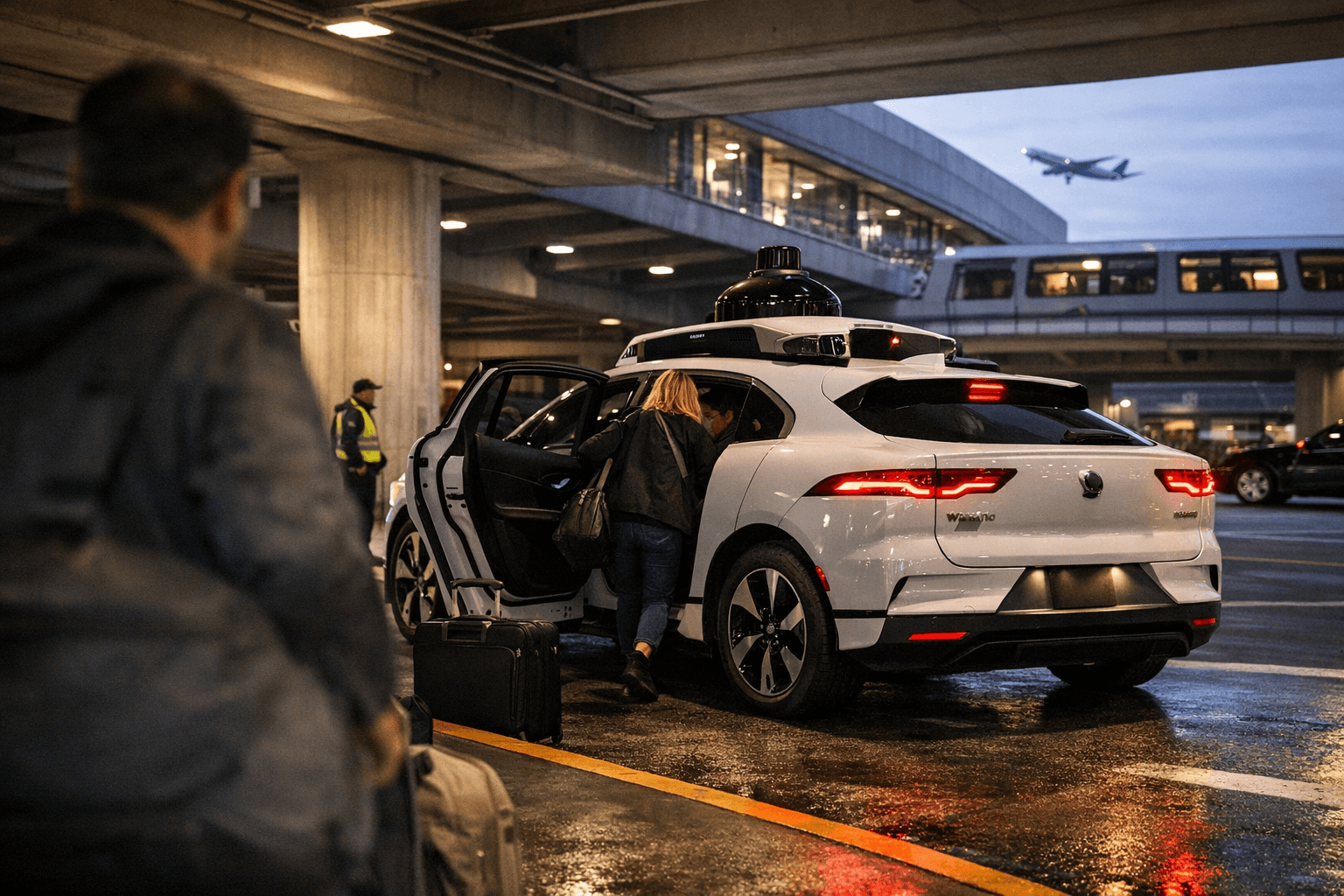
Fleet and technology details vary across reporting: CNET noted Waymo offers fully autonomous rides in the all-electric Jaguar I-Pace, and Electrek reported Waymo is deploying Jaguar I-Pace and newer Zeeker RT vehicles equipped with sixth-generation self-driving technology, described as Level 4 autonomy. Waymo already runs 24/7 robotaxi services in parts of the Bay Area, Phoenix and Los Angeles and has been expanding into Miami, Atlanta, Austin and other markets.
Local impact is practical and procedural. Travelers can now summon a Waymo to the Rental Car Center and transfer to terminals by AirTrain, which may reduce demand for curbside pickups at terminal roadways but also raises questions about accessibility for passengers with heavy luggage, mobility needs, or tight connections. Officials have not disclosed how many riders are included in the initial cohort, the selection criteria, vehicle models assigned to SFO service, operational hours, pricing or any airport-specific permit fees beyond the September pilot permit.
What comes next for passengers is gradual expansion and oversight. Expect incremental increases in rider access and eventual terminal service, but San Francisco residents and airport users should press for clarity on selection rules, safety monitoring, operating hours and how SFO will measure the pilot’s effects on traffic, transit connections and airport operations.
Know something we missed? Have a correction or additional information?
Submit a Tip