Webb telescope captures blazing core of spiral galaxy M77
Webb pierced M77’s dusty core, revealing an eight-million-solar-mass black hole powering a blazing nucleus 45 million light-years away.
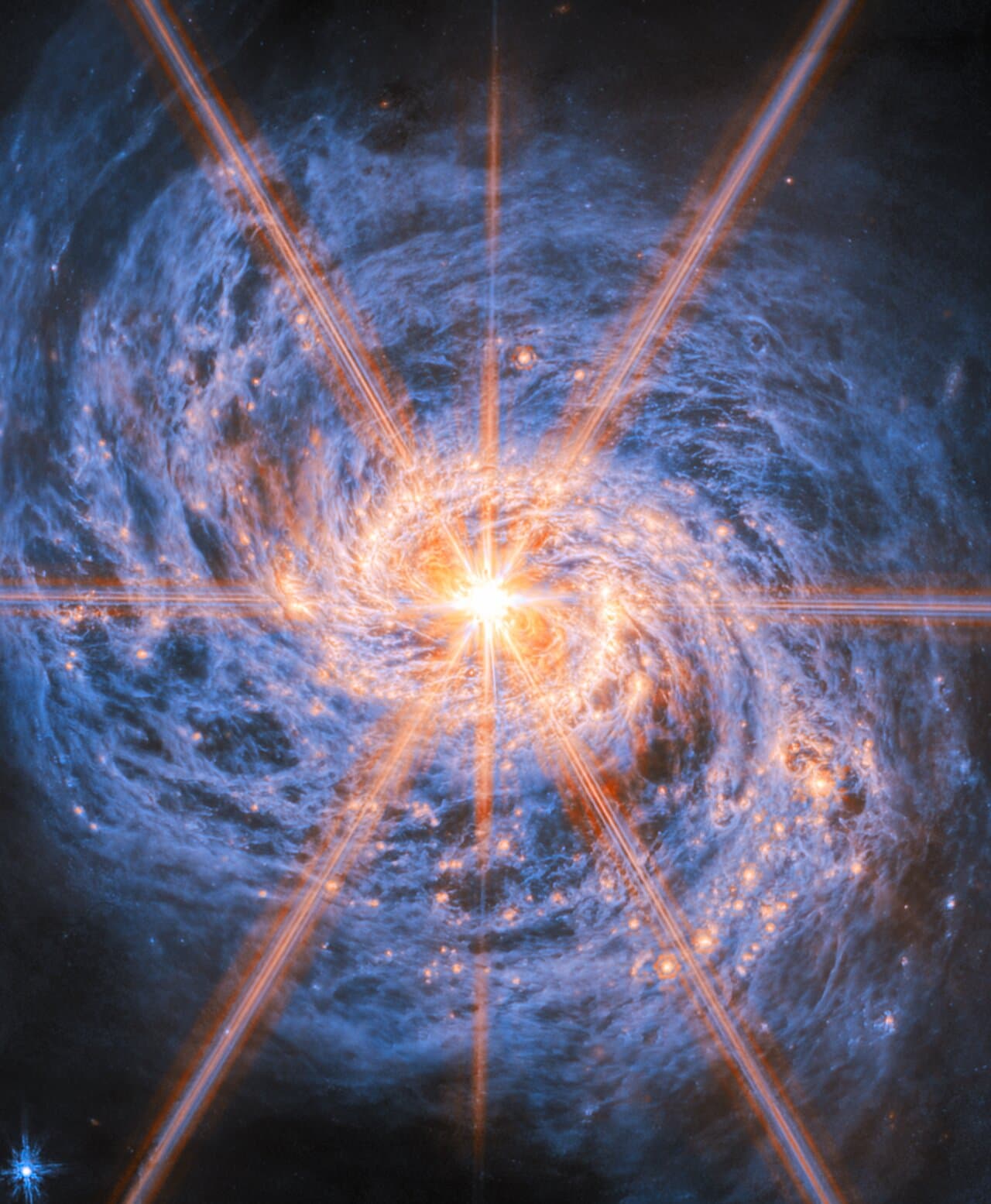
A new Webb image turned Messier 77 into a lesson in how galaxies work at their most crowded center. The barred spiral galaxy, also known as NGC 1068, sits about 45 million light-years from Earth in Cetus, and the latest Picture of the Month from the NASA, ESA and CSA James Webb Space Telescope, released May 7, showed its spiral arms, dust lanes and a core so bright it outshines the rest of the galaxy.
At the heart of M77 is an active galactic nucleus powered by a supermassive black hole about eight million times the mass of the Sun. ESA says gas in the central region is pulled into a tight, rapid orbit, where it collides, heats up and emits intense radiation. That makes the nucleus blaze with enough energy to challenge Webb’s cameras, while the surrounding disc still shows the galaxy’s structure in sharp infrared detail. The image makes clear that a black hole and star-forming material can coexist in the same core, with dust and hot gas packed into a compact region that is both chaotic and productive.
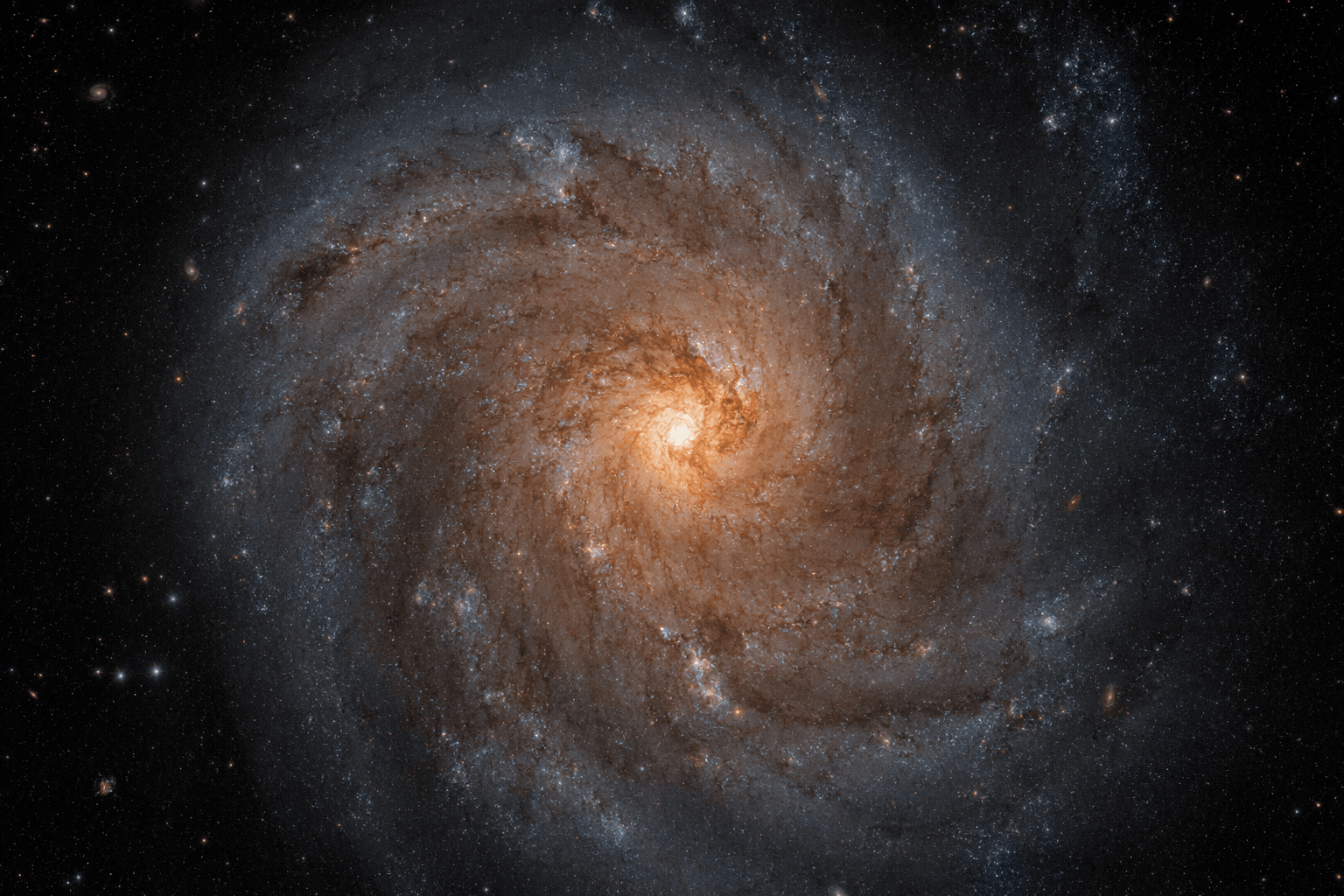
Astronomers have been tracking M77 for centuries. NASA says French astronomer Pierre Méchain first identified it as a nebula in 1780, and Charles Messier later cataloged it as one of the largest galaxies in the Messier list. With an apparent magnitude of 9.6, it can be seen in a small telescope, but modern observatories have transformed it from a faint patch into a benchmark for studying active galaxies. Hubble observations had already shown brightness fluctuations in the nucleus, pointing to a powerful hidden energy source, and earlier images highlighted pockets of star formation and dark dust lanes across the galaxy’s center.
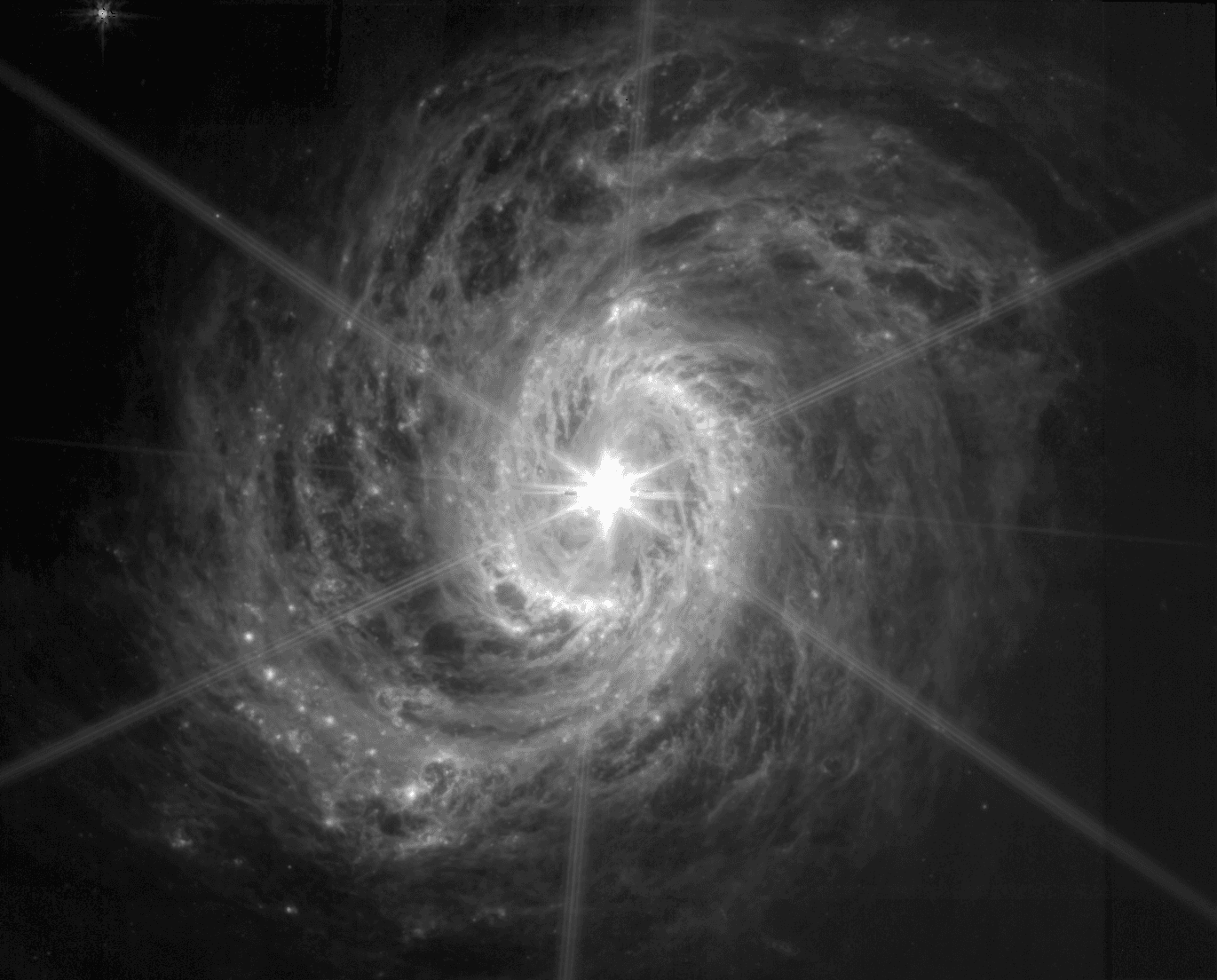
That is why Webb’s view matters beyond one striking picture. NASA has used M77, a nearby barred spiral, as a proxy for understanding the fireworks at the center of the Milky Way galaxy, where our own hidden black hole is expected to drive similar physics on a different scale. The new infrared image shows what decades of U.S.-backed space science have made possible: the ability to look through dust, separate star-forming regions from the active nucleus, and trace how galaxies build energy at their cores. In M77, Webb did not just capture a brilliant heart; it revealed the machinery that can let a black hole and new stars shape the same galactic center at once.
This article was produced by Prism’s automated news system from verified source data, official records, and press releases, then run through automated quality and moderation checks before publishing. The system is built and supervised by the people who set the standards it runs under. Read our full AI policy.
Know something we missed? Have a correction or additional information?
Submit a Tip