Wembanyama’s Shaolin temple training fuels Spurs playoff surge
Wembanyama’s Shaolin detour looks surreal, but the numbers suggest a wider performance reset behind San Antonio’s playoff push.

A detour that fits the modern superstar playbook
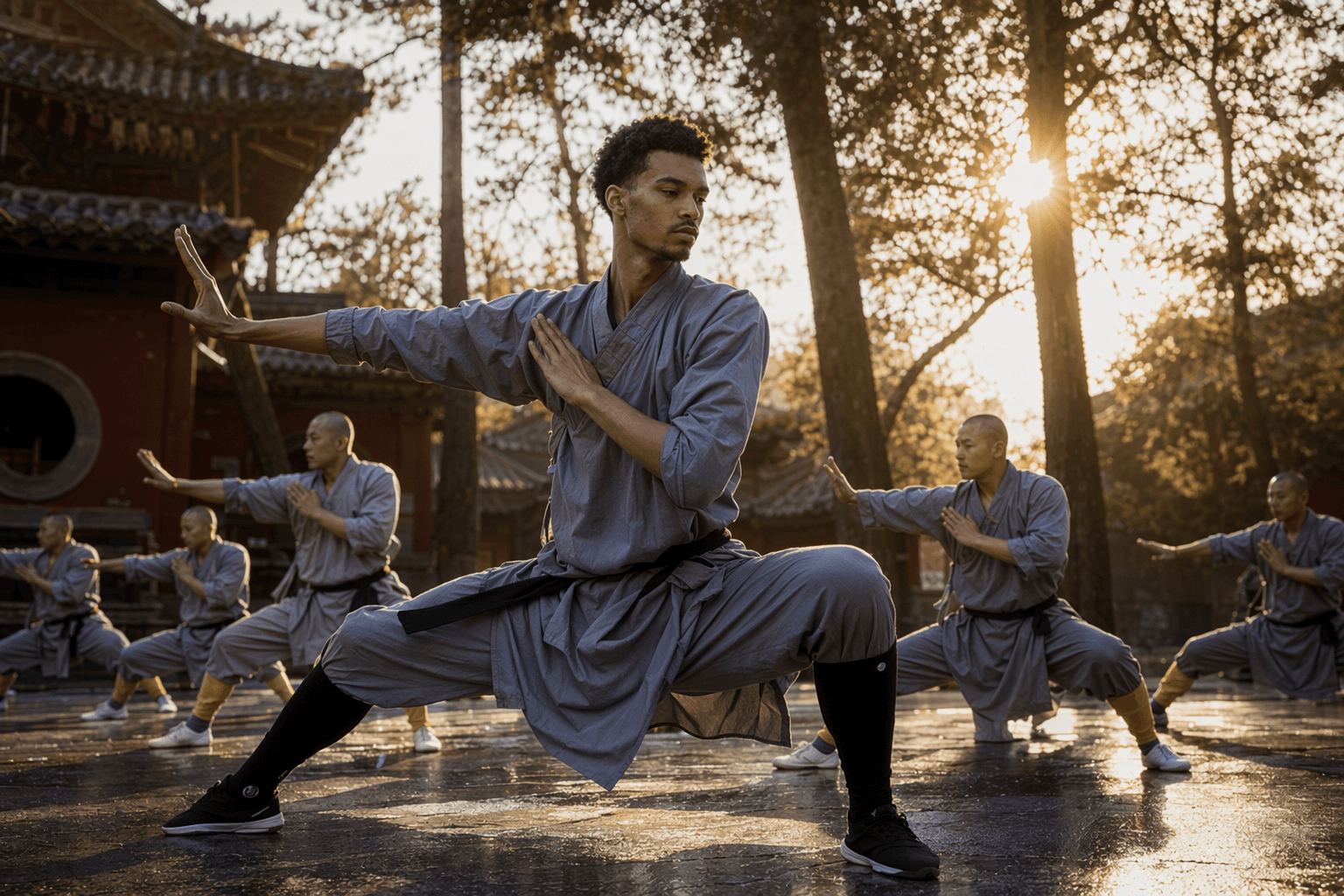
Victor Wembanyama’s Shaolin temple visit sounds like something lifted from a martial-arts film, yet it belongs squarely in the current economics of elite sport: the chase for marginal gains. The San Antonio Spurs center spent an expected 10-day stay at a Shaolin temple in Zhengzhou, China, during the 2025 offseason, turning an injury interruption into a broader reset in body and mind. What looks like mysticism from the outside is better understood as a blend of recovery, discipline and brand-shaping global symbolism.
The most important context is medical. The Spurs shut Wembanyama down in February 2025 for the rest of the 2024-25 season after he developed deep vein thrombosis in his right shoulder. That made the offseason less about normal conditioning and more about rebuilding trust in his body. ESPN later reported that Wembanyama said he went to China because he wanted to put his body through a different method of training and learn more about himself, a statement that places the trip in the language of experimentation rather than spectacle.
What happened at the Shaolin temple
The temple in Zhengzhou is not merely a tourist stop. It welcomes visitors to study Chan meditation, Shaolin Kung Fu and traditional Chinese medicine, three practices that map neatly onto the modern athlete’s core priorities: focus, movement quality and recovery. NBA China confirmed that Wembanyama was there, and photos quickly circulated showing him with a shaved head and monk-style robe, imagery that made the trip instantly viral.
The Spurs amplified the moment with video from the China trip, including footage of Wembanyama at the Great Wall of China. That visual package mattered beyond social media novelty. For a global team like San Antonio, and a global star like Wembanyama, the trip functioned as both personal development and international branding, underscoring how contemporary athletes are expected to perform not just on the court but across the full cultural economy of their sport.
Why the Shaolin story matters in basketball terms
The Shaolin stay is best read as one piece of a larger offseason transformation. After medical clearance, Wembanyama returned to action and later trained with Hakeem Olajuwon, a move that fits the NBA’s long tradition of big men refining footwork, touch and post discipline under one of the game’s great interior technicians. The sequence matters: medical shutdown, alternative training environment, elite skills work, then a return to production.
That progression helps explain why the Shaolin detail has become so central to the Spurs’ playoff narrative. It is not that meditation alone changed his game. It is that the unusual training, the medical reset and the added skill work all fit together as a modern performance stack. In a league where every contender searches for tiny edges, Wembanyama’s offseason became a case study in how recovery culture and technical refinement can converge.
The statistical evidence behind the surge
The results are visible in the numbers. In the 2025-26 regular season, Wembanyama averaged 25.0 points, 11.5 rebounds, 3.1 assists and a league-leading 3.1 blocks per game. Those figures point to a player who is not only scoring more but also controlling possessions at both ends of the floor. The rebounding total shows physical dominance, while the blocks remain the clearest indicator that his rim protection still changes game plans.
His playoff form has reinforced the case. On May 18, 2026, he delivered a 41-point, 24-rebound performance against Oklahoma City, one of the loudest individual statements of the postseason. A game like that does more than pad a box score. It signals that his body held up under playoff intensity and that the skills layered into his offseason have translated into production when the stakes rose.
Performance science, branding, and the global wellness market
The Shaolin chapter also sits inside a bigger trend across elite sports: the outsourcing of marginal gains to practices once viewed as outside the mainstream. Meditation, breathing control, ritualized recovery and cross-cultural training now occupy the same strategic space as shooting coaches and biomechanics labs. For superstars, the question is no longer whether a practice looks traditional or modern. The question is whether it improves readiness, durability and decision-making under pressure.
There is also a branding dimension that cannot be ignored. A shaved head, a monk’s robe and a visit to the Great Wall created an image that traveled far beyond NBA circles. That visibility is useful to a player whose reach already extends well beyond San Antonio, Texas, and it is useful to a league that increasingly markets its stars as global symbols. The wellness layer may be real performance science, but the packaging also feeds a global audience hungry for a story that feels larger than basketball.
What makes Wembanyama’s case notable is that the image and the data now point in the same direction. The Shaolin temple trip was not a standalone stunt. It became part of a chain that included medical recovery, technical work with Olajuwon, a regular-season statistical leap and a playoff explosion against Oklahoma City. In that sense, the temple story matters because it shows how the modern NBA superstar is built: through training methods that mix culture, science, recovery and spectacle, all in service of winning when the games mean the most.
Know something we missed? Have a correction or additional information?
Submit a Tip