West Java landslide kills at least 34 as dozens remain missing
Heavy rains triggered a landslide in Pasirlangu, West Bandung regency; rescue teams continue searches amid unstable slopes and ongoing rain.
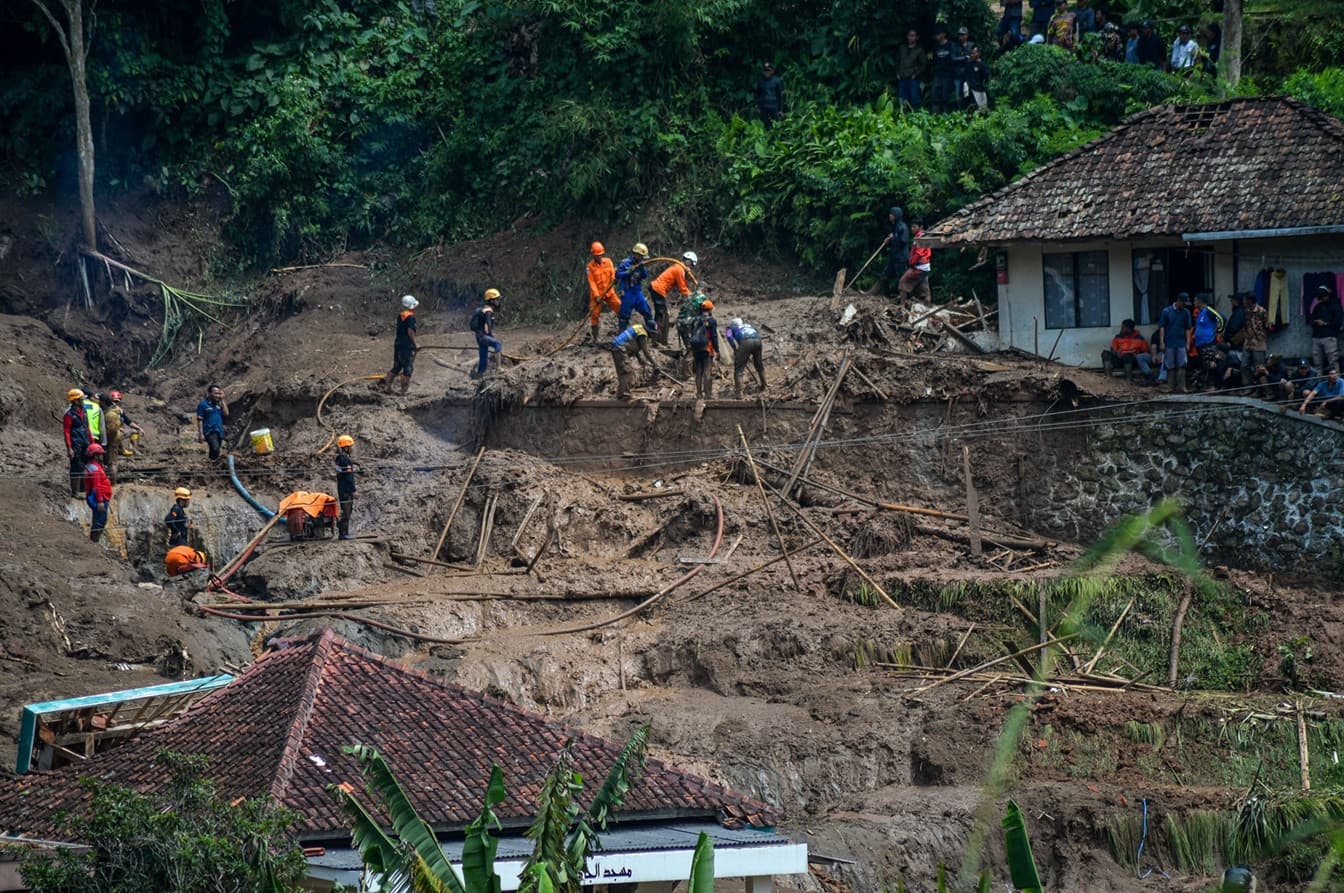
A torrent of mud, soil and debris from heavy rains has swept through the mountain village of Pasirlangu in West Bandung regency, West Java, killing at least 34 people and leaving roughly 32 others unaccounted for, officials said on Jan. 28. Rescue teams continued search-and-rescue operations amid unstable slopes and persistent rainfall that have complicated recovery efforts.
The national disaster mitigation agency, BNPB, said 34 victims had been formally identified as of 7:30 p.m. local time on Tuesday, agency spokesman Abdul Muhari said, and the identified bodies "will be handed over to the victims' families for burial." Authorities cautioned that the figure for people missing remains provisional and could be significantly higher as teams work through mud and debris.
The slide struck Pasirlangu, also reported as Pasir Langu, at the foot of Mount Burangrang. Local officials and the provincial governor attributed the catastrophe to a combination of intense rainfall, unstable ground and human activity. West Java Governor Dedi Mulyadi said plantation expansion around the village had increased vulnerability and pledged to relocate affected residents from the most exposed areas.
Multiple accounts described widespread destruction: more than 50 houses were severely damaged and roughly 650 or more people were displaced, with some local tallies putting the number relocated at about 685. Families in the area remain anxious and grieving. One resident, Aep Saepudin, whose relatives are among those missing, said: "It's impossible that they are still alive. I just want their bodies to be found."
Search teams composed of national and local disaster responders, military personnel and first responders have been clearing debris both manually and with heavy machinery, including excavators and water pumps. Operations are slow and hazardous; rescuers must proceed cautiously because continued rain raises the risk of secondary slides and further collapse of already weakened slopes. Images and field reports from the site show responders carrying body bags and equipment through deep mud while using tracking devices and other tools to locate survivors.

Several reports said the navy and additional military units were involved in the response and that a training detachment at the site suffered casualties, with some soldiers buried; authorities have not released consolidated military casualty figures. Inconsistencies in provisional tallies have been a recurring feature of the operation, as early figures issued earlier in the week varied widely while teams continued to reach remote pockets of the slide area.
Officials have linked the disaster to broader patterns of land-use change in Indonesia, noting concerns about forest loss and watershed degradation after last year’s deadly floods and landslides on Sumatra that killed about 1,200 people and displaced more than 240,000. The governor’s relocation pledge underscores mounting tension between agricultural expansion, community safety and the need for long-term land management reforms.
Rescue operations were ongoing on Jan. 28, with authorities prioritizing finding missing people and recovering bodies for handover to families. Officials warned residents to stay clear of the area while rainfall and unstable terrain persist, and urged consolidated reporting of casualty figures as identification efforts proceed.
This article was produced by Prism’s automated news system from verified source data, official records, and press releases, then run through automated quality and moderation checks before publishing. The system is built and supervised by the people who set the standards it runs under. Read our full AI policy.
Did this article answer your question?