What employers can and cannot do when wages are garnished
Wage garnishment can cut pay quickly, but federal law sets hard limits on what employers can withhold and what they cannot do to workers.
What your employer must do
When wages are garnished, the employer is usually the middleman, not the creditor. Under federal law, wage garnishment is a legal process in which earnings are withheld by an employer under a court order or other lawful process, and most creditors need a court judgment before they can take that step. The Consumer Financial Protection Bureau notes that some government debts can be collected through administrative wage garnishment, which means a court judgment is not always required.
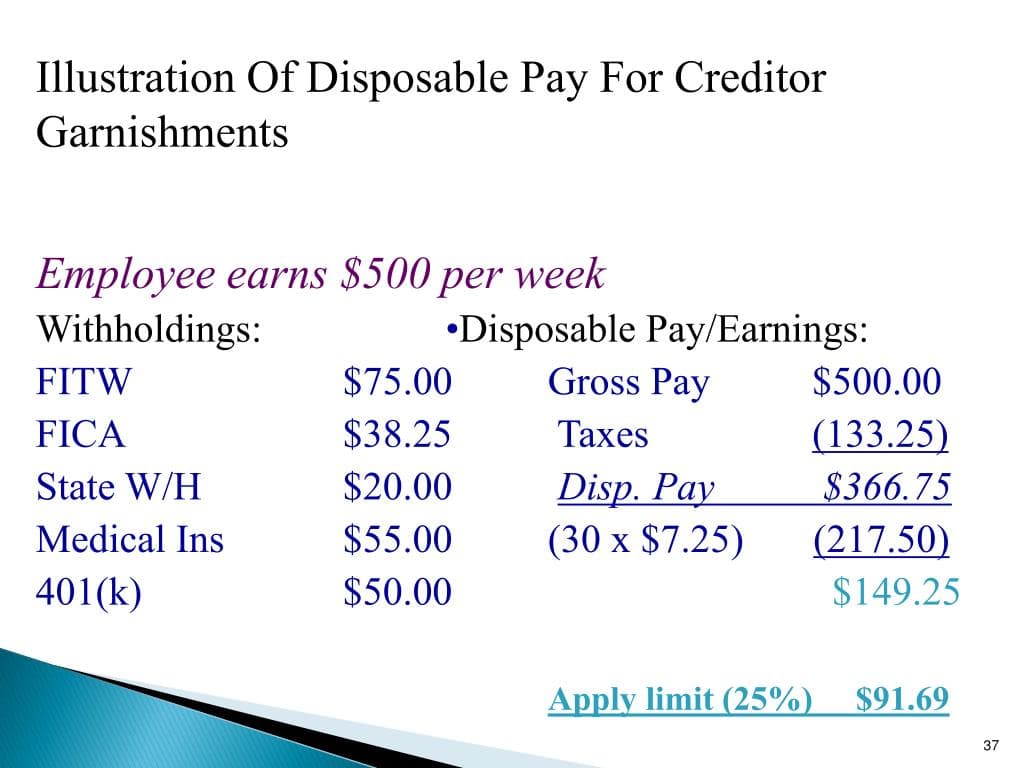
Once a valid garnishment reaches payroll, the employer must follow the law that applies to the worker’s wages and calculate the amount correctly. Federal rules cap how much of a worker’s disposable earnings can be taken in a workweek, and the U.S. Department of Labor says those limits apply in all 50 states, the District of Columbia, and all U.S. territories and possessions. That matters because garnishment is not supposed to wipe out a paycheck; the law is designed to leave enough earnings for basic living expenses while a debt is repaid.
Where employers have to choose the smaller amount
One of the most important compliance points is that state law and federal law do not always match. The Department of Labor says employers must observe the law that results in the smaller garnishment amount when the two differ. In practice, that means payroll teams cannot simply follow the most aggressive order or the easiest deduction; they have to compare the applicable rules and protect the worker from an over-withholding mistake.
That is where errors often become costly for employees under financial stress. A single calculation mistake can shrink take-home pay immediately, making rent, transit, groceries, child care, and medical bills harder to cover. Because garnishment is tied to disposable earnings in a workweek, payroll departments need to get the underlying wage data right the first time.
What counts as wages, and what usually does not
Not every form of income is treated the same way. The Department of Labor says personal earnings covered by garnishment rules include wages, salaries, commissions, bonuses, and pension or retirement payments. Tips are not ordinarily included in that category, which means workers whose income depends heavily on gratuities may face a different practical impact than salaried workers.
That distinction matters for equity as well as compliance. A worker whose income is built from commissions or bonuses may see fluctuations in take-home pay that make garnishment harder to absorb, while a retiree receiving pension income can also be affected. The legal system does not treat every paycheck in the same way, but the pressure on a household budget can be just as severe.
What employers cannot do to workers
Federal law also draws a line around retaliation. Title III of the Consumer Credit Protection Act prohibits an employer from discharging an employee because wages were garnished for any one debt. The Department of Labor’s Fact Sheet #30 says that protection is enforced by the Wage and Hour Division, and it is meant to prevent workers from losing a job simply because a creditor has reached their paycheck.
That protection is real, but it is not unlimited. The anti-discharge rule does not cover garnishment for a second or subsequent debt. In other words, the law shields a worker from being fired over one debt’s garnishment, but it does not give the same protection if another separate debt triggers a new garnishment problem. That gap is one reason workers juggling multiple obligations can be especially vulnerable.
How debt collectors are limited before wages ever get withheld
The employer is not the only actor with legal boundaries. Debt collectors cannot legally threaten garnishment unless the action is lawful and intended, according to the Consumer Financial Protection Bureau’s Regulation F. They are also prohibited from contacting a consumer at work if they know, or should know, that the employer bars such communication.
That restriction matters because workplace contact can create privacy and employment risks long before any deduction appears on a paycheck. A collector’s unlawful threat can pressure a worker into paying a debt that has not yet gone through the legal process. The law is designed to stop that kind of coercion, especially when a worker may already be under severe financial strain.
What happens to protected benefits
Some money is shielded more than ordinary wages, though not always completely. The Consumer Financial Protection Bureau says federal benefits such as Social Security and VA benefits are usually protected from garnishment, but they can be taken for certain government debts or support obligations. That means protection exists, but it has exceptions that matter in child support cases and other legally authorized collections.
For workers and retirees, this is one of the most confusing parts of the system. A benefit that is normally protected can still be vulnerable in specific circumstances, so the source of the debt matters as much as the type of payment. Employers and payroll processors need to distinguish between ordinary wage withholding and broader legal collection rules that may apply to certain federal payments.
Why this issue hits workers so hard
Wage garnishment is not just a back-office payroll task. It immediately reduces take-home pay, which can force a household to fall behind on bills that do not wait for the legal process to end. Because the law limits garnishment and protects some workers from firing, it reflects a policy judgment that debt collection should not push people all the way out of the labor market.
That balance is especially important for workers who are already living close to the edge. A garnishment can expose how fragile a budget is, and a misstep by an employer can deepen that strain. Payroll errors, retaliatory action, or mishandled collection notices can all compound the harm, which is why the legal line around garnishment matters so much.
The practical bottom line
If wages are being garnished, the employer must do the withholding lawfully, calculate the amount under the correct rules, and use the smaller garnishment amount when state law and federal law conflict. The employer cannot fire a worker because of garnishment for one debt, and debt collectors cannot bluff or harass their way around the legal process.
For workers, the most important safeguard is knowing that garnishment is regulated, not automatic, and not unlimited. Federal law gives creditors a path to collect certain debts, but it also sets firm limits on how far that collection can reach into a paycheck. That balance is the difference between lawful repayment and financial collapse.
This article was produced by Prism’s automated news system from verified source data, official records, and press releases, then run through automated quality and moderation checks before publishing. The system is built and supervised by the people who set the standards it runs under. Read our full AI policy.
Know something we missed? Have a correction or additional information?
Submit a Tip