What Target employees in Washington need to know about pay transparency
Washington law requires many job postings to show a wage range and a general description of benefits, changing how Target posts jobs and how applicants can compare offers.
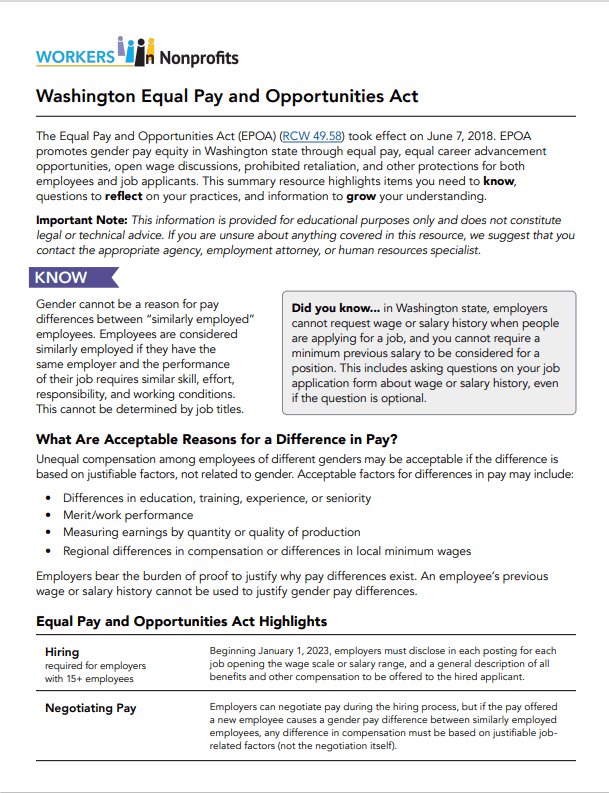
Target team members and job seekers in Washington should expect more detailed pay and benefits information in job listings under the state’s Equal Pay and Opportunities Act. Employers with 15 or more employees must include a wage scale or salary range and a general description of benefits in covered job postings, and employees have a protected right to discuss wages under RCW 49.58.110 and RCW 49.58.040.
The law reaches beyond brick-and-mortar listings. State guidance makes clear that businesses without a physical presence can still be covered if they “engage in business in Washington or recruit for jobs that could be filled by a Washington‑based employee.” Job postings for work performed entirely outside Washington are generally not covered, but employers cannot avoid obligations by saying they will not accept Washington applicants.
What counts as a covered posting is broad. “Pay transparency disclosures are required on any written solicitation intended to recruit job applicants that lists the qualifications sought for applicants of a specific position,” which can include recruiting emails, third-party ads, and electronic listings. Recent amendments tied to SB 5408 and effective July 27, 2025, added employer-friendly changes, including a rule that “Starting July 27, 2025, if only one fixed wage is intended to be offered, the employer may disclose only that fixed wage,” and limits on employer liability for some noncompliant third-party postings.
Washington courts have pushed for broad application of the law. The courts interpret “applicant” broadly, with the legislature’s choice to use plain “job applicants” seen as evidence of wide reach. That makes consistent, detailed postings more important for large employers like Target, which must ensure store, distribution center, and corporate listings comply.

Practical expectations for postings are specific. Employers should publish a range extending from the lowest to highest pay planned for the role and update it if the range changes. Other compensation such as bonuses, commissions, profit-sharing, and stock options must be described; where a job is commission-only, employers must state a “rate or range.” Examples used in guidance include commission rates of “5-8% of net sale price per unit” and piece rates like “$0.55-$0.75 per pound of strawberries picked.” Benefits should be described with enough detail to be meaningful—examples show the level of specificity expected: “Employees (and their families) are covered by medical, dental, vision, and basic life insurance. Employees are able to enroll in our company’s 401k plan, as well as a deferred compensation plan. Employees will also receive eight hours of vacation leave every month and twelve paid holidays throughout the calendar year.”
For Target HR teams this means auditing job templates, training recruiters and hiring managers, and monitoring third-party job boards to avoid costly missteps. For applicants and current team members, clearer ranges and benefit summaries make it easier to compare offers and discuss pay without fear of retaliation.
What comes next is tighter enforcement and clearer hiring conversations. Employers that fail to comply face cure periods and escalating penalties under recent updates, and Washington’s legal trend favors broad employee protections. For Target employees in Washington, the result should be more transparency at every step of the hiring process and stronger footing in pay conversations.
Know something we missed? Have a correction or additional information?
Submit a Tip