What to know about the report
The latest AP-NORC polling tracker shows weak approval, price anxiety and immigration divides, but the method behind the numbers matters just as much.
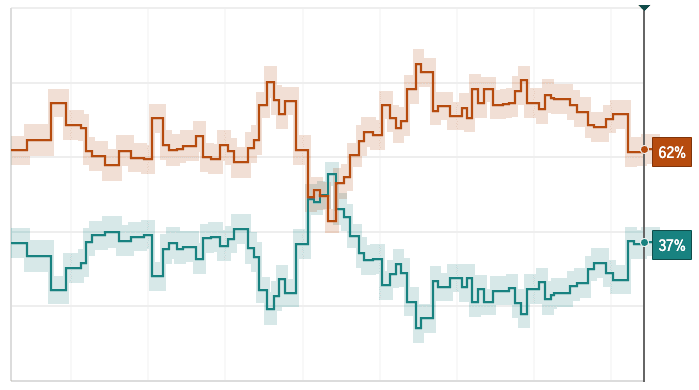
The AP-NORC polling tracker is more than a scoreboard of presidential approval. It is a live readout of how Americans think about the economy, immigration, foreign policy and other issues that shape governing, but the numbers only make sense when the survey design behind them is clear.
What this report is
The tracker sits inside a long-running partnership between The Associated Press and NORC at the University of Chicago. AP-NORC says the center was created to preserve rigorous survey research as major newsrooms cut back on it, and that mission still drives work on politics, the economy, health care, the environment and other public concerns.
AP News describes the polling page as a home for “new and historic polling” on presidential approval, the U.S. economy and other issues, while NORC says the monthly poll has been producing news-making surveys since 2015. The partnership is not built around horse-race snapshots alone; it is designed to measure the underlying attitudes and behaviors shaping public opinion.
How to read it
The first thing to check is the survey engine itself. NORC says the AP-NORC Poll draws 1,000 respondents from its probability-based AmeriSpeak panel, which is meant to include hard-to-reach groups such as rural and low-income households. That matters because a topline percentage means little without knowing who was asked and how broadly the sample reflects the country.
A second check is timing. NORC says data can be collected on Tuesday and turned into journalism on Wednesday, a fast cadence that helps the public see how sentiment moves in real time. That speed is useful for tracking changes in public mood, but it also means each release should be treated as a snapshot of opinion at a particular moment, not a final verdict on a settled debate.
A practical reading guide looks like this:
- Check the sample size and panel source first. NORC says the AP-NORC Poll uses 1,000 respondents from AmeriSpeak.
- Look for the policy area attached to the number. AP-NORC currently highlights approval of Trump’s handling of the economy, immigration, Iran and foreign policy, along with views on tariffs, recession risk and the direction of the country.
- Separate broad approval from issue-specific approval. In AP-NORC’s current political polling, about a third of the public approve of Trump’s handling of the economy, Iran and foreign policy, while 45% approve of his handling of immigration.
- Check whether a result is a one-off or part of a trend. AP-NORC’s tracker is built to show both new and historic polling, which helps readers judge whether a number is an outlier or part of a longer shift.
What the tracker is showing right now
The current AP-NORC pages point to a public mood defined by economic strain and skepticism. About 7 in 10 Americans describe the national economy as poor and say the country is headed in the wrong direction, three-quarters expect tariffs to increase consumer prices, and half say they are worried about a possible recession in the coming months.
The foreign policy picture is just as sharp. AP-NORC says 56% of the public have little or no trust in Trump’s judgment on the use of military force overseas, and the tracker also notes broad concern about recent military actions against Iran. Those findings show how quickly foreign policy judgments can bleed into domestic politics when voters connect them to prices, safety and stability.
Immigration is another dividing line. AP-NORC’s tracker says only a quarter believe the United States is a great place for immigrants, while 65% support granting citizenship to all children born in the United States and 49% support granting citizenship to children born to parents in the country illegally. That mix of views suggests the public often distinguishes between national identity, legal status and the treatment of children, even when the broader debate is highly polarized.
Why the gaps matter
The most important thing missing from any topline number is context. Without the exact wording of the questions, the field dates, the subgroup cuts and the trend line around each figure, a result can be read too broadly or weaponized too quickly. AP-NORC’s own history shows why that context matters: the center was built to move beyond simple “who’s up and who’s down” coverage and focus on the deeper attitudes shaping democracy.
That is why the report matters to governance as much as to politics. AP-NORC says its work is meant to give citizens, policymakers, business leaders and elected officials timely, independent, issue-based data, and the center says its research has covered more than 250 studies over time. In practice, that makes the tracker part of the public infrastructure for democratic accountability, because it helps show not just what people say, but which pressures are building underneath the headlines.
If the public wants to judge the report fairly, the question is not simply what the percentage says. The better question is what kind of political, economic or institutional stress the percentage is trying to measure, and whether the surrounding evidence supports the conclusion officials may want to draw from it.
This article was produced by Prism’s automated news system from verified source data, official records, and press releases, then run through automated quality and moderation checks before publishing. The system is built and supervised by the people who set the standards it runs under. Read our full AI policy.
Did this article answer your question?