When Husbands Can't Find Work, Divorce Risk Rises Sharply
Men not working full time are 33% more likely to divorce within a year, Harvard research shows, a risk that persists for up to eight years and cannot be explained by income alone.

Men who are not employed full time face a 33% higher risk of divorce in the following 12 months compared with husbands who hold full-time jobs, according to a landmark study by Alexandra Killewald, a professor of sociology at Harvard University. The finding, published in the American Sociological Review, draws on data from 6,300 heterosexual couples and carries a key distinction: the effect holds even after adjusting for income.
That detail dismantles the intuitive explanation. It is not simply that unemployed husbands earn less, straining household finances. Something deeper is at work. "Contemporary husbands face higher risk of divorce when they do not fulfill the stereotypical breadwinner role, by being employed full-time," Killewald said. Her broader analysis pushes further: "My results suggest that, in general, financial factors do not determine whether couples stay together or separate. Instead, couples' paid and unpaid work matters for the risk of divorce, even after adjusting for how work is related to financial resources."
The historical lens sharpens the picture considerably. For couples who married before 1975, a husband's failure to hold full-time work had no statistically significant effect on divorce risk. The shift reveals how deeply, and how recently, cultural expectations around male breadwinning have been recalibrated into a marital norm that carries real consequences when unmet.
The damage does not resolve quickly. Research published in the Review of Economics of the Household by Marcus Eliason found that a husband's job loss acts as a major stressor affecting social networks, time structure, and identity for both spouses, with elevated divorce risk persisting for up to eight years after the initial job loss. Finnish researchers Huttunen and Kellokumpu, working from employer-employee data on plant closures, corroborated the long tail of that effect.
There is a countervailing current at the macro level. An analysis published through the National Center for Biotechnology Information found that a one percentage point rise in the national unemployment rate is associated with roughly a 1% fall in the overall divorce rate, suggesting that broader economic downturns may actually suppress divorce filings because couples cannot afford to separate.
That dynamic has fresh relevance: approximately 3.51 million men in the United States were unemployed as of October 2024, up from 3.35 million in October 2023, according to Bureau of Labor Statistics data compiled by Statista. The adult male unemployment rate stood at 3.8% in the most recent BLS report.
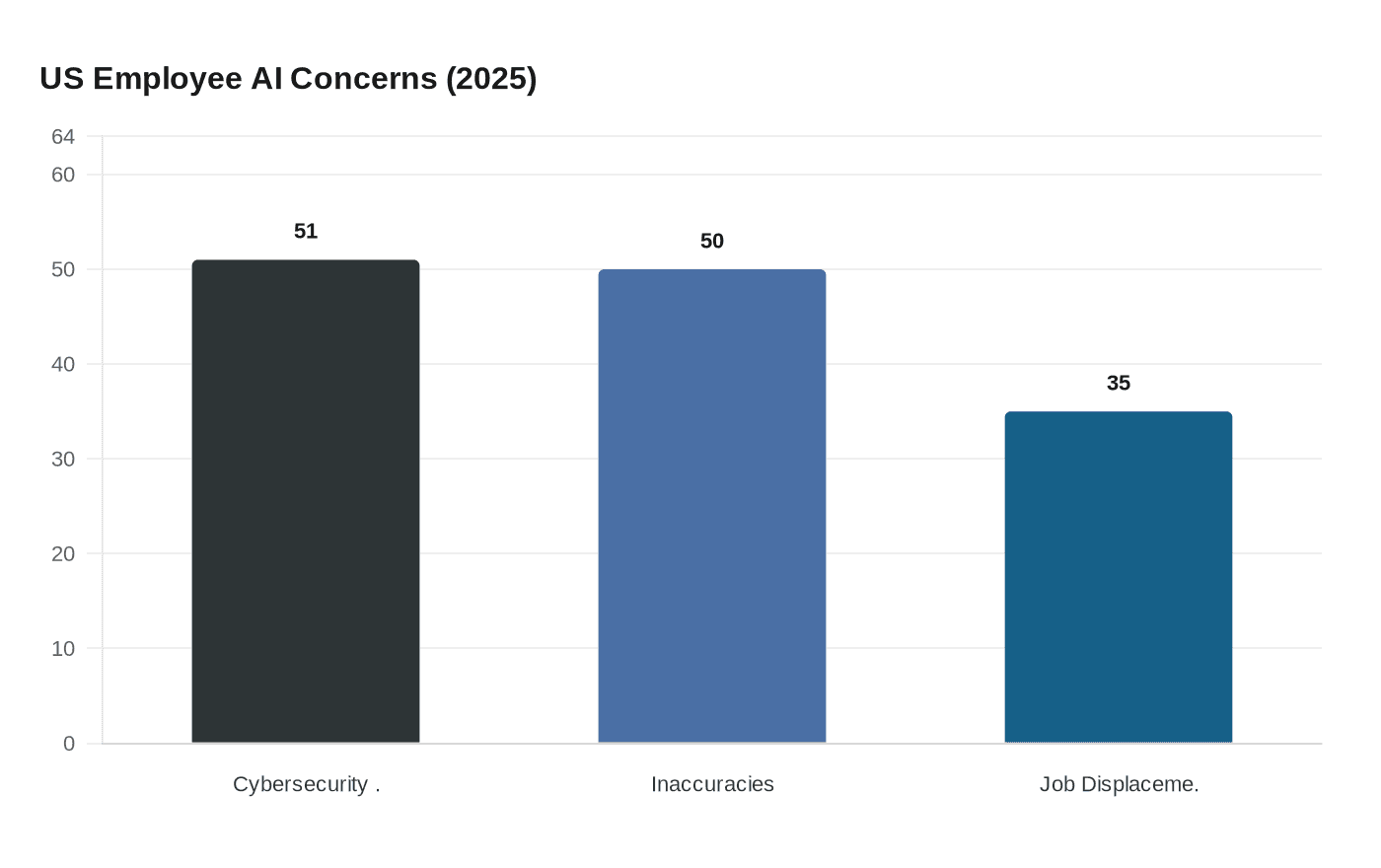
Running alongside these marital fault lines is a separate but connected ethical fracture in the modern workplace. Workers who believe artificial intelligence is harmful or morally problematic are increasingly confronting pressure to use it anyway to remain competitive. McKinsey's 2025 workplace AI report found that 51% of U.S. employees cite cybersecurity risks as a top concern, 50% flag inaccuracies, and 35% worry about workforce displacement, yet adoption continues to accelerate. A 2024 article in the Journal of Ethics identified seven major ethical issues with AI at work, including erosion of workers' moral agency and what researchers term "hidden labour," economically valuable work that goes unrecognized or uncompensated.
Corporate ethics researchers have identified a phenomenon called moral distancing: AI creates a psychological buffer that can lead people to request behaviors they would not otherwise pursue themselves. For an employee who opposes the technology on principle but deploys it to gain a competitive edge, the machine becomes a vehicle for outsourcing ethical discomfort. SurveyMonkey's 2025 AI Workplace Statistics Report found that organizations are racing to deploy AI for competitive advantage even as their own employees raise objections, leaving workers who abstain on moral grounds structurally exposed to peers who do not share their hesitation.
Both dilemmas, marital and professional, point toward the same underlying pressure: the quiet but relentless weight of social expectations in domains where the rules have changed faster than the culture has caught up.
This article was produced by Prism’s automated news system from verified source data, official records, and press releases, then run through automated quality and moderation checks before publishing. The system is built and supervised by the people who set the standards it runs under. Read our full AI policy.
Did this article answer your question?

