White House denies involvement in no-bid Reflecting Pool contract
The White House says Donald Trump was not involved in picking the contractor for the Reflecting Pool work, but the no-bid award has sharpened questions about influence and federal contracting.

The White House has denied that President Donald Trump had any role in choosing Greenwater Services for the Lincoln Memorial Reflecting Pool renovation, but the contract has become a test of how public work, political access and federal contracting standards intersect. The award, reported as a no-bid deal worth about $1.7 million, went to a business owned by a trust led by John J. Cafaro, a Trump donor and Mar-a-Lago neighbor.
That arrangement matters because the Reflecting Pool is not just another maintenance project on the National Mall. The National Park Service says the pool was completed in 1924 and has no circulation or filtration system, a design flaw that has long made water-quality problems a recurring issue. The current rehabilitation began with closures on April 10, 2026, and was scheduled to continue through June 10, 2026, with work meant to clean the pool, repair joints and install lining material.
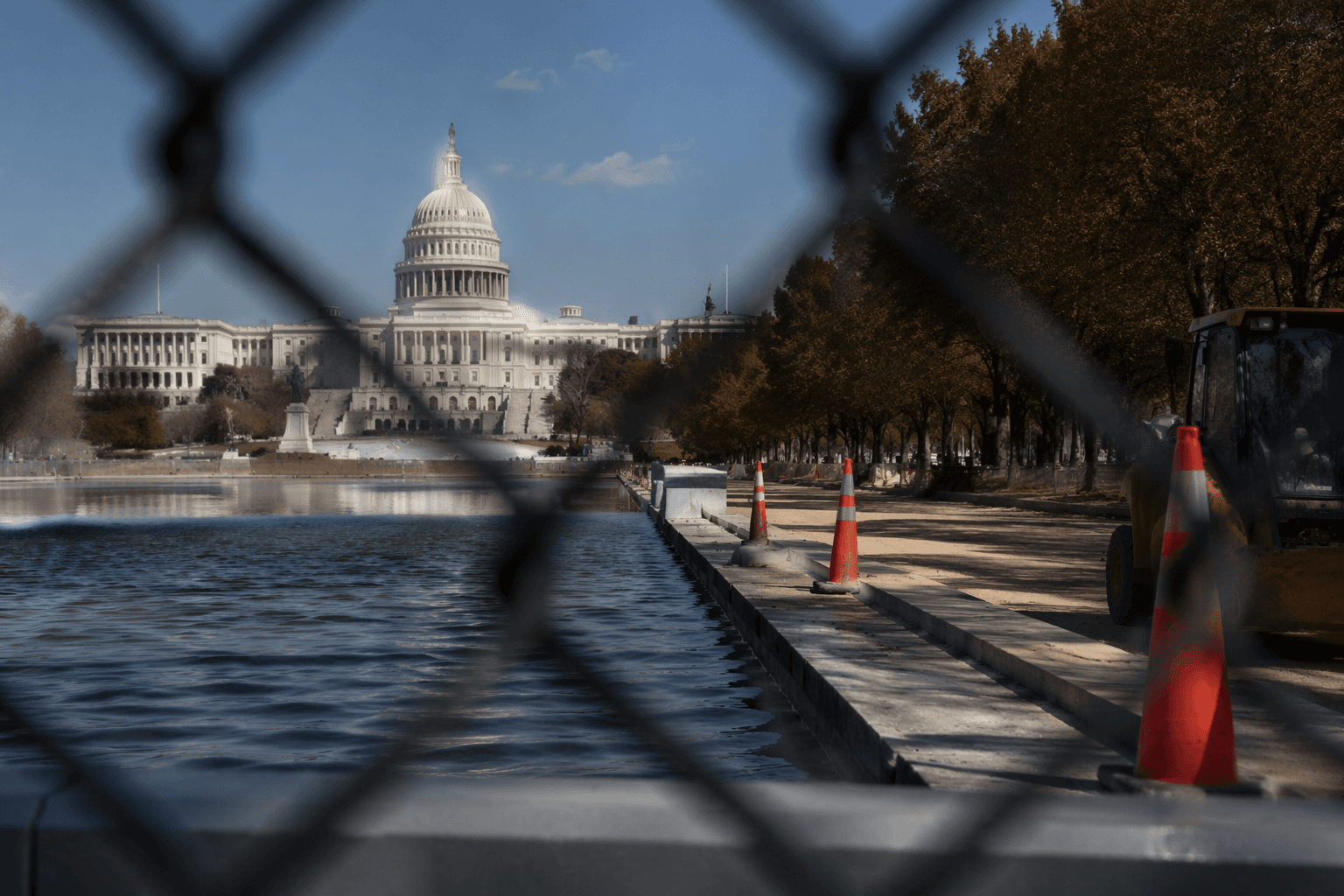
The contracting dispute has expanded beyond procurement into preservation law. A federal complaint says the Reflecting Pool’s dark gray basin was part of the historic design and argues that resurfacing it with a vivid blue coating altered the site’s historic character without the consultation required under Section 106 of the National Historic Preservation Act. The complaint also says the Reflecting Pool and its surrounding landscape are listed in the National Register of Historic Places as part of the National Mall Historic District.
The political baggage around the contractor has only intensified the scrutiny. Earlier reporting and court records show Cafaro pleaded guilty in the early 2000s to giving an unlawful gratuity to former Rep. James A. Traficant Jr. That history has fed questions about whether a politically connected donor benefited from a taxpayer-funded award on one of Washington’s most recognizable landmarks.
The project has also been dogged by environmental fallout. The Washington Post reported on June 18, 2026, that satellite imagery showed algae levels spiking days after the repairs, describing the bloom as one of the biggest recorded in years after the roughly $14 million renovation. Together, the no-bid contract, the preservation complaint and the algae surge have turned a routine maintenance job into a broader examination of how federal agencies award work and how much transparency the public can expect when the site is the center of the capital.
This article was produced by Prism’s automated news system from verified source data, official records, and press releases, then run through automated quality and moderation checks before publishing. The system is built and supervised by the people who set the standards it runs under. Read our full AI policy.
Know something we missed? Have a correction or additional information?
Submit a Tip