White House Expected to Seek $80 Billion to $100 Billion From Congress
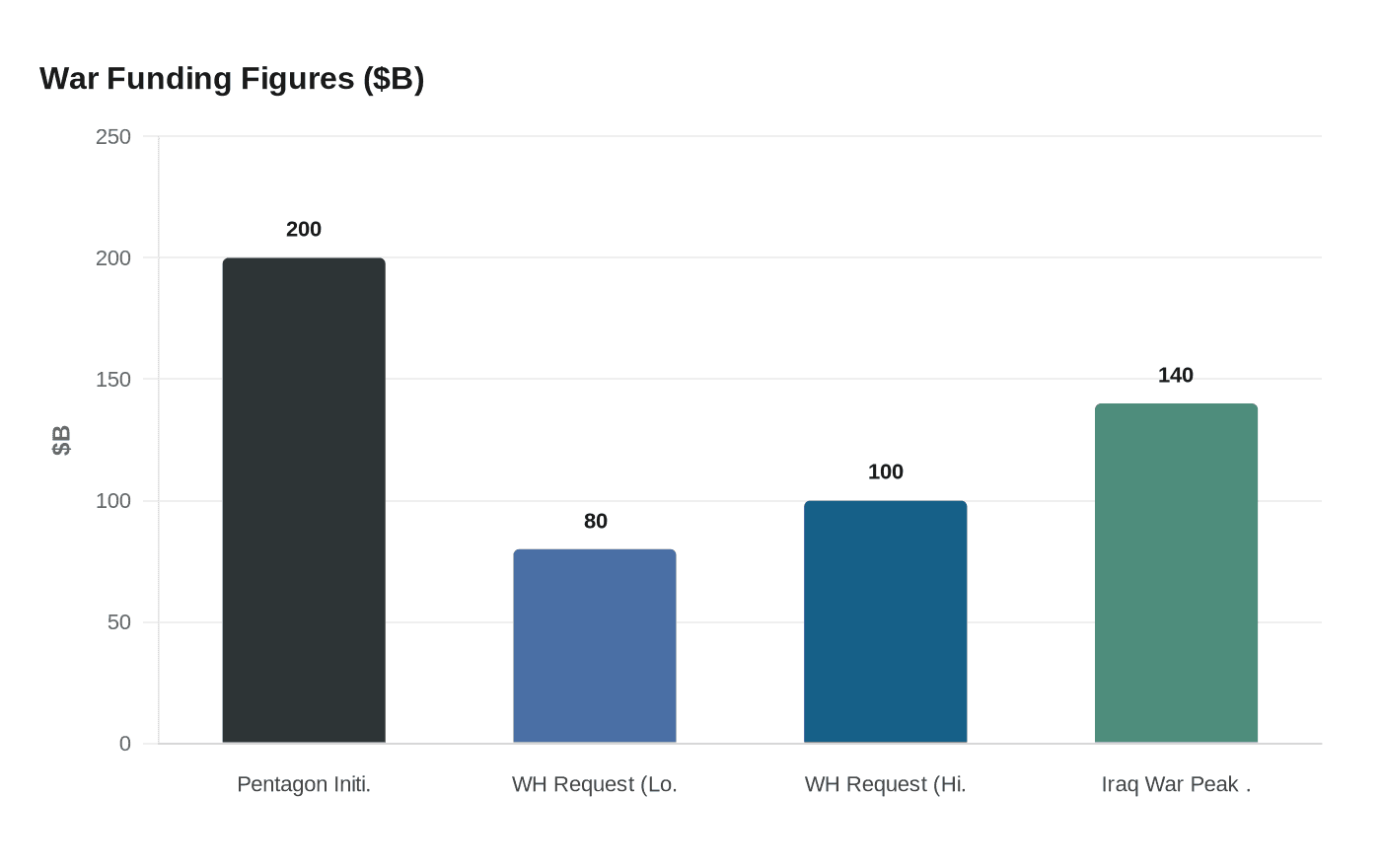
The White House's Iran war funding ask is expected to land at $80–$100 billion, cutting the Pentagon's original $200 billion proposal by more than half amid fierce congressional resistance.
The Trump administration signaled a significant retreat from the Pentagon's initial war funding ambitions, with officials saying the White House planned to ask Congress for between $80 billion and $100 billion to cover costs of Operation Epic Fury, less than half the $200 billion-plus the Defense Department had submitted to the Office of Management and Budget weeks earlier.
The scaled-back figure carries a message beyond simple arithmetic. By setting the request well below the Pentagon's ceiling, the White House appeared to be defining the conflict's near-term scope on its own terms: enough to replenish depleted munitions stockpiles, sustain ongoing deployments, and reconstitute weapons reserves consumed since U.S. and Israeli forces launched strikes against Iran on Feb. 28, but short of the kind of open-ended appropriation that would invite a prolonged congressional battle.
Defense Secretary Pete Hegseth had acknowledged as much in late March when he confirmed the Pentagon sent OMB a $200 billion request, adding the number "could move." The war, which the administration branded Operation Epic Fury, has burned through what military analysts described as years' worth of critical munitions at an estimated cost of up to $2 billion per day. Kevin Hassett, director of the National Economic Council, put spending at roughly $12 billion as of mid-March, but that figure was widely viewed as incomplete.
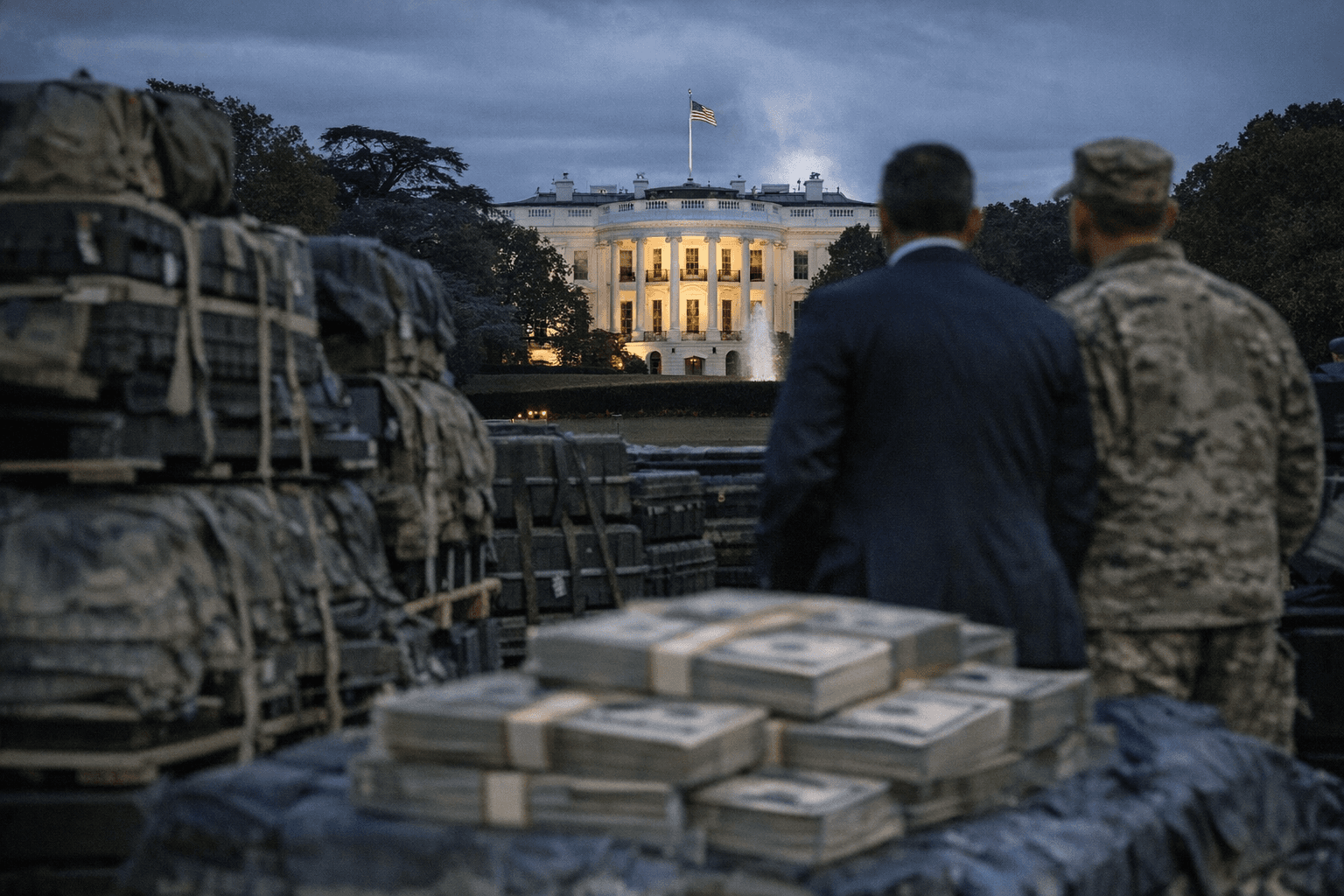
Congressional resistance on both sides of the aisle had made the larger number politically untenable. Republican fiscal hawks, unwilling to hand the Pentagon a blank check, demanded spending offsets and operational clarity before any vote. House Budget Committee Chairman Jodey Arrington said he had $600 billion in potential cuts "in a drawer," but cautioned that reconciliation, not a traditional supplemental, was likely the only viable legislative vehicle given Democratic opposition. Sen. John Kennedy of Louisiana put the skepticism more bluntly: "You gotta show me the candy before I'll get in that car."
Democrats offered no such candy. House Minority Leader Hakeem Jeffries accused the administration of waging a "reckless war of choice," and Sen. Ruben Gallego of Arizona, an Iraq War veteran, noted that at the height of that conflict the U.S. spent roughly $140 billion per year. A $200 billion ask, Gallego argued, implied planning for a far longer war. The answer, he said, was "a simple no."
The compressed request does not resolve those tensions; it reframes them. Congress will now press the White House to account for what the $80 billion to $100 billion actually covers, what costs are being absorbed by existing Pentagon accounts, and whether the lower figure reflects a genuine assessment of the conflict's expected duration or simply a negotiating opener designed to survive a floor vote. With the national debt at $39 trillion and interest payments exceeding $2 billion per day, the question of offsets will define the oversight fight ahead. Appropriations Chair Susan Collins and Senate Appropriations ranking member Patty Murray had both said they had not yet seen the formal request, a signal that the hardest negotiations had not yet begun.
This article was produced by Prism’s automated news system from verified source data, official records, and press releases, then run through automated quality and moderation checks before publishing. The system is built and supervised by the people who set the standards it runs under. Read our full AI policy.
Did this article answer your question?

