White House weighs criminal case against Raúl Castro amid Cuba pressure
Washington is weighing a case against Raúl Castro as Cuba reels from fuel shortages and blackouts, testing whether legal pressure can force change.

The White House is escalating pressure on Havana on several fronts at once, and the most consequential may be a criminal case aimed at Raúl Castro, the 94-year-old former Cuban president. The potential indictment would center on the February 24, 1996 shootdown of two unarmed Brothers to the Rescue Cessnas, an attack that killed Carlos Costa, Armando Alejandre Jr., Mario de la Peña and Pablo Morales.
Any case would have to clear a grand jury and is being pursued through the Justice Department’s Southern District of Florida investigation, a venue that carries obvious political and historical weight in southern Florida. Brothers to the Rescue was a Florida-based exile humanitarian group that searched the Florida Straits for Cubans fleeing the island on rafts, making the episode one of the most charged flashpoints in U.S.-Cuba relations. The legal move would not just revisit a 30-year-old atrocity; it would test whether Washington can turn accountability into leverage, or only deepen the standoff.
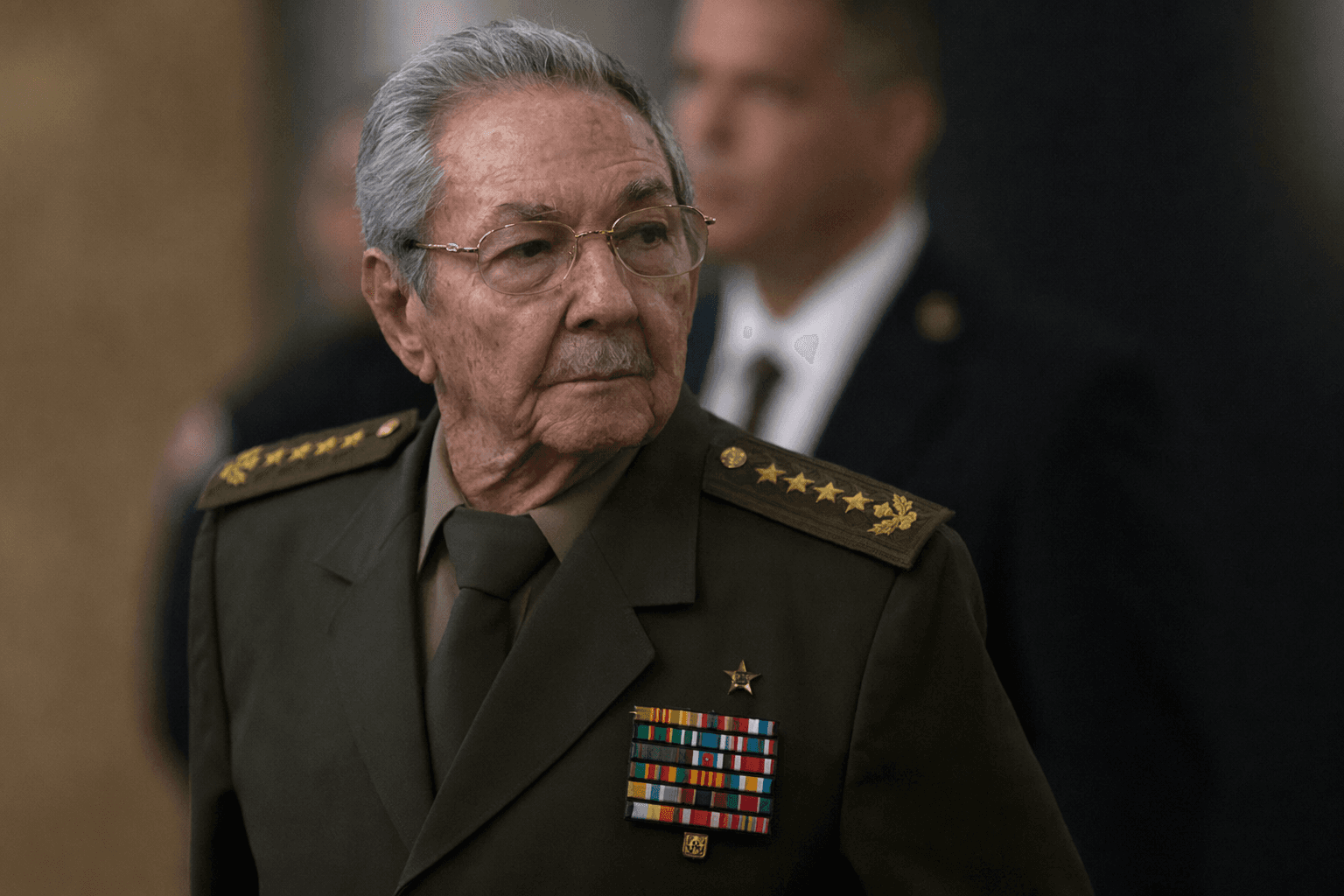
The pressure campaign is unfolding alongside a rare diplomatic contact. CIA Director John Ratcliffe traveled to Havana on May 14 and met with senior Cuban officials, including Raúl Guillermo Rodríguez Castro, Interior Minister Lázaro Álvarez Casas and Cuba’s intelligence chief. Ratcliffe delivered a blunt message: Washington was prepared to expand economic and security engagement only if Cuba made fundamental changes. That message came as the State Department restated an offer of an additional $100 million in direct humanitarian assistance for the Cuban people through the Catholic Church and other independent organizations.
The timing was also shaped by Cuba’s worsening economic crisis. Reuters reported on May 13 that the island had completely run out of diesel and fuel oil, while blackouts in Havana were lasting 20 to 22 hours a day. At the same time, U.S. military and intelligence aircraft were stepping up surveillance near the island, with P-8A Poseidon, RC-135V Rivet Joint and MQ-4C Triton flights among at least 25 intelligence-gathering missions in recent weeks.
The Venezuela comparison is central to the White House’s thinking. In January 2026, Venezuelan leader Nicolás Maduro was brought to New York to face drug-trafficking charges, and Washington is signaling that a similar playbook could be applied to Havana. Politically, that may stiffen the message to Cuba’s Communist Party that the United States sees no safe haven for adversaries in the hemisphere. Legally, an indictment could preserve a case and constrain travel. Diplomatically, it may leave the administration with less room to negotiate unless Havana responds with the kind of fundamental shift U.S. officials say has not yet come.
This article was produced by Prism’s automated news system from verified source data, official records, and press releases, then run through automated quality and moderation checks before publishing. The system is built and supervised by the people who set the standards it runs under. Read our full AI policy.
Did this article answer your question?

