WHO revokes measles elimination status for six countries after surge
Several European nations, including the UK, lost measles elimination status after outbreaks and sustained transmission tied to falling MMR vaccination.
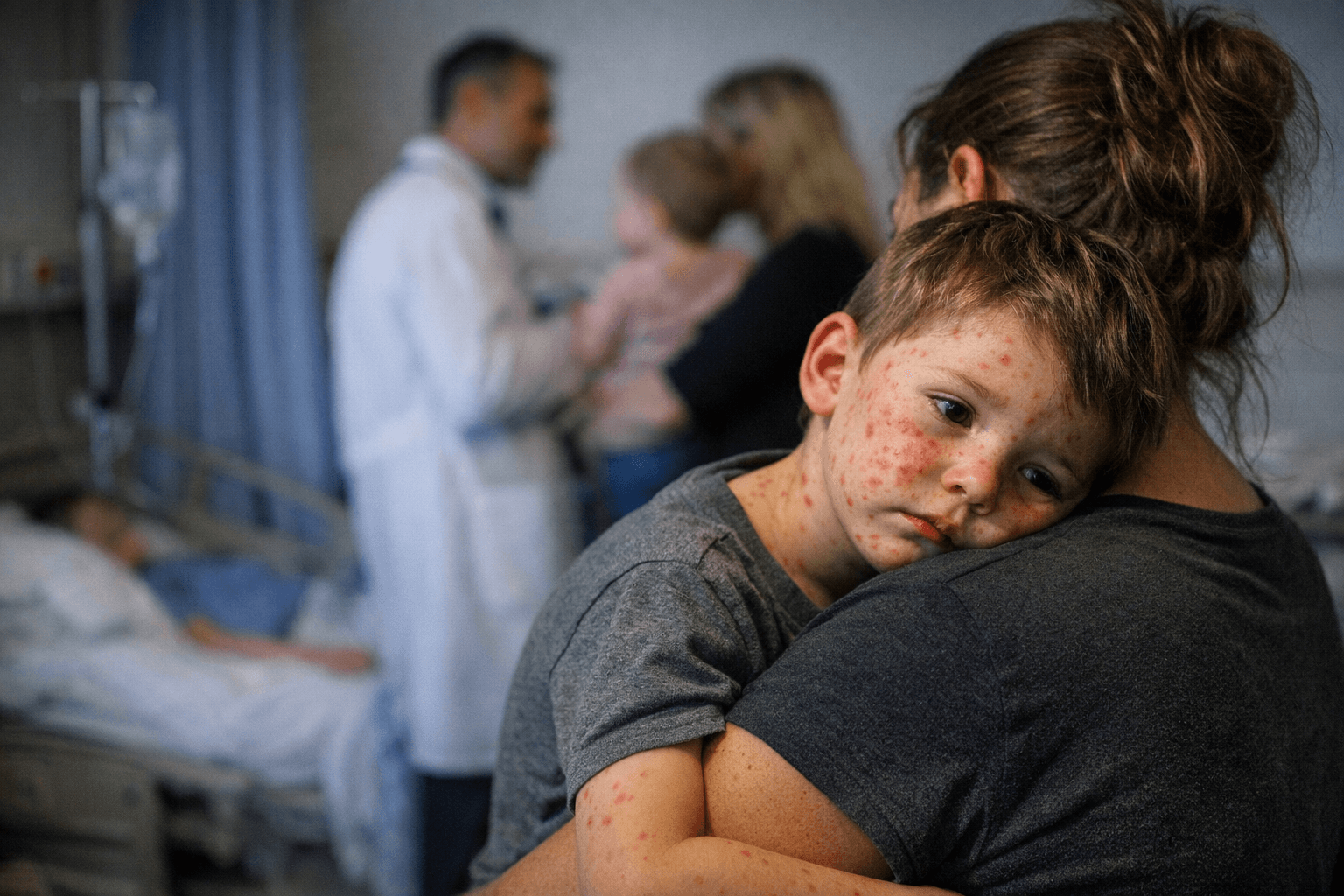
The World Health Organization announced on Jan. 26, 2026 that Britain, Spain, Austria, Armenia, Azerbaijan and Uzbekistan had lost their measles elimination status after a sharp rise in sustained transmission and multiple outbreaks across the region. The reversal marks a setback for public health authorities who had declared measles under control in pockets of Europe only a few years earlier.
Elimination, as defined by WHO, indicates the absence of endemic measles transmission for 12 months or longer in the presence of high-quality surveillance. Losing that status signals that chains of transmission persisted and surveillance and vaccination coverage were insufficient to stop spread. WHO cited rising case counts and sustained outbreaks as the primary reasons for the change, noting that declines in MMR vaccination coverage left gaps in population immunity.
Measles is among the most contagious known viruses. Public health experts typically aim for at least 95 percent coverage with two doses of measles-mumps-rubella vaccine to maintain herd immunity. Where coverage falls, the virus exploits clusters of susceptible people, producing outbreaks that can hospitalize children, cause encephalitis and, in some cases, lead to death. The groups most at risk include infants too young for vaccination, people with weakened immune systems and communities with limited access to healthcare.
Health officials say several factors contributed to the decline in vaccine coverage in recent years. Pandemic-era disruptions to routine immunization programs interrupted schedules and outreach, while persistent vaccine hesitancy and misinformation have kept uptake below recommended thresholds in some communities. Cross-border mobility and uneven access to services also created conditions for measles to reestablish transmission chains across countries.
WHO is urging affected nations to accelerate catch-up immunization campaigns, tighten surveillance and ensure rapid outbreak response measures. Strengthening routine immunization programs, expanding school and community-based vaccination access, and targeted campaigns in underimmunized neighborhoods are among the public health tools emphasized. Reclaiming elimination status will require sustained, coordinated efforts to raise two-dose MMR coverage and to detect and interrupt transmission quickly.
The return of endemic measles in parts of Europe carries broader implications for global disease control. Regions that had achieved elimination must now contend with the political and financial costs of emergency responses and the potential erosion of public trust in vaccination programs. The situation also underscores how fragile disease gains can be when routine health services are weakened and when misinformation undermines public confidence.
Restoring protection will demand clear political leadership, reliable funding for immunization and community engagement to rebuild trust. Public health officials warn that without rapid action to plug immunity gaps, more countries could face similar reversals, prolonging outbreaks and increasing preventable illness and death.
This article was produced by Prism’s automated news system from verified source data, official records, and press releases, then run through automated quality and moderation checks before publishing. The system is built and supervised by the people who set the standards it runs under. Read our full AI policy.
Did this article answer your question?


