WHO says Congo Ebola outbreak has spread for two months, may grow
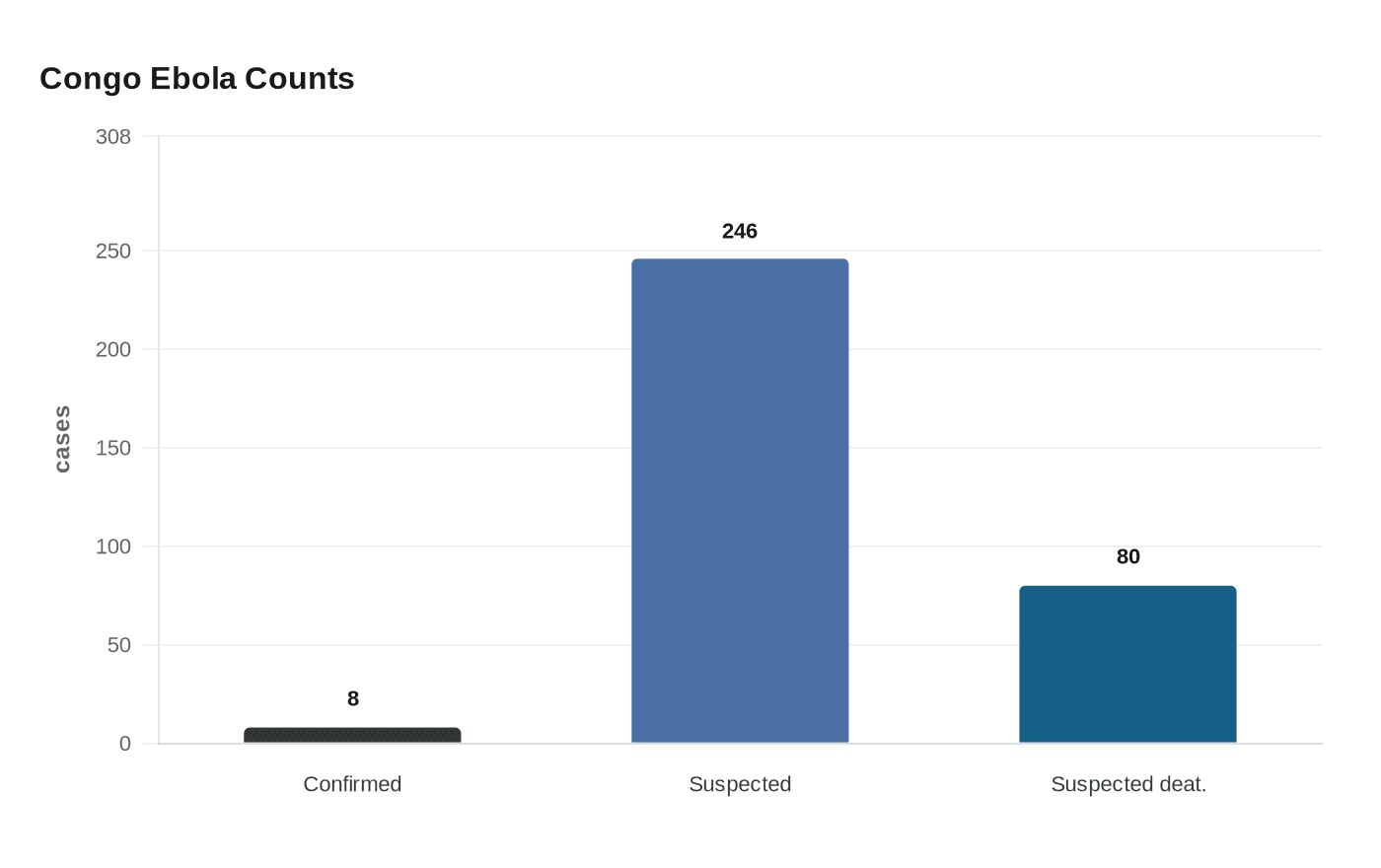
Ebola has likely been spreading in eastern Congo for two months, with 8 confirmed cases, 80 suspected deaths and signs the outbreak has already crossed into Uganda.
.png%3Fsfvrsn%3Ddb9a40db_3&w=1920&q=75)
The Ebola outbreak in eastern Congo is now testing whether containment can outrun a fast-moving crisis. The World Health Organization said the virus has likely been circulating for at least two months in Ituri Province and is expected to keep growing, with confirmed spread already tied to the less common Bundibugyo strain.
Health officials had recorded 8 laboratory-confirmed cases, 246 suspected cases and 80 suspected deaths in Ituri Province as of May 16, according to WHO. Laboratory analysis confirmed Ebola Bundibugyo in 8 of 13 samples taken from suspected cases linked to clusters of severe illness and deaths in the Mongbwalu and Rwampara health zones. WHO also said at least four healthcare workers had died, a warning sign that infection control inside clinics and hospitals may already be failing.
The outbreak has not remained inside Congo’s borders. WHO said two infected people who traveled from the Democratic Republic of the Congo were admitted to intensive care in Uganda, underscoring the danger posed by cross-border mobility, trade ties and humanitarian strain. On May 17, WHO declared the outbreak a Public Health Emergency of International Concern, while also saying it does not recommend international travel or trade restrictions.
The challenge now is speed. There are no approved vaccines or specific treatments for the Bundibugyo strain, so the response depends on finding cases early, tracing contacts, testing samples, isolating patients and preventing unsafe burials. WHO and national authorities in Congo and Uganda are scaling up surveillance, contact tracing, laboratory testing, safe burials, infection control and community engagement, a familiar post-COVID playbook that hinges on rapid coordination before local transmission becomes regional spread.
Washington has moved to backstop that effort. The U.S. Department of State said it established an interagency coordination cell in Washington on May 15 and activated a response plan within 48 hours, initially committing $13 million in foreign assistance for surveillance, laboratory capacity, risk communication, safe burials, screening and case management. The Centers for Disease Control and Prevention said it mobilized response activities after being notified through long-standing ties with the health ministries in Congo and Uganda, and said the risk to the American public remains low while it supports containment efforts and the safe withdrawal of a small number of Americans directly affected.
The outbreak is Congo’s 17th Ebola episode since 1976 and its second involving Bundibugyo virus, first identified in Uganda in 2007. That history is part of the warning now: if assistance, laboratory confirmation and contact tracing lag, a localized outbreak in Ituri could become a wider emergency before containment catches up.
Know something we missed? Have a correction or additional information?
Submit a Tip