WHO says Tenerife hantavirus risk low as cruise ship nears port
WHO says Tenerife’s risk stays low even as MV Hondius brought an Andes-virus cluster ashore. Passengers were to move through a sealed corridor to repatriation flights.
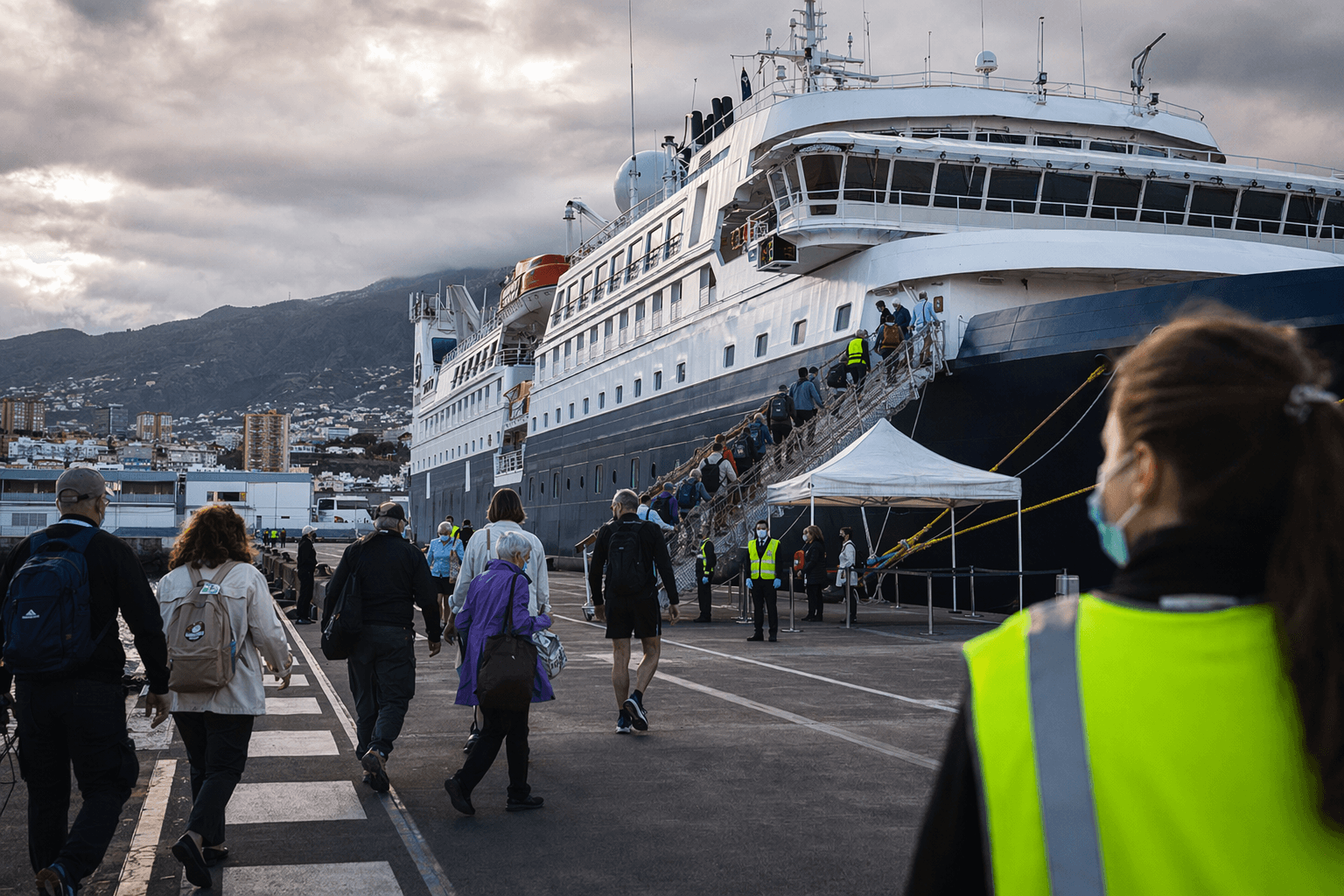
Fear moved faster than the ship, but World Health Organization officials said the public health risk to Tenerife residents remained low as the MV Hondius neared Granadilla port with a hantavirus cluster aboard. Tedros Adhanom Ghebreyesus told islanders, “This is not another Covid,” seeking to calm a public already shaken by news that eight cases had been reported, including three deaths.
The WHO said five of the eight cases had been confirmed as hantavirus, and that the virus involved was the Andes virus, the only hantavirus species known to allow limited human-to-human transmission, usually through close and prolonged contact. That distinction is central to the response: officials are treating the incident as serious, but not as a broad community threat. WHO and Spanish authorities have said nobody on board is currently showing symptoms, and they have repeatedly stressed that the danger to the general public remains low.
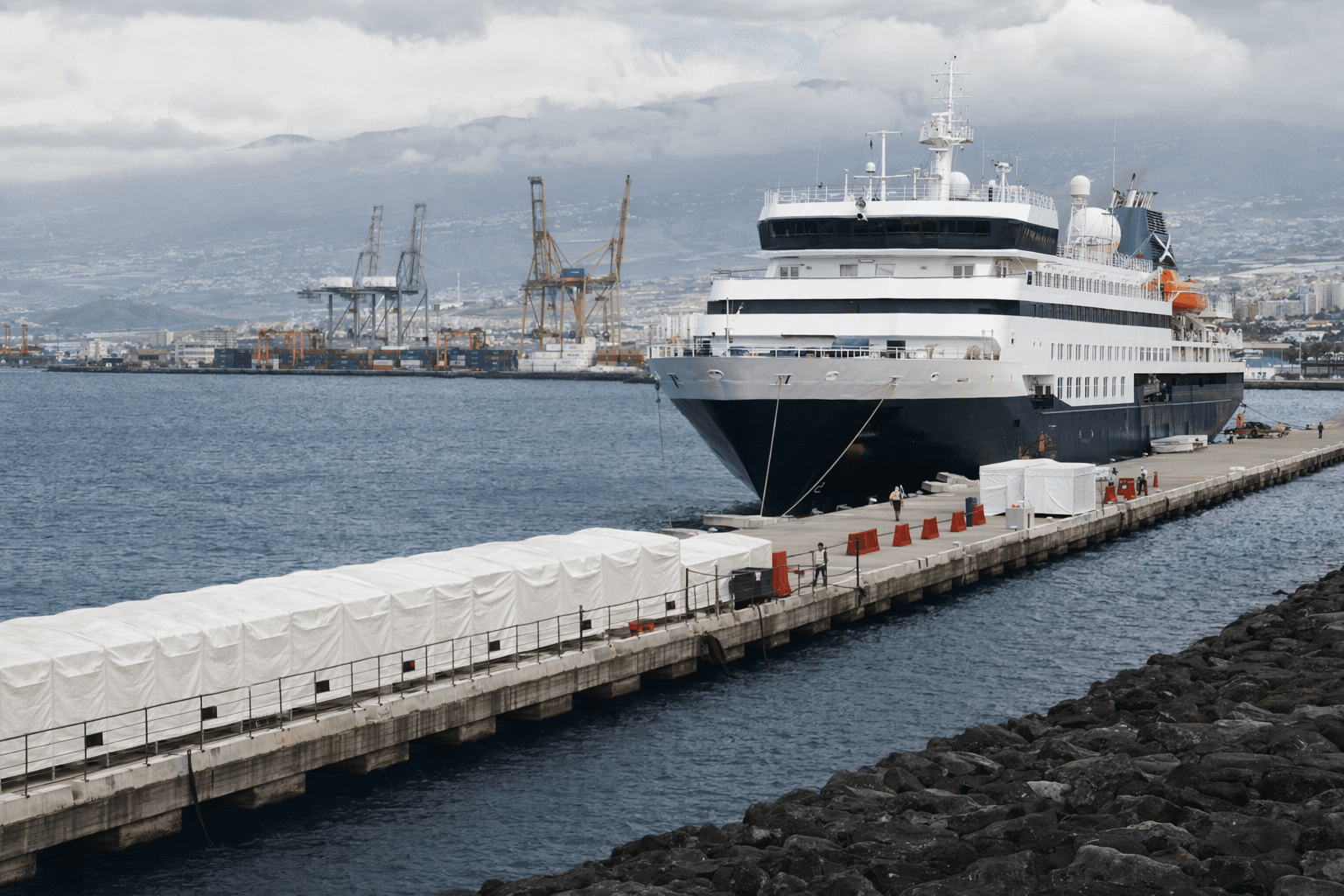
The ship, carrying about 140 to nearly 150 passengers and crew from 23 countries, was expected to arrive in the early hours of Sunday and dock at the industrial port of Granadilla, away from residential neighborhoods. Spanish authorities planned to move passengers in sealed, guarded vehicles through a cordoned-off corridor, then transfer them directly to repatriation flights. Spanish citizens were expected to disembark first. The operation was being handled under the International Health Regulations, a framework designed to manage cross-border health threats without needless disruption.
WHO said it was notified of the situation on Saturday, May 2, 2026, and sent an expert aboard the vessel. It also arranged for 2,500 diagnostic kits to be shipped from Argentina to laboratories in five countries, a measure aimed at speeding up testing and clarifying who is infected and who is not. Tedros said Tenerife was chosen because it had the medical capacity, infrastructure and humanity to help the passengers and crew reach safety.
The response has still stirred deep unease on the island. Residents and dockworkers protested in recent days, warning that even a tightly controlled arrival could damage Tenerife’s tourism-driven economy and image. The protests reflected a familiar public health dilemma: how to contain risk with precision while avoiding the kind of panic that can spread wider than disease itself. Tedros, who was traveling to Tenerife with Spain’s health minister, Mónica García, and interior minister, Fernando Grande-Marlaska, acknowledged that the pain of 2020 remains fresh.
Know something we missed? Have a correction or additional information?
Submit a Tip