WHO warns Congo Ebola outbreak outpaces response amid war
False Ebola claims spread as Congo’s outbreak raced through a war zone, with 43 cases and 33 deaths reported within days of the declaration.

False Ebola claims spread through eastern Congo as health workers tried to slow an outbreak moving through war, displacement and fear. The Democratic Republic of the Congo declared its 10th Ebola outbreak on August 1, 2018, in North Kivu province, only eight days after a prior outbreak in Équateur province was declared over.
The World Health Organization said the North Kivu-Ituri outbreak became the world’s second-largest Ebola outbreak on record. By August 3, WHO had reported 43 cases, including 13 confirmed and 30 probable, and 33 deaths. Three health-care workers were among the people affected, and one of them died. WHO said the outbreak was unfolding in an active conflict zone, a setting that made it far harder to trace contacts, move vaccine teams and keep treatment sites open.
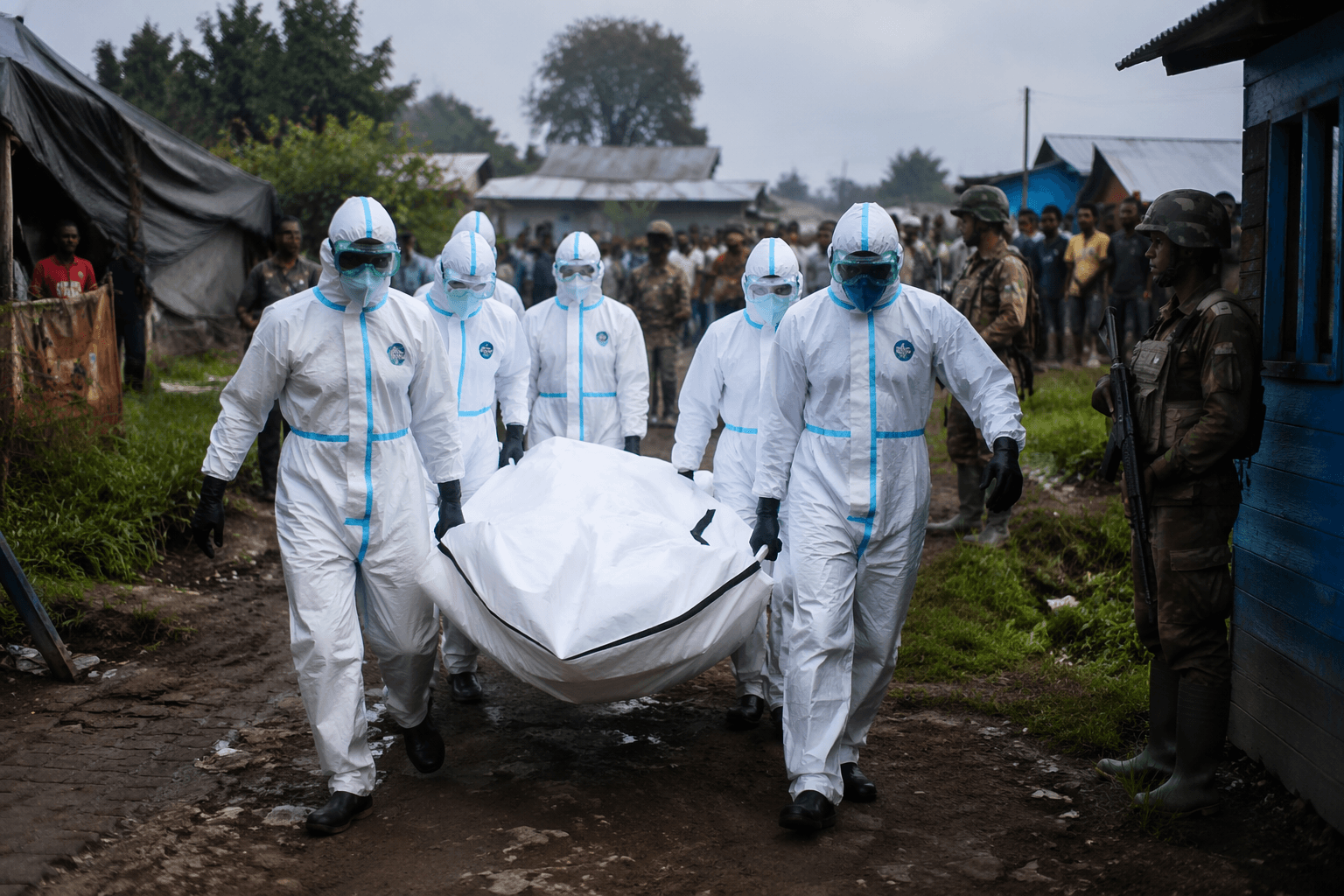
That collision between violence and misinformation became one of the outbreak’s defining features. Health officials needed communities to believe that reporting symptoms early, accepting vaccination and cooperating with contact tracers could break chains of transmission. Instead, rumors and mistrust spread alongside the virus, feeding fear of treatment centers and weakening the response at the exact moment when speed mattered most. WHO said the outbreak involved four separate locations, including an urban center linked by river to Kinshasa and neighboring countries, raising the risk that confusion in one place could quickly become a regional problem.
The human toll deepened as the outbreak spread. By September 16, UNICEF said there were more than 140 reported cases, and children were an unusually large share of those affected. Many were already coping with the illness or death of parents and other loved ones, a sign that Ebola was tearing through households as responders struggled to reach them. In displacement settings, the response was often improvised and thinly resourced, with basic infection control made harder by shortages of water and equipment.
WHO later declared the outbreak over on June 25, 2020, after nearly two years and 2,287 lives lost. The agency used a 42-day benchmark, two incubation periods with no new cases, before closing the outbreak. Tedros Adhanom Ghebreyesus and Matshidiso Moeti marked that end, but the warning from 2018 still stands: in eastern Congo, Ebola did not spread only through contact with bodily fluids. It also spread through insecurity, rumor and the erosion of trust, which turned every delay into another opening for the virus.
This article was produced by Prism’s automated news system from verified source data, official records, and press releases, then run through automated quality and moderation checks before publishing. The system is built and supervised by the people who set the standards it runs under. Read our full AI policy.
Know something we missed? Have a correction or additional information?
Submit a Tip