Why Cheap Renewables Haven't Lowered Energy Bills for Europeans
Solar and wind now generate nearly half of Europe's electricity, yet household bills in many countries remain stubbornly high. The reason lies not in generation costs but in market architecture, grid bottlenecks, and policy choices.
Solar panels and wind turbines cost virtually nothing to run once they're built. Fuel is free, and the marginal cost of producing one additional megawatt-hour from either technology hovers near zero. By that logic, a continent that generated 47% of its electricity from renewables in 2024, up from just 34% in 2019, should be rewarding consumers with meaningfully lower bills. For most Europeans, that reward has not arrived. Understanding why requires a tour through market design, infrastructure politics, and the stubborn physics of electricity grids.
The Merit Order: How Gas Still Sets the Price
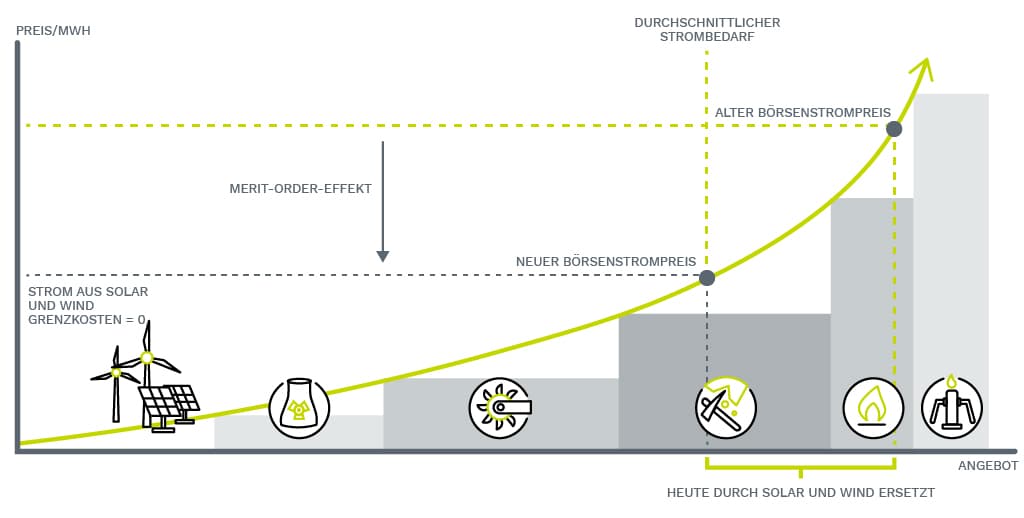
The core mechanism frustrating consumers is a pricing rule called the merit order. European wholesale electricity markets operate as a pay-as-clear auction: generators submit bids ranked from cheapest to most expensive, and the system dispatches them in sequence until demand is met. The price paid to every generator, including the wind farm that bid in at zero, is whatever the last and most expensive plant required to balance the grid actually charges.
In practice, that final plant is almost always gas-fired. Because gas plants carry significant fuel costs, they bid high, and their clearing price becomes the universal price. The electricity price is set by the most expensive supply bid accepted in the market, typically from technologies with a relatively high marginal cost located at the far-right side of the merit-order curve. The arithmetic is unforgiving: assuming the marginal plant is a gas-fired unit with 50% efficiency, and that gas trades at €50 per MWh, the marginal electricity price for the entire system will be €100 per MWh. Wind turbines generating for free collect that same €100, but so does every household paying its bill.
In 2024, EU gas wholesale prices averaged nearly five times those in the United States, a gap that widened after Russia's invasion of Ukraine severed pipeline flows that European power systems had been calibrated around for decades. Even as renewables displaced gas in the actual generation mix, the gas price remained the dominant signal in the pricing mechanism.
Your Bill Is Only Half Wholesale
A second layer of complexity sits between the wholesale market and the invoice on a kitchen table. The wholesale electricity price accounted for just 48% of household electricity bills in 2024. The remainder consists of network charges for maintaining and expanding transmission and distribution infrastructure, taxes, surcharges, and levies that governments have historically used to fund renewable deployment. These fixed costs do not fall when the wind blows harder.
Some governments have already successfully reduced electricity prices through policy design changes. Germany managed to reduce annual household bills by 16% by taking its levy for renewable energy support off electricity bills and placing it onto general tax revenue. That single accounting change made electricity cheaper without altering a single turbine or panel. It is a useful illustration of how much of the "high bill" problem is a political construction, not a physical one.
Grid Bottlenecks and the Storage Gap
Even setting aside pricing mechanics, the physical grid is blocking savings that renewables could otherwise deliver. Electricity cannot simply be generated anywhere and consumed anywhere else. Transmission lines have finite capacity, and Europe's grids were designed around a different energy system, one built on large, centralized fossil fuel plants located near industrial centers, not distributed wind farms hundreds of kilometers from demand.
Across Europe, roughly 500 gigawatts of ready-to-connect renewable projects sit idle because transmission and distribution networks have not yet been upgraded to absorb them. These grid constraints caused approximately €7.2 billion of curtailed clean energy in 2024. That is energy that was generated, or could have been generated, but had no path to consumers.
Germany illustrates the problem acutely. Renewable energy in Germany is generated across distributed locations, with wind concentrated in the north and solar spread across all regions, but must be transported to consumption centers in the industrial south and west. The infrastructure costs of this transmission burden are borne by electricity consumers through network charges. Grid bottlenecks meant that 3.5% of Germany's renewable electricity could not reach end consumers in 2024, and grid congestion management costs reached €2.9 billion that year.
Storage compounds the problem. When solar generation peaks on a sunny weekend afternoon and demand is low, grids cannot absorb the surplus. Negative prices occurred frequently in 2025 when demand was weak, such as on weekends or during mild weather, while renewables continued generating at full capacity. Together, these conditions created periods where supply far exceeded demand, forcing wholesale prices below zero far more often than in previous years. Consumers, however, rarely see negative prices on their bills. The savings evaporate into balancing costs, curtailment payments, and grid management fees.
Germany: Clean Energy, Expensive Electricity
Germany is the starkest example of the paradox. Renewables accounted for 59% of Germany's electricity generation in 2024, with onshore wind alone supplying 25.9% as the single largest source. Yet German households paid nearly 40 cents per kilowatt-hour in 2024, significantly more than consumers in countries like Hungary and Bulgaria where state subsidies suppress retail prices to around 10 cents.
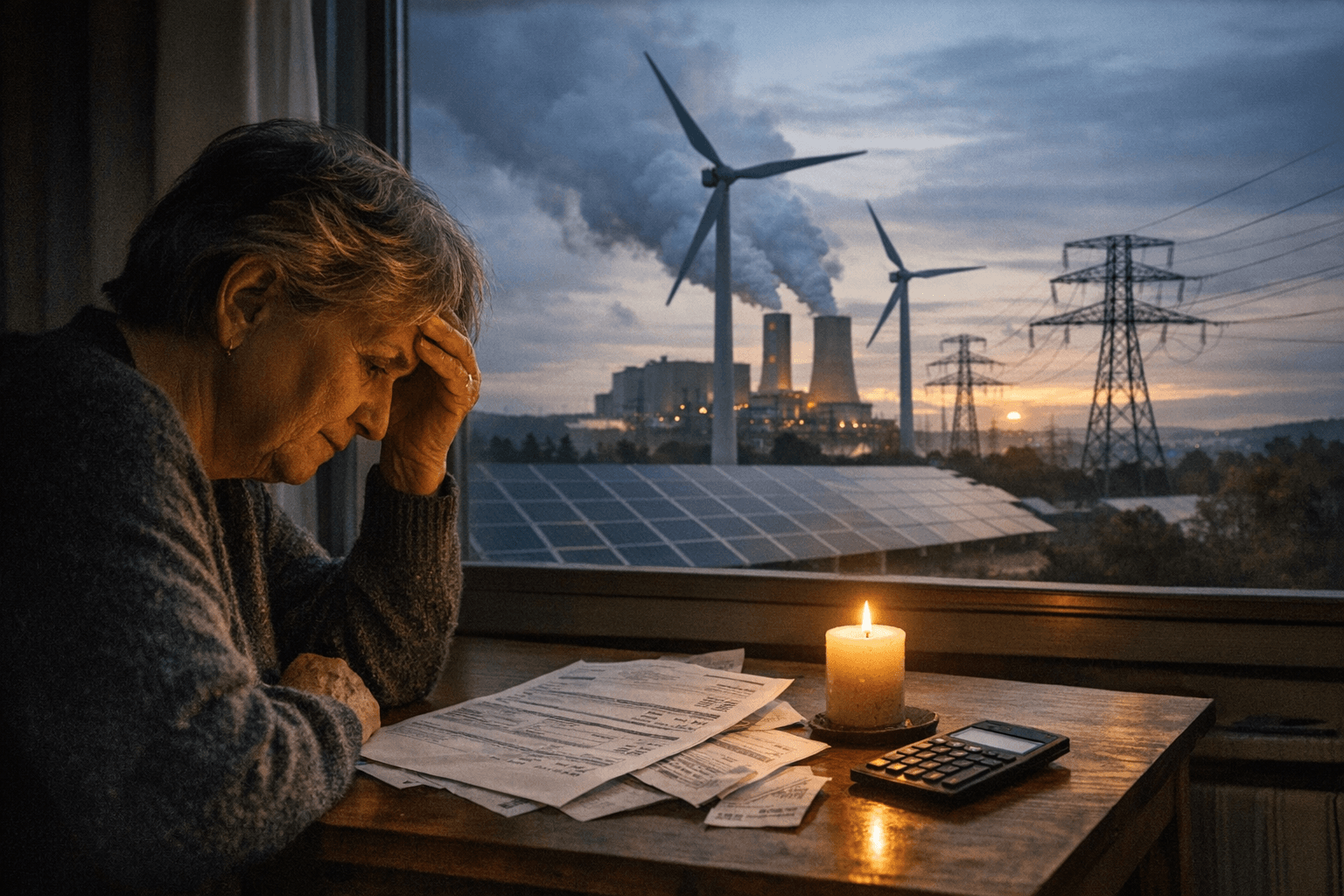
The average German household with annual consumption of 3,500 kilowatt-hours paid €115.6 per month in 2025. Around 4.2 million Germans, roughly 5% of the population, reported being late on utility bill payments in 2024. The transition also carried another structural shock: 2024 was Germany's first full year of operation without any nuclear power, after the country's last three plants were closed in 2023, removing a stable, low-marginal-cost source from the grid and increasing reliance on gas for balancing.
Spain: The Exception That Proves the Rule
Spain offers a contrasting lesson in what happens when renewable penetration becomes deep enough, and market conditions align, to actually displace gas from the price-setting role. Between December 2019 and June 2025, Spain added 40 gigawatts of renewable energy capacity, more than any other EU country except Germany. The difference is that Spain's grid geography and policy framework allowed those plants to actually shift prices.
In Spain, gas influenced the electricity price in only 15% of hours in the early months of 2026, compared to the majority of hours in many other European countries. The impact on wholesale prices has been decisive: Spain's average hourly electricity price in the first half of 2025 was 62 €/MWh, well below the cost of generating electricity with gas, which averaged 111 €/MWh over the same period.
The savings cascaded through to import bills. Between 2020 and 2024, Spain cut its power sector import bill more than any other EU country, with new solar and wind farms avoiding 26 billion cubic metres of gas imports costing €13.5 billion, almost five times what Spain invested in its transmission grid over the same period. A 20 percentage point increase in Spain's renewable share from 2021 to 2024, driven by solar and wind, reduced wholesale electricity prices by almost 20%. Household prices followed: Eurostat recorded Spain's average electricity price for household consumers at roughly €0.23 per kWh in the second half of 2024, among the lowest in Western Europe. Projections suggest Spain's prices could remain as much as 60% below the EU average in the years ahead if solar and wind capacity continues expanding.
What It Will Take to Close the Gap
Spain's experience is not luck. It reflects a specific combination of factors: enough renewable capacity installed fast enough to regularly push gas off the price-setting position, sustained grid investment that prevents bottlenecks from swallowing the gains, and a market environment where wholesale savings transmit to retail bills. That chain of conditions is precisely what most of Europe has not yet assembled.
The European Commission has acknowledged that expanding the range and volume of renewable sources would help reduce the costs of energy supply for industry and citizens, and has issued guidance to EU countries on accelerating grid rollout, storage infrastructure, and future network tariff design. A University of Cambridge study published in early 2025 found that electricity prices across Europe could stabilize if 2030 renewable targets are met, though stabilization is a considerably more modest promise than the dramatic bill reductions many consumers were led to expect.
The fundamental lesson from comparing Germany and Spain is that generation costs are only one variable. Market design determines whether the savings from cheap wind and solar actually reach consumers, or whether they get captured as windfall profits by gas generators benefiting from marginal pricing. Grid infrastructure determines whether renewable electricity can physically reach demand centers. Storage capacity determines whether surplus generation translates into lower average prices or simply into curtailment bills. Europe has invested heavily in the turbines and panels. The harder and less glamorous work of reforming the systems around them is only now beginning.
This article was produced by Prism’s automated news system from verified source data, official records, and press releases, then run through automated quality and moderation checks before publishing. The system is built and supervised by the people who set the standards it runs under. Read our full AI policy.
Did this article answer your question?