Why children near shootings face lasting trauma, and how parents can help
Children who were near the San Diego mosque shooting may carry fear long after the violence ends. Calm, coordinated adult responses can reduce harm, but lasting changes mean it is time for help.

When violence reaches children’s everyday places
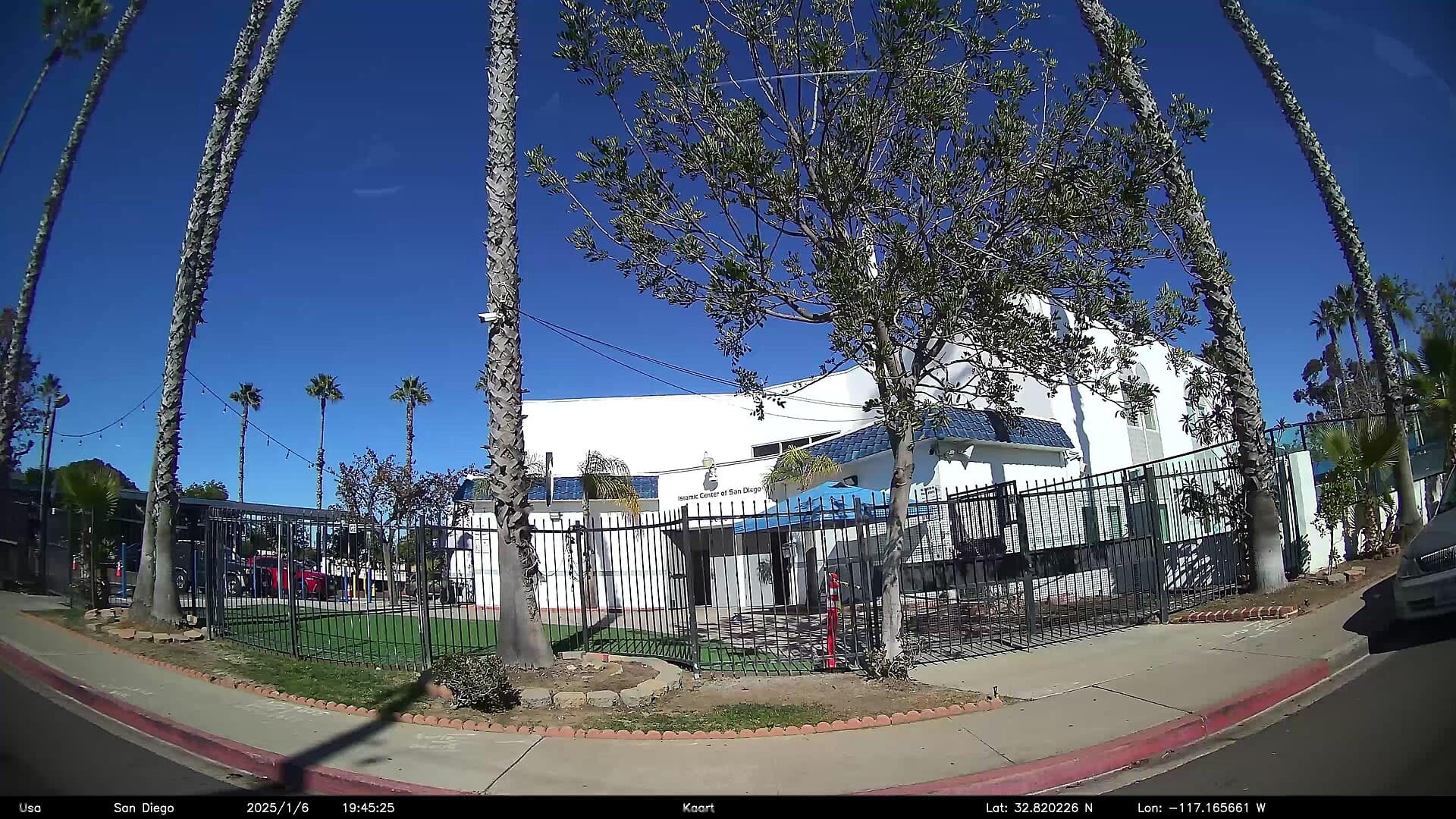
The children most likely to carry lasting psychological harm are often the ones who were closest to the gunfire, even if they were never physically injured. That is why the shooting at the Islamic Center of San Diego is so unsettling for families: reporting said three people were killed there on May 18, 2026, and the same building also houses pre-K through third-grade Islamic school classes, placing children inside the space where the attack unfolded.
That proximity matters. Children and teens who witness or live through gun violence can absorb terror from the scene itself, from the adults around them, and from the steady uncertainty that follows. The impact does not stop at the site of the shooting. It can spread through a congregation, a school community, and a neighborhood, especially when children have to return to the same hallways, classrooms, or worship spaces where they felt danger.
How trauma can show up in children
Trauma after mass violence does not always look like tears. The National Child Traumatic Stress Network says common reactions can include fear, sleep problems, behavior changes, regression, and persistent distress. Children may also have trouble concentrating, feel unusually irritable, or struggle to separate from caregivers after an event that shook their sense of safety.
Those reactions vary by age. Younger children may cling, become more fearful at bedtime, or seem to act younger than they are. Older children and teens may withdraw, get angry more easily, or find it hard to focus at school. What looks like defiance, laziness, or drama can instead be a child’s nervous system stuck in alarm.
The most important signal is not whether a child reacts, but whether the reaction starts to interfere with daily life. If sleep, schoolwork, worship, friendships, or the ability to be apart from a trusted adult starts to unravel, the child may need more than patience alone.
What parents, teachers, and faith leaders can say in the first days
After a shooting, children take their cues from the adults around them. The National Child Traumatic Stress Network says children’s and teens’ reactions are strongly influenced by how parents, relatives, teachers, and other caregivers respond. That makes the first conversations especially important.
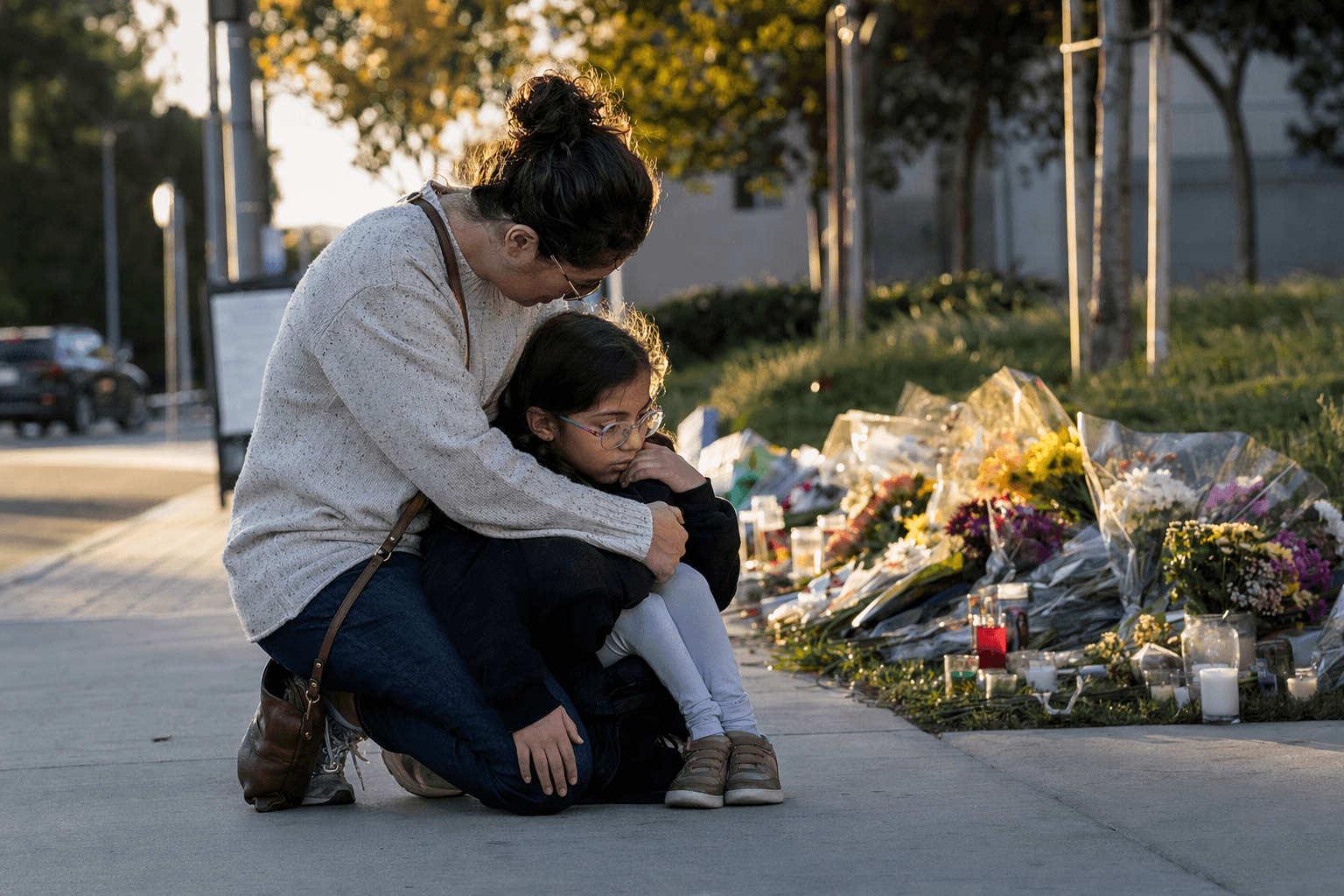
Start with calm, simple truth. Children do better when adults name what happened without graphic detail, stay steady, and avoid speculation. If you do not know an answer, say so. What children need most is a trusted adult who can help them make sense of the event without making the world seem even more chaotic.
In the first days, focus on three jobs: keep children close, keep information age-appropriate, and keep routines moving as much as possible. Teachers can let students know what the schedule will be for the day, while faith leaders can create quiet, predictable spaces for prayer, checking in, and regrouping. Home, school, and congregation should not send conflicting messages about safety or blame.
- “You are safe right now.”
- “It makes sense to feel scared, sad, or angry.”
- “Adults are here to help and to protect you.”
- “You can ask me anything, and I will tell you what I know.”
Helpful responses are often the simplest ones:
The goal is not to erase fear. The goal is to keep fear from becoming overwhelming and isolated. SAMHSA’s trauma and violence resources point caregivers toward parent guidance after a recent shooting for exactly this reason: children recover better when the adults around them stay connected, honest, and regulated.
When worry becomes a sign to get professional help
Some distress is expected after mass violence. What matters is whether symptoms are easing or deepening. If a child’s fear, sleep problems, irritability, behavior changes, or concentration problems persist, intensify, or make everyday life harder, it is time to bring in a professional.
Warning signs include ongoing nightmares, refusal to go to school or worship, repeated separation panic, sudden regression, explosive behavior, or a child who seems emotionally shut down for days or weeks. If a child cannot settle, cannot sleep, or cannot function the way they usually do, a pediatrician, school counselor, child psychologist, or trauma specialist should be part of the response.
Julie Kaplow of The Meadows Institute, speaking in coverage of the San Diego mosque attack, stressed that children need trauma and grief informed support after violence like this. That approach matters because children are not only processing fear. They may also be grieving people they knew, a place they loved, or the loss of a sense of belonging.
Why this is a public health issue, not only a family crisis
Gun violence is not just a private tragedy. The CDC says firearm injuries and deaths remain a major U.S. public health problem, and KFF reported in March 2026 that nearly 22,000 children and adolescents died by firearm over the past decade. KFF also reported that the firearm death rate for people ages 17 and younger held around 3.5 per 100,000 from 2021 to 2023, then declined to 3.0 in 2024, still above pre-pandemic levels.
The burden is not shared equally. Research summarized by the CDC shows Black and Latinx youth are more likely to experience gun homicide, and exposure to gun violence is linked to depression. The same research found boys in the most disadvantaged communities, especially Black boys, faced the greatest risk of exposure and depression. That means trauma after shootings is tied to inequality, neighborhood disinvestment, and the uneven distribution of safety in American life.
This is why prevention policy belongs in the same conversation as counseling. The Johns Hopkins Center for Gun Violence Solutions has pointed to strong public support for prevention policies, a reminder that many communities want fewer children exposed to these events in the first place. Healing matters, but so does reducing the number of children who ever need this kind of help.
What communities can do now
Schools, mosques, churches, and neighborhood groups should plan together after a shooting, not work in silos. Children do better when the adults in every setting give the same basic message: the danger is being handled, they are not alone, and their reactions are understandable. That kind of coordination can lower confusion and reduce the sense that the world has split apart.
Longer term, communities need access to trauma informed care, grief support, and culturally responsive services that fit the families they serve. That is especially important in places where children already face higher exposure to gun violence and other stressors. Recovery is stronger when mental health support, school support, and public safety policy move together.
The children near a shooting may never have been touched by a bullet, but many will still carry the event in their bodies, sleep, schoolwork, and sense of safety. The adults around them can soften that impact, and systems can reduce it further, yet the clearest lesson is the hardest one: no child should have to learn fear in a place built for learning, worship, or care.
Know something we missed? Have a correction or additional information?
Submit a Tip