Why eclipse chasers travel thousands of miles for totality
Eclipse chasers cross continents for minutes of totality because the narrow shadow turns travel, science, and obsession into a high-stakes global subculture.
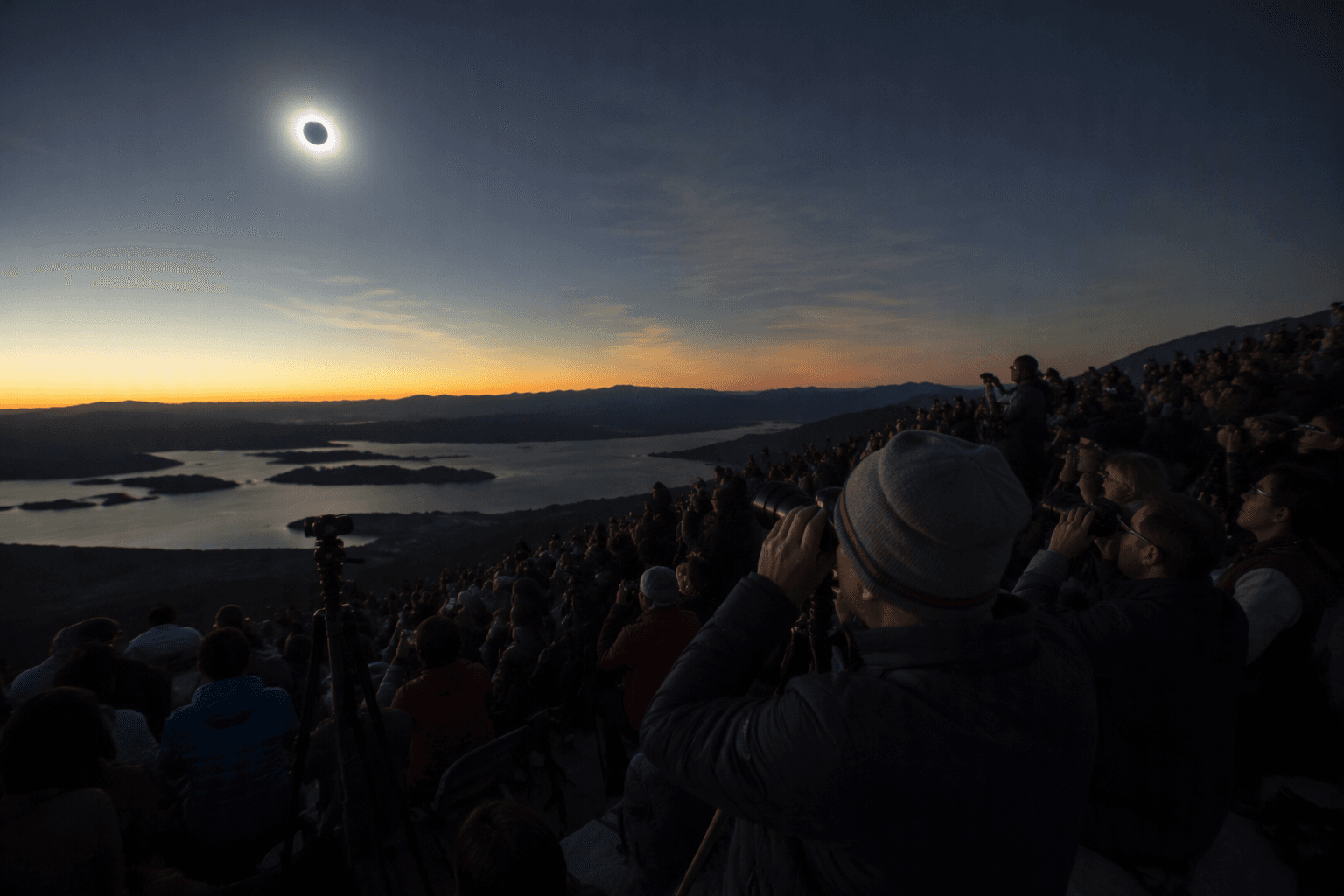
People will cross continents for a few minutes of darkness because totality is not just an astronomy event, it is a moving target. A total solar eclipse happens when the Moon passes between the Sun and Earth and completely blocks the Sun, and the sky can darken as if it were dawn or dusk. That brief plunge into shadow has built a global community of chasers who plan around narrow corridors, long drives, and the certainty that the next chance may be years away.
Why totality matters
The appeal starts with scarcity. NASA’s eclipse materials describe the 2017 U.S. totality path as roughly 70 miles wide, while other eclipse guides put the path at about 120 km wide from Oregon to South Carolina. That sliver matters because totality is the only place where the full visual and emotional payoff exists, and for many observers it lasts only minutes.
Eclipse watching has also carried a long human history. NASA’s FAQ notes that eclipses have puzzled people for thousands of years, which helps explain why a modern eclipse chase can feel both scientific and almost ritualistic. The August 21, 2017 total solar eclipse was the first coast-to-coast U.S. total eclipse since 1918, a rarity that turned one day into a national travel event.
The economics of the shadow
Eclipse travel is a logistics problem as much as an astronomical one. Great American Eclipse publishes statistics and visitation projections focused on traffic inside the path of totality, which is where the pressure concentrates as travelers funnel toward the narrow line of best viewing. In 2017, a tourism analysis said the eclipse was expected to be among the most photographed and traveled-for celestial events in U.S. history, a useful reminder that rare sky events can act like temporary magnets for hotels, highways, campgrounds, and small-town businesses.
The scale of the travel is visible in the behavior of the chasers themselves. NASA has highlighted cases of people traveling thousands of miles for totality, including a Langley intern who covered 1,340 miles to see a total solar eclipse. That kind of trip shows why eclipse tourism has its own calendar: the destination is not a city or a landmark, but a line drawn across maps by orbital mechanics.
2017 and 2024 turned the chase into a continent-sized event
The 2017 eclipse helped define the modern chase. Most viewers on the ground saw totality for less than two and a half minutes, but a NASA-funded team used two retrofitted WB-57F jet planes to follow the Moon’s shadow and extend observations to more than seven minutes. The contrast is striking: the same event compressed for most people, stretched for scientists willing to turn the sky into a moving laboratory.
The 2024 eclipse widened the audience again. NASA’s live coverage said the April 8 eclipse traveled through Mexico, across the United States from Texas to Maine, and out across Canada’s Atlantic coast. NASA and JPL also emphasize that photos cannot do justice to the in-person experience, which is why many chasers return even after seeing earlier eclipses captured in perfect image galleries.
How scientists chase the eclipse from the air
Not every eclipse observer stays on the ground. NASA’s 2024 WB-57 mission sent jets up to about 50,000 feet to cut down interference from clouds, dust, and water vapor, giving scientists clearer views of the corona. That high-altitude strategy echoes the 2017 jet mission, when the shadow was chased fast enough to extend usable observation time well beyond what most people experienced below.
The aircraft matter because eclipse science is limited by time and weather. A few extra minutes can mean a better look at the corona, and altitude can mean the difference between a clouded-out flight and usable data. In eclipse science, mobility is part of the instrument package.
The subculture is bigger than a single event
By now, eclipse chasing has its own infrastructure. There are dedicated resources such as the American Astronomical Society’s Solar Eclipse Task Force and its Solar Eclipse Across America hub, plus media built around the subject, including Totality Talks: The Solar Eclipse Podcast. That ecosystem reflects a community that mixes amateur science, travel planning, and repeat obsession, often returning for multiple eclipses over many years.
That repetition is part of the psychology. The event is so brief that it invites comparison, memory, and pursuit, which is why one eclipse can pull in first-timers while also reassembling veterans who have spent decades positioning themselves under the right patch of shadow. The chase is not only about seeing an eclipse once; it is about refining the strategy each time.
What communities can learn before the next major eclipse
The next major planning date is already fixed: the total solar eclipse scheduled for August 12, 2026. NASA, the European Space Agency, and other eclipse guides have flagged 2026 and 2027 as years that will drive travel planning and eclipse tourism, which means the early lessons from 2017 and 2024 matter now.
The practical takeaway is simple: the path will be narrow, the crowds will be concentrated, and the best viewing will not happen by accident. Communities in or near the path should expect traffic surges, short-notice lodging pressure, and heavy attention from travelers who are willing to cross states or borders for a few minutes of totality. That is the recurring economy of eclipse chasing: a rare celestial event creates a temporary travel market, and the people who understand that pattern first usually plan best.
This article was produced by Prism’s automated news system from verified source data, official records, and press releases, then run through automated quality and moderation checks before publishing. The system is built and supervised by the people who set the standards it runs under. Read our full AI policy.
Did this article answer your question?