Wildfires Doubling Forest Loss Threaten Woodturners' Timber Supply
New analyses show global forest fires now destroy more than twice the tree cover of two decades ago, shrinking and degrading timber supplies that woodturners rely on.

Forests are burning deeper and more often, and that shift matters for woodturners who depend on steady, quality timber and safe working conditions. New analyses show 2024 saw about 135,000 km² of forest burn—an area larger than England—and researchers report fires now destroy more than twice as much tree cover as they did two decades ago. The pattern is concentrated in dense forests rather than savanna and agricultural burns, shrinking the pool of high-grade logs and specialty burls that turners prize.
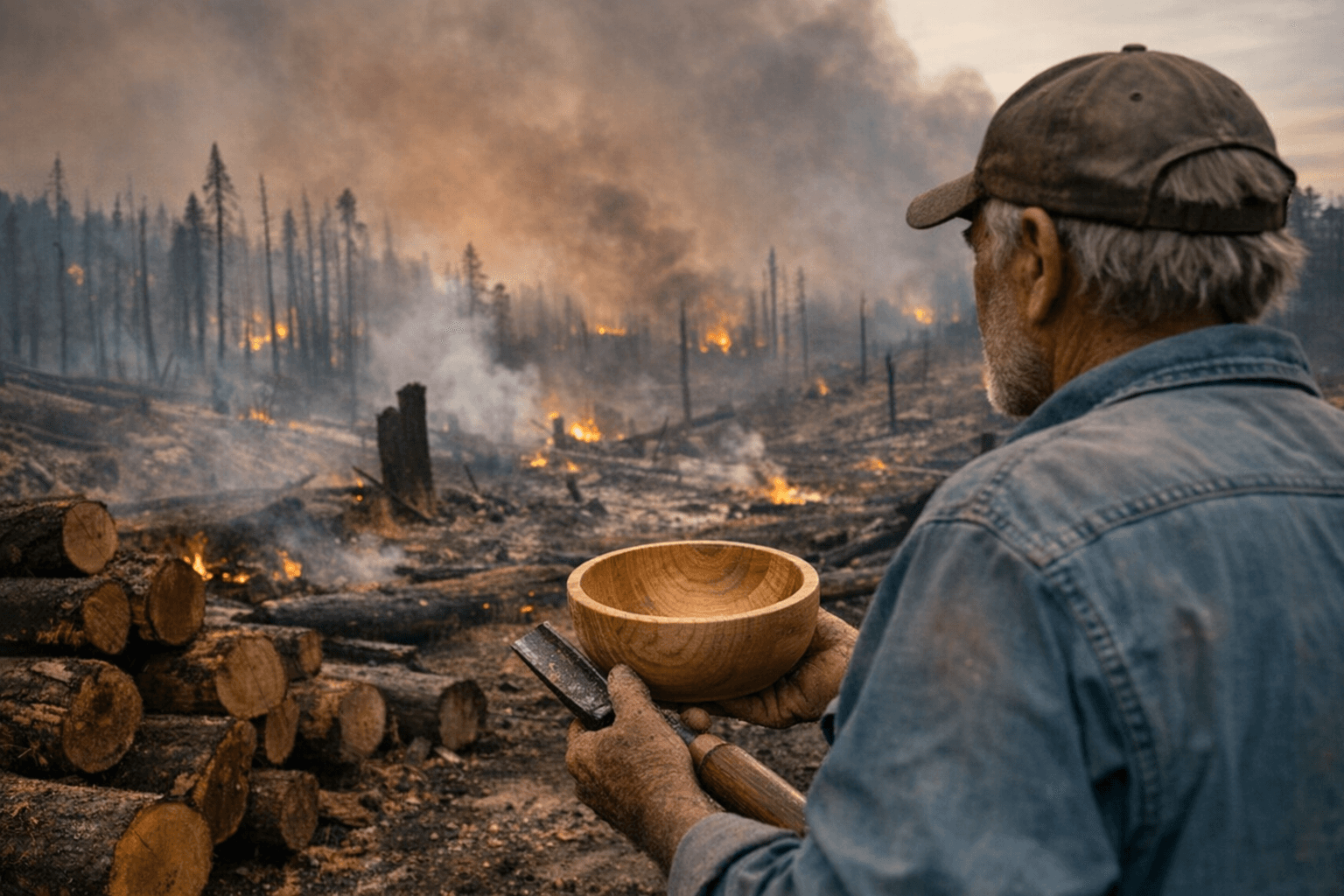
The global picture includes major losses in boreal and tropical zones: Russia has lost 623,208 km² of forest to fire since 2001, and Canada 402,664 km². In Victoria, Australia more than 400,000 hectares burned in what local authorities called the state’s worst fire emergency since 2019-20. University of Tasmania Fire Centre Research Hub data note that while total burned area has declined over decades because of fewer agricultural and savanna fires, forest fires have surged. The hottest years on record in 2023 and 2024 coincided with the most forest area burned, and scientists warn escalating temperatures and drought are changing fire behavior - fires now reach into historically wet forests and peatlands and release long‑stored carbon, setting up a climate-fire feedback loop that makes future blazes more likely and more severe.
For the woodturning community, the immediate impacts are practical and local. Timber supply chains face reduced inventories of straight-grain, knot-free blanks and rarer species that often come from older, intact stands. Salvageable wood from fire-affected areas will be available in some regions, but supply will be uneven and wood condition will vary widely. Smoke and char can change color and workability, and longer-term fungal and insect impacts may appear as burned material weathers. Fire seasons are getting longer, smoke travels thousands of miles, and firefighting resources are stretched—conditions that affect when and where logging and salvage operations can safely proceed.
Plan for those realities now. Check and diversify supply sources, keep lines of communication open with local mills and arborists, and confirm chain-of-custody and legality when buying salvage wood. Monitor air-quality advisories before cutting or working outdoors; consider indoor drying and storage options as wildfire smoke and extended seasons become more common. Community networks and local clubs can be a fast route to vetted salvage and shared information about safe harvesting windows.
The era of more intense, forest-centered fires reshapes what’s available at the lathe and when you can work safely. Expect tighter supplies for prized blanks, more variability in material, and a growing need to adapt sourcing and safety practices as the landscape and markets respond to a warming world.
Sources:
Know something we missed? Have a correction or additional information?
Submit a Tip