Wind slabs over faceted layer trigger persistent slab avalanches near Telluride
Wind slabs sitting on faceted grains produced several persistent slab avalanches near Telluride, raising the risk for backcountry skiers and snowmobilers in the Northern San Juan.
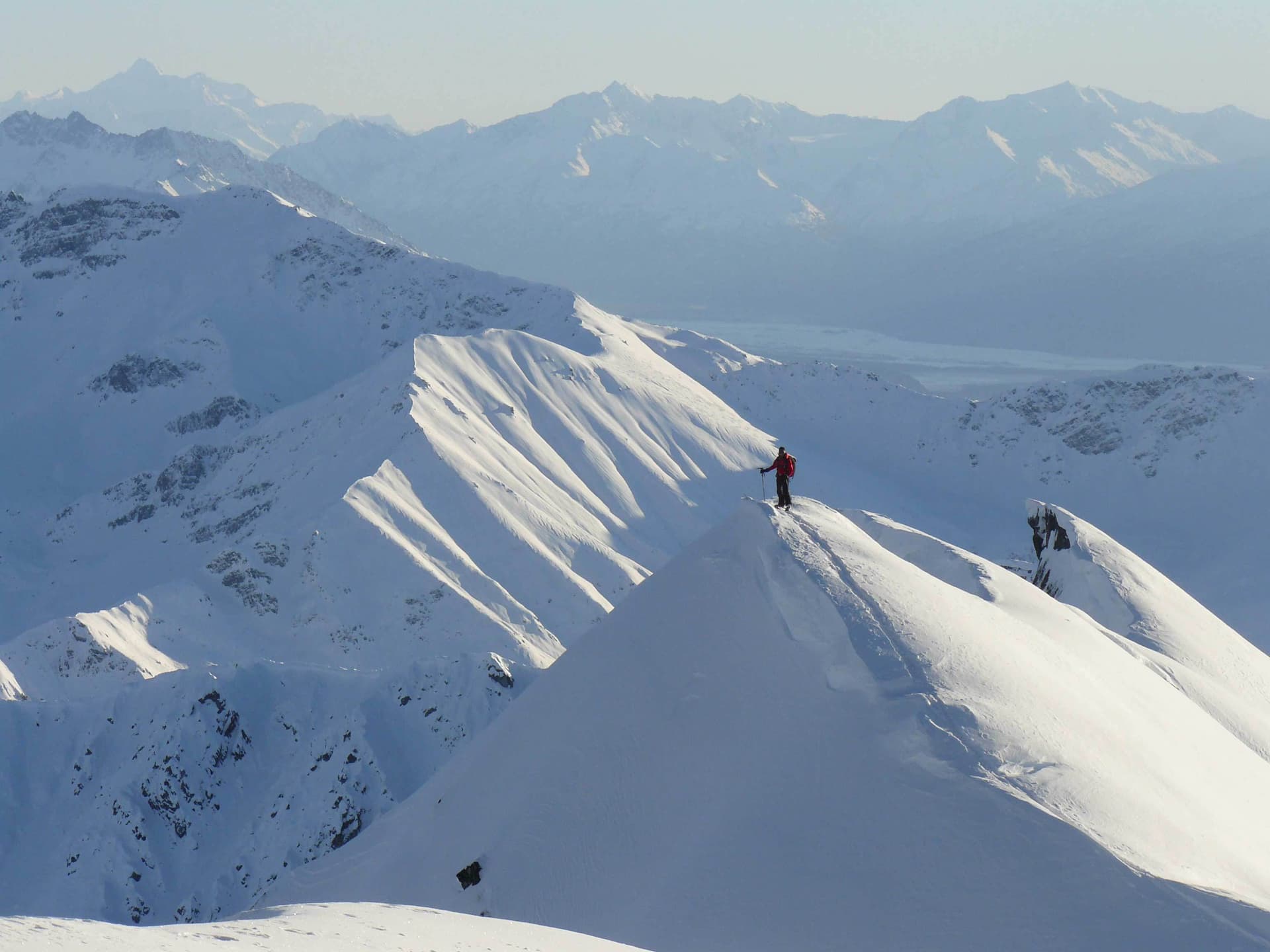
Wind-transported snow riding over a stubborn faceted weak layer produced multiple persistent slab avalanches in the Northern San Juan, with one observed crown reaching roughly 60 cm. Field observers working around Red Mountain Pass and the Telluride Peak corridor found a 4-finger (4F) wind slab below treeline on north and northeast aspects, and noted minor cracking in wind-affected terrain that underscored the instability.
Avalanches were concentrated in steep, concave features near ridgelines where wind-loading was strongest. While many crowns and debris piles looked shallow, at least one failure stepped down into old faceted grains and produced a deep crown near 60 cm. Observers reported that most slides appeared natural, triggered by wind or overload, but the combination of fresh wind slabs sitting on persistent faceted layers means human triggers remain a clear hazard where drifted slabs exist above older weak snow.
Alpine conditions showed a mix of scoured spots and wind-redistributed new snow. North and northeast facing alpine slopes developed thin wind crust or soft sastrugi in places, yet steep concavities collected significant wind drift. Clear skies and cold temperatures prevailed when the observations were made, with a WNW wind component creating transport at ridge tops. That pattern creates the classic setup for isolated but significant persistent slab failures: a slab that looks stable on the surface but is backed by a weak, reactive layer that can propagate fractures widely.
This matters to backcountry travelers departing from Durango, Telluride, or Dove Creek. The below-treeline location of some 4F wind slabs means consequences can show up at lower elevations than people expect. Carrying and practicing with avalanche rescue gear - beacon, probe, shovel - and maintaining companion rescue skills are essential. Choose conservative routes that avoid steep, wind-loaded lee slopes and recent drift deposits, and pay attention to signs of instability such as cracking or recent natural avalanches.
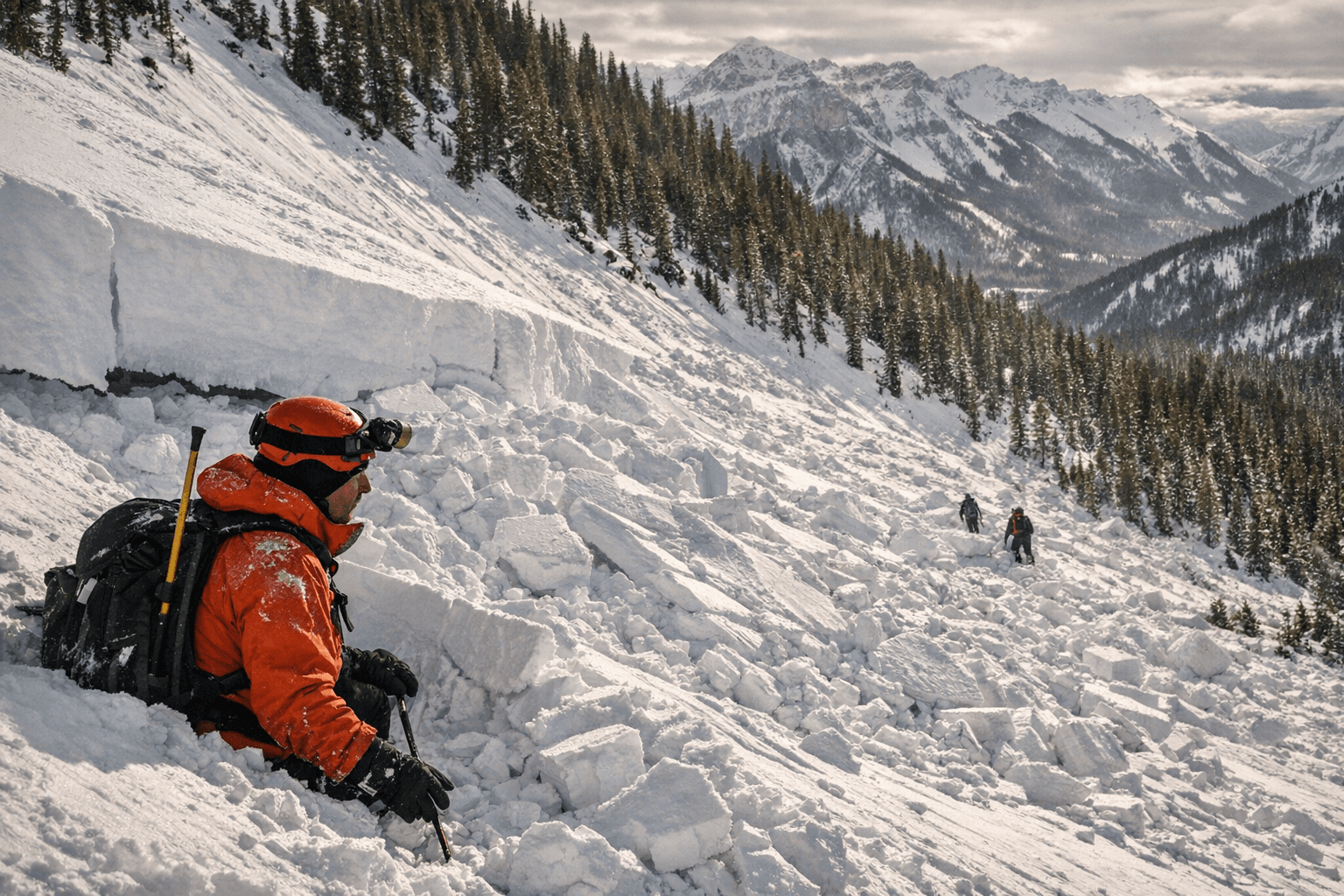
Forecasters flagged the ongoing potential for isolated large slides where wind-drifted slabs step down into older weak layers. That potential can persist until either a stabilizing warm-up, additional snowfall that buries and bonds the layer, or thorough natural decay of the facets occurs. Travelers should treat north and northeast aspects, ridgelines, and steep concave terrain as elevated risk zones until more benign conditions are confirmed.
What this episode means for the local community is straightforward: backcountry plans need to be more conservative and more intentional. Expect variable surface conditions, watch for wind-loaded features both above and below treeline, and prioritize rescue readiness and route selection before committing to steep terrain.
Know something we missed? Have a correction or additional information?
Submit a Tip