Wine fraud deepens as U.S. consumption and winery traffic decline
U.S. wine drinking fell to 2.54 gallons per person in 2024, while tasting-room traffic and revenue sagged, opening more room for counterfeiters and middlemen.

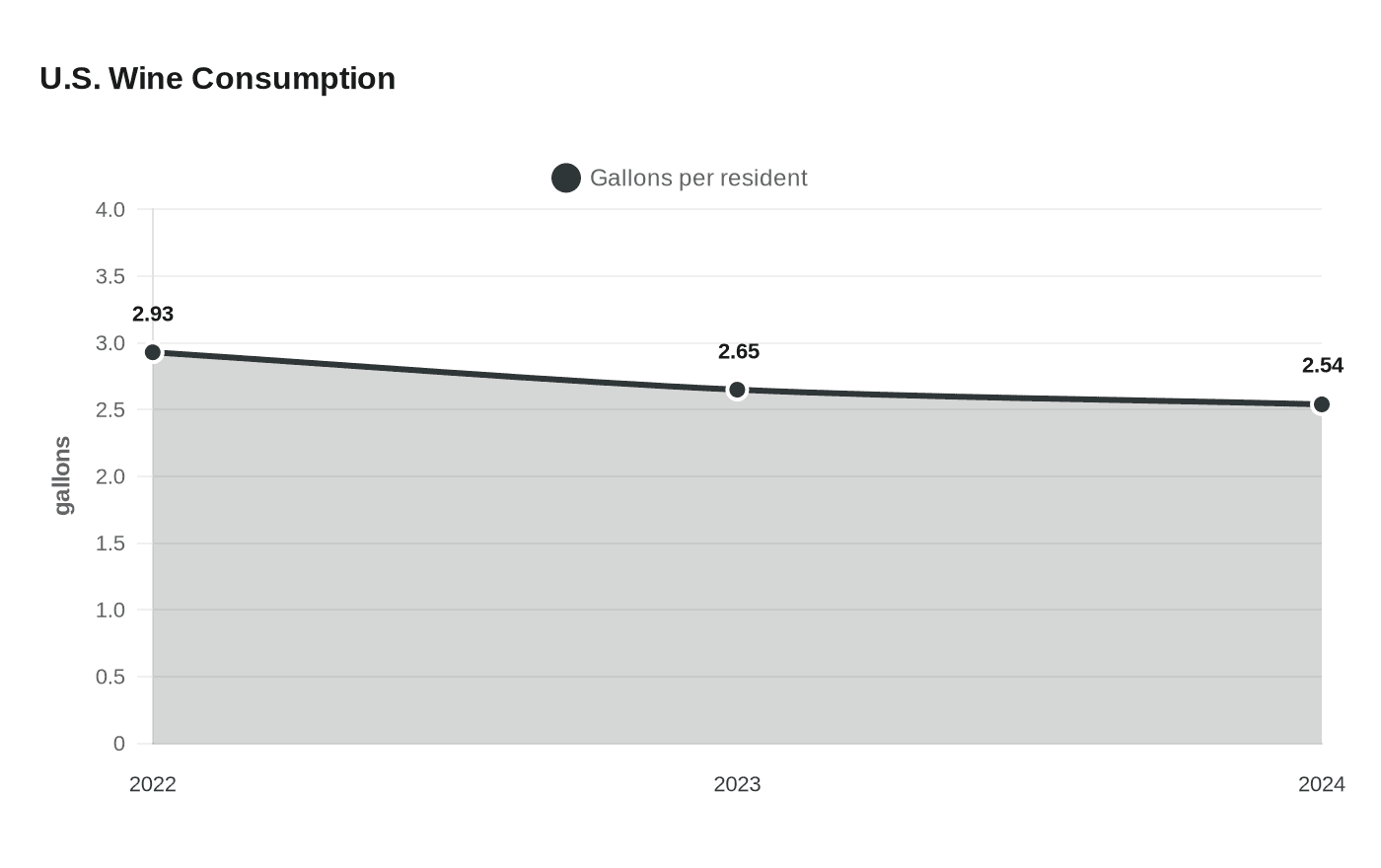
Wine’s trust problem is widening just as the market weakens. U.S. consumption fell to 2.54 gallons per resident in 2024, down from 2.65 gallons in 2023 and 2.93 gallons in 2022, with total U.S. wine consumption at 870 million gallons, a slide that leaves less room for error in an industry where authenticity is part of the product.
That softer demand is showing up in the trade as well. USDA Foreign Agricultural Service data put 2025 exports of wine, beer and spirits at $3.5 billion, below the three-year average of $3.78 billion. In California, the tasting-room business that anchors many premium labels is also under strain. One winery operator told Wine Business Monthly that total sales were down around 25% even where traffic held up. In Sonoma County, winery visitors fell 14% in 2024 and then another 8.4% in the first quarter of 2025. Napa followed with visitor counts down 3.1% in the first quarter of 2025 and tasting-room revenue down 4.5%, although 38% of Napa wineries still posted direct-to-consumer growth versus the same quarter a year earlier.
That kind of pressure creates ideal conditions for fraud. Maureen Downey, a leading authority on wine fraud, has argued that the industry cannot rely on single-layer anti-fraud tools because bottle markings, labels and QR codes can all be replicated. Her answer is digital control of the supply chain, with bottle identity systems that travel with the wine as it changes hands. The risk is not limited to forged trophy bottles. It extends through the opaque chain of distributors, resellers and intermediaries where a counterfeit can be mixed into legitimate inventory and keep moving until it reaches a collector, restaurant or retail shelf.
The warning is not theoretical. Rudy Kurniawan, the best-known modern wine counterfeiter, was sentenced in 2014 to 10 years in prison after federal prosecutors said he sold about $30 million worth of counterfeit wine and fraudulently obtained a $3 million loan. The Federal Bureau of Investigation said wealthy buyers were often seduced by his persona. More recently, former Napa Valley winemaker Jeffry Hill was arrested and later sentenced in a mislabeling case in which prosecutors said wine made from grapes produced elsewhere was sold as genuine Napa Valley product.
The pattern matters because fraud is no longer confined to rare bottles auctioned at the high end. As consumption falls, exports soften and tasting-room traffic thins, the luxury wine market becomes easier to game. The most vulnerable points are the least visible ones: the transfer between bottling and distribution, the paperwork that travels with a case, and the labels that can be copied faster than trust can be rebuilt.
This article was produced by Prism’s automated news system from verified source data, official records, and press releases, then run through automated quality and moderation checks before publishing. The system is built and supervised by the people who set the standards it runs under. Read our full AI policy.
Did this article answer your question?