Xi Jinping Urges Closer China-Russia Coordination in Beijing Meeting with Lavrov
Xi told Sergei Lavrov China and Russia should “defend each other’s interests,” sharpening Beijing’s alignment message as it courts both Russia and Western capitals.
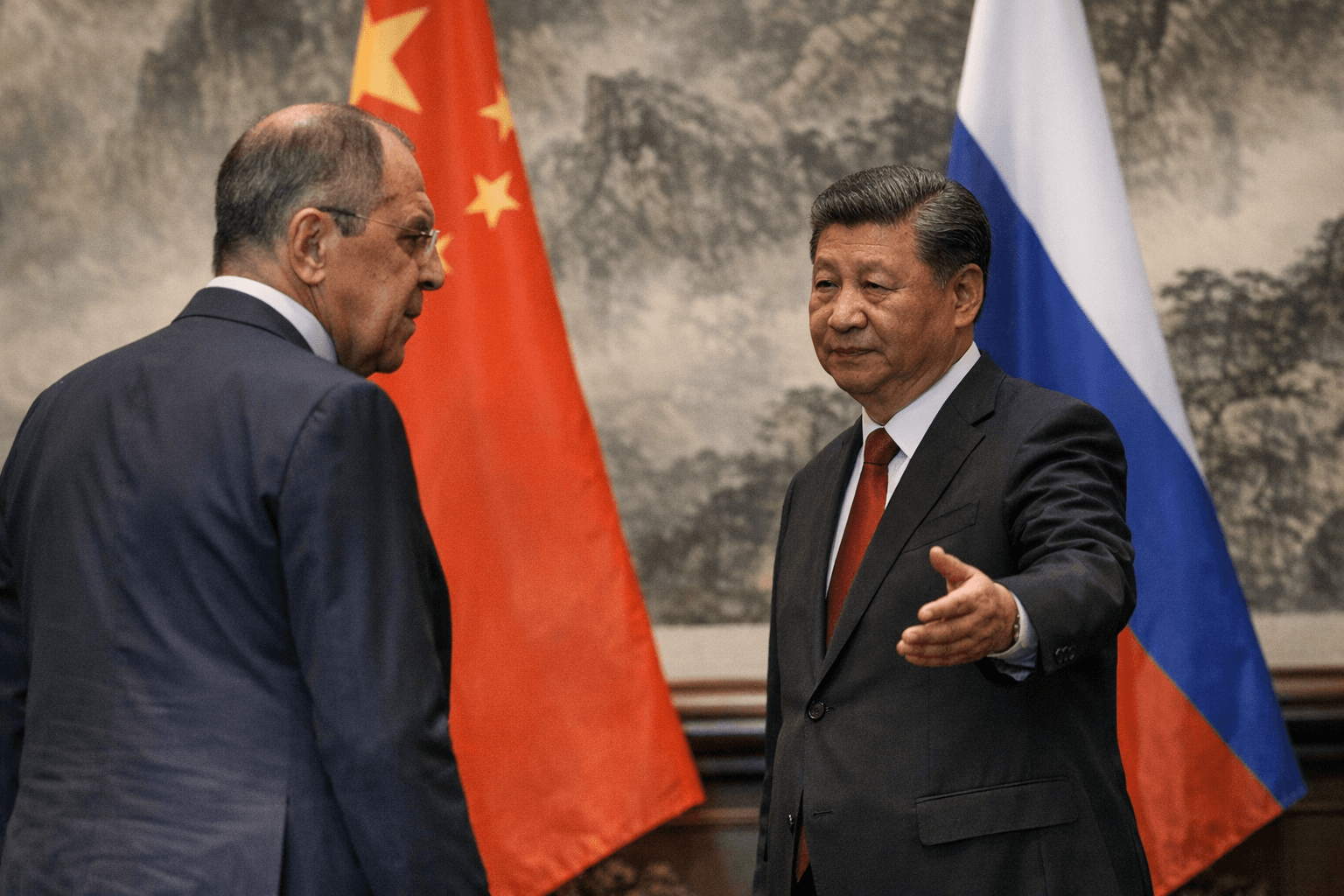
Xi Jinping used a high-profile meeting in Beijing to make a blunt case for closer China-Russia coordination, telling Sergei Lavrov that the two countries should trust and support each other, deepen cooperation and defend each other’s interests.
The meeting at the Great Hall of the People came as Xi framed the relationship as especially valuable in a turbulent international environment. He described China-Russia ties as “precious” and called for “closer and stronger strategic coordination” to defend the legitimate interests of both countries and safeguard the unity of Global South nations. The language was more explicit than routine diplomatic courtesy and placed the partnership squarely inside Beijing’s broader argument for a multipolar world.
For Moscow, the message was practical as well as political. Lavrov arrived in Beijing on April 14 for talks on Ukraine, Iran and bilateral ties, and Russian reporting said he later indicated Vladimir Putin could visit China in the first half of 2026, with the itinerary still being finalized. Lavrov also said Russia was ready to increase energy supplies to China ahead of the expected trip, underscoring how trade and energy remain central to the relationship even as Russia faces Western sanctions and the war in Ukraine grinds on.
The meeting also echoed the symbolism of the 2001 Treaty of Good-Neighborliness and Friendly Cooperation, signed in Moscow on July 16, 2001 by Jiang Zemin and Putin. Beijing has long described that treaty as a historic landmark, and Xi’s remarks suggested that the legal and political framework built more than two decades ago remains the anchor for a partnership both sides now present as a shield against outside pressure.
Xi’s meeting with Lavrov was not the only diplomatic signal from Beijing on April 15. He also met Vietnam’s To Lam, whose visit was his first foreign trip after becoming president, and the two sides signed cooperation agreements on connectivity and emerging technologies. That same pattern has been visible across 2026, with Western leaders including the prime ministers of Spain, Britain and Canada also visiting Beijing in search of broader ties. China is thus pressing two tracks at once: keeping Russia close while broadening ties with Europe, Asia and the developing world.
The result is not a sudden break in Chinese policy but a clearer public presentation of where Beijing wants the bloc lines to harden. China is signaling that, under pressure from Washington, its relationship with Russia is not just durable but strategically useful in a contest over trade, energy and global influence.
This article was produced by Prism’s automated news system from verified source data, official records, and press releases, then run through automated quality and moderation checks before publishing. The system is built and supervised by the people who set the standards it runs under. Read our full AI policy.
Did this article answer your question?