Xi Jinping’s military buildup accelerates, but distrust deepens inside PLA
Xi has built a stronger PLA, but his own purges now leave China’s top commanders under suspicion, complicating war planning and Taiwan preparedness.
A stronger army, a narrower circle
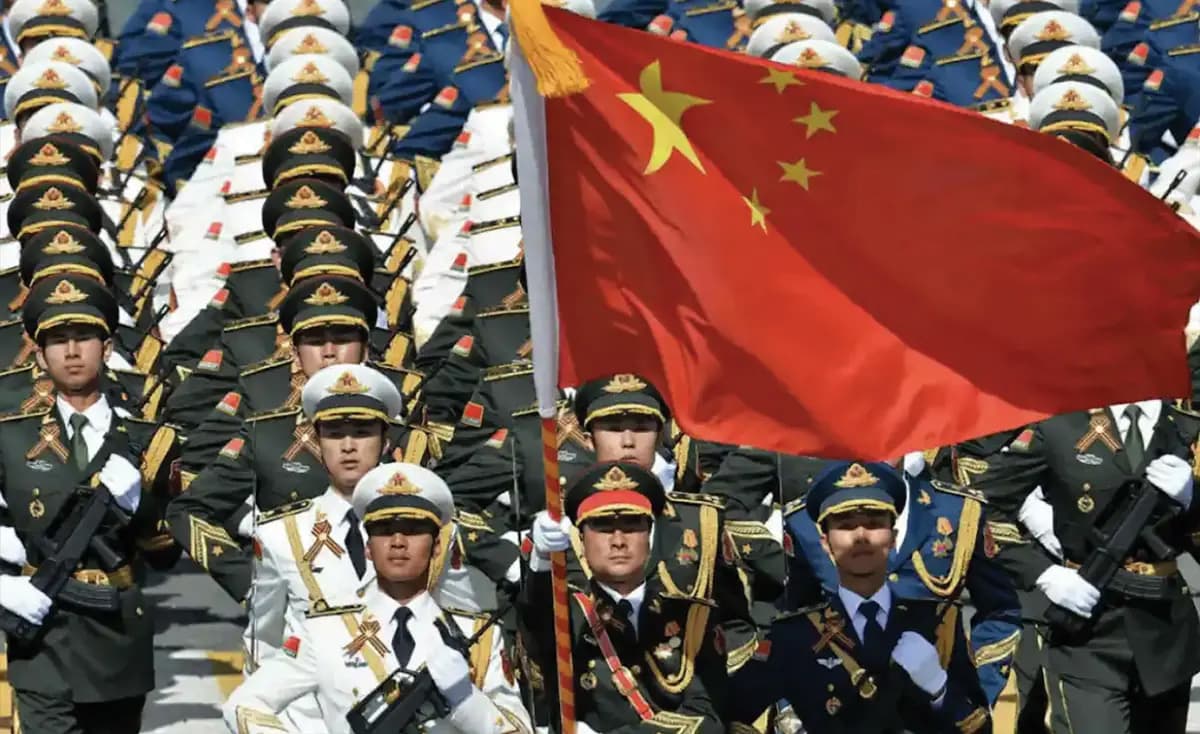
Xi Jinping has spent 13 years remaking China’s armed forces into a military meant to stand beside the United States, yet that expansion has come with a deepening distrust of the officers at the top. Since becoming China’s top leader in 2012 and general secretary in 2013, Xi has pushed the People’s Liberation Army through sweeping 2015-16 reforms and a modernization drive built around two milestones: a 2027 target widely tied to Taiwan contingencies and a 2049 goal of turning China into a world-class military power.
That dual effort has produced a paradox at the center of China’s military rise. The force is larger, more modern, and more central to Beijing’s national strategy than at any point in the post-Mao era, but the commander in chief appears less willing to trust the generals he personally elevated. The result is not just a matter of personnel churn. It is a question of whether Xi’s effort to build a more capable war machine is also making it harder for that machine to think clearly, act quickly, and operate cohesively in a crisis.
Modernization under pressure
U.S. defense officials say the PLA continues to make steady progress in modernizing its conventional capabilities, but they also say it still struggles with long-standing deficiencies. The Pentagon’s 2024 China Military Power Report goes further, describing the People’s Republic of China as the Defense Department’s top pacing challenge and framing Beijing’s military buildup as part of a broader strategy to accumulate national power and revise the international order in line with Chinese interests.
That is why the 2027 and 2049 goals matter so much. The earlier benchmark signals pressure for a force that can credibly intimidate or defeat Taiwan, while the longer horizon points to a military that can support Xi’s broader geopolitical ambitions across the Pacific region. Even so, U.S. officials have repeatedly emphasized that modernization does not equal readiness, especially when command structures are unsettled and the political climate around the officer corps is defined by suspicion.
The Pentagon has also noted that in 2023 the PLA largely denied, cancelled, or ignored recurring bilateral engagements and Defense Department requests for communication. That made the military relationship between Washington and Beijing more brittle at the same time the risk environment was becoming more consequential. Xi and Joe Biden agreed in November 2023 to resume military-to-military communication at all levels, but the rupture had already shown how quickly the PLA can become a closed system when Beijing wants tighter political control.
Purges reach the senior ranks
Xi’s anti-corruption drive has moved far beyond routine discipline. It has reached the highest tiers of military leadership and, in the process, exposed how uncertain loyalty has become inside the system. Li Shangfu was removed as defense minister in October 2023 after just seven months, making him China’s shortest-serving defense minister ever. His fall was a signal that even cabinet-level authority offers little protection when Xi decides that trust has eroded.
The purge then spread into one of the most sensitive parts of the Chinese arsenal. The Pentagon later said the Rocket Force was hit by corruption scandals in 2023. That matters not only because the Rocket Force oversees China’s nuclear weapons and conventional missiles, but because it sits at the center of any Taiwan contingency, any signaling cycle with Washington, and any escalation ladder in the Pacific region. If the branch responsible for missile forces is compromised, the consequences extend well beyond personnel politics.
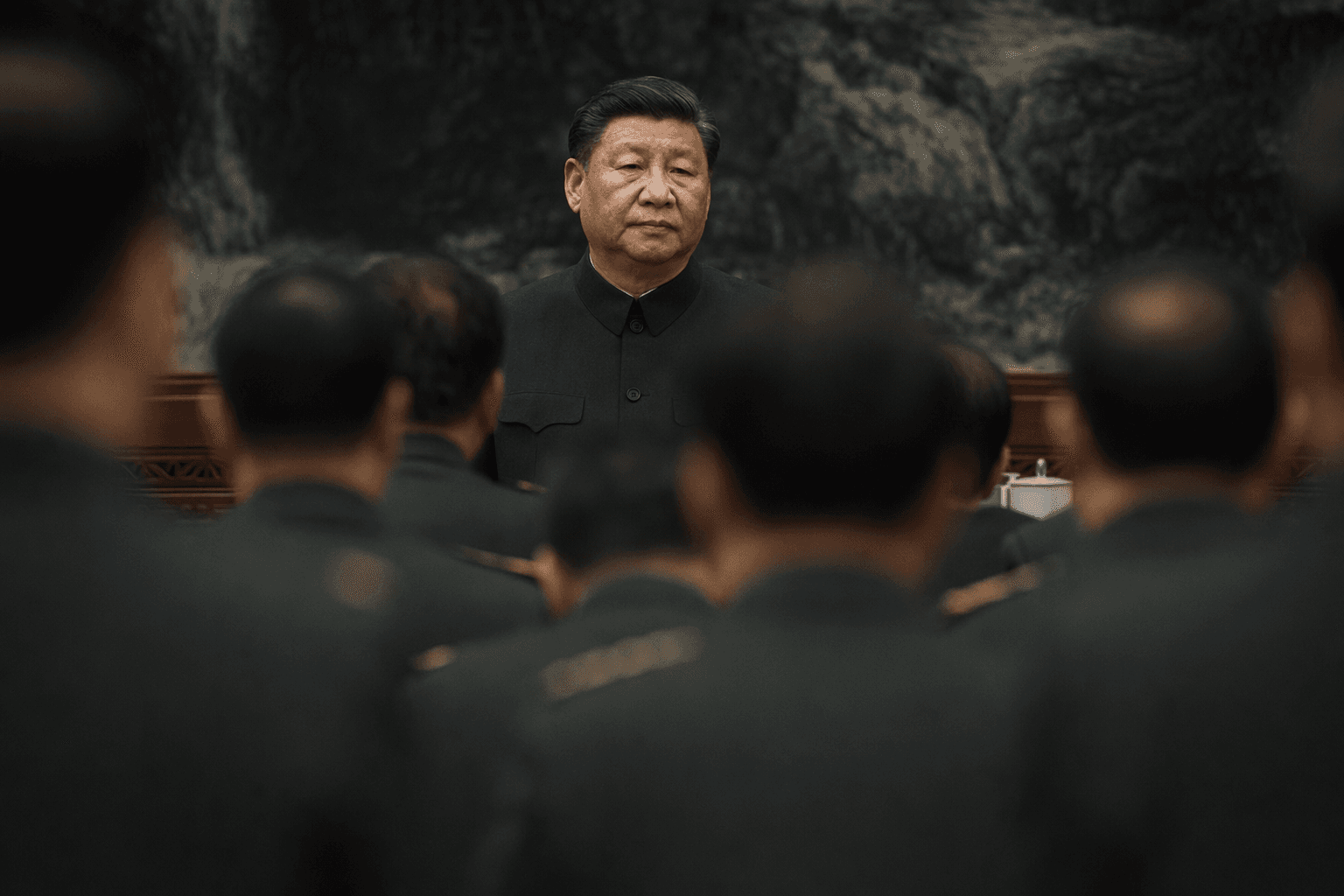
By late 2024, the pressure had widened again when Admiral Miao Hua, who oversaw the PLA’s political and organizational work, was suspended from his duties. According to the Asia Society Policy Institute, his removal made him the third PLA general in charge of political and organizational work that Xi had purged. That is a revealing pattern: Xi is not only targeting corruption, he is repeatedly moving against the very officials charged with managing loyalty, party discipline, and internal cohesion.
A shrinking command structure at the top
The latest phase of the crackdown has created something even more destabilizing than turnover: a leadership vacuum. By January 2026, China’s defense ministry said Zhang Youxia, the PLA’s top uniformed officer, and Liu Zhenli, the chief of the general staff, were under investigation for serious violations of discipline and law. Those are not peripheral figures. They sit near the center of China’s military command structure, where routine authority, crisis planning, and wartime decision-making are supposed to converge.
The impact on the Central Military Commission is stark. The Institute for the Study of War says the continued purges have reduced the commission since 2023 from seven members to two. That is an extraordinary contraction for the body that sits atop China’s armed forces and links military power directly to party control. When the CMC is hollowed out in this way, it is not only a staffing problem. It is a warning that the chain of command has become narrower, more personalized, and more vulnerable to political shock.
This is the core tension for Xi. A leader who seeks tighter command may believe purges create discipline, but repeated removals can also encourage paralysis, cautious reporting, and self-protective behavior inside the ranks. Officers who fear being accused of corruption or disloyalty may hesitate to deliver bad news, challenge flawed assumptions, or advocate for operational risks that a war plan requires.
Why this matters for Taiwan and the United States
The strategic stakes are clearest in any confrontation over Taiwan. A military that is modernizing rapidly but whose senior leadership is under investigation is one that may be less predictable in a crisis, even if its hardware is improving. For the United States, that raises the importance of reading not just the PLA’s weapon systems and exercises, but also the internal politics that shape who can authorize action, who can be trusted, and how much candor flows upward in a time of tension.
Beijing’s broader message remains unchanged: the PLA is meant to help achieve the great rejuvenation of the Chinese nation by 2049, and the force is still moving in that direction. But the recurring purges suggest that Xi sees a military he built as one he still cannot fully rely on. That tension may ultimately shape China’s war-readiness as much as any new missile, ship, or aircraft, because a military can be modern on paper and still be strategically constrained by fear at the top.
For now, the paradox endures. Xi has assembled a more formidable PLA, but the deeper he cuts into its leadership, the more he risks turning strength into uncertainty. In a confrontation with the United States or over Taiwan, that uncertainty could matter as much as firepower.
This article was produced by Prism’s automated news system from verified source data, official records, and press releases, then run through automated quality and moderation checks before publishing. The system is built and supervised by the people who set the standards it runs under. Read our full AI policy.
Did this article answer your question?