Xi’s long game, Beijing’s 2049 ambition reshapes China’s military and global strategy
Xi’s 2049 blueprint is reshaping China around patience, coercion, and industrial power, while Washington keeps treating a decades-long contest like a series of short ones.
Xi’s horizon is 2049, not the next cycle
Xi Jinping is building for 2049, not for the next news cycle. Beijing’s long-running goal of the “great rejuvenation of the Chinese nation” is framed in official documents as a plan to make China a fully modernized socialist country by the 100th anniversary of the People’s Republic, with a “basic” modernization milestone by 2035. That gives the Chinese state something most democracies struggle to sustain: a political horizon measured in decades, not election seasons.
The 20th Communist Party Congress in October 2022 hardened that long game by folding “Xi Jinping Thought on Socialism with Chinese Characteristics for a New Era” into the Party Constitution. It also reaffirmed the Second Centenary Goal, the project of building China into a modern socialist country in all respects. In practice, that means the leadership can align industrial policy, military planning, technology controls, and diplomatic pressure across multiple five-year plans, rather than lurching from one domestic political cycle to the next.
Military reform is now an information fight
Xi’s military strategy is not just about adding hardware. It is about reorganizing the People’s Liberation Army to fight the kind of war Beijing thinks matters most, one shaped by networks, sensors, cyber operations, and command systems. In April 2024, Xi announced a major restructuring of the PLA, disbanding the Strategic Support Force and creating the Information Support Force, which focuses on network defense, communications, and coordinated wartime information operations. At the force’s establishment ceremony on April 19, 2024, Xi personally presented its flag, signaling that the reform sits close to the center of his military agenda.
U.S. military analysts interpret that shift as an effort to improve the PLA’s ability to achieve information dominance and conduct integrated joint operations. That matters because a modern force does not need to outshoot an adversary in every category if it can disrupt communications, blind sensors, or shape the battlefield before the fighting even becomes visible. Beijing is betting that future conflict will be won by systems integration as much as by brute force.
The money backing that bet has continued to rise. China increased its official defense budget by 7.2 percent in 2024, and the Pentagon has said China’s announced defense spending has nearly doubled since Xi became general secretary. That increase has gone into areas that matter for a long war of competition, including artificial intelligence, biotechnology, and hypersonic missiles. The pattern is clear: Beijing is building a force designed to intimidate, deter, and, if needed, fight inside a broader strategy of national power.
Industry and trade are part of the same campaign
Xi’s long game is not confined to the military. It runs through tariffs, supply chains, and the machinery of advanced manufacturing. The White House said on May 12, 2025, that Washington and Beijing reached a Geneva economic and trade understanding that suspended 24 percentage points of some U.S. tariffs on Chinese goods for 90 days while leaving a 10 percent tariff in place. Later White House material described a broader U.S.-China trade deal in late 2025, but the deeper contest did not disappear.
The Council on Foreign Relations argued in April 2026 that the trade war remains structurally difficult to unwind, because both sides still rely on tariffs and export controls as leverage. Chinese controls on rare earths, in particular, matter for advanced manufacturing and defense supply chains. That is the part of Xi’s strategy that can be easy to miss if the focus stays on summit optics: Beijing is not only trying to sell more goods, it is trying to control chokepoints that determine who can make the most advanced products, field the best weapons, and absorb economic pressure longest.
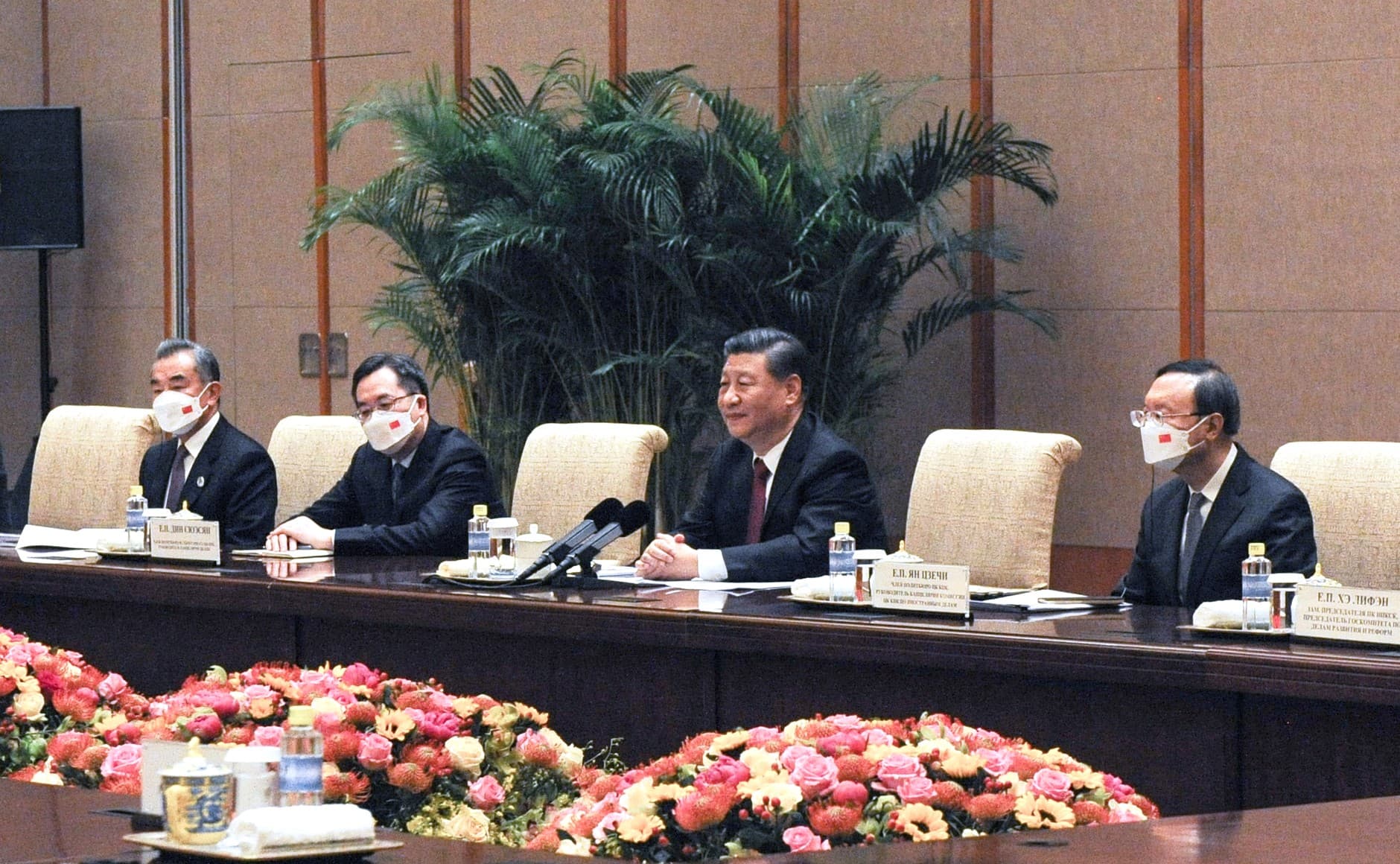
This is why the rivalry cannot be reduced to a series of bargaining episodes. Even when leaders announce deals, the industrial competition continues beneath the headlines. China’s approach is to turn commerce into leverage, and leverage into strategic patience.
What the U.S. gets right, and where it remains exposed
The strongest U.S. vulnerability is structural. American policy often changes with the political calendar, while China’s long-term targets are fixed to 2035 and 2049. That does not mean Beijing automatically wins, but it does mean the United States has to compete under harder conditions if it keeps treating industrial policy, supply chains, and defense modernization as separate conversations. A state that can plan across five-year blocks has an advantage over a democracy that has to defend every policy through recurring political conflict.
The threat, however, should not be exaggerated into inevitability. Xi’s ambitions are real, but they are still ambitions. The contest is durable, not predetermined. The CSIS China Power Project surveyed 79 U.S. experts and former officials in late 2025 and found that the relationship remained tense despite some stabilization after Trump-Xi trade agreements. Taiwan, economics, diplomacy, and military issues stayed at the center of the rivalry, but the survey did not point to a clean endpoint or a simple victory lap for either side.
That distinction matters. Beijing’s strategy is powerful because it is integrated, patient, and backed by state institutions that can absorb short-term costs. But the United States still has advantages in innovation, alliances, and adaptability if it chooses to use them consistently. The real danger is not that China’s plan guarantees domination. The danger is that Washington keeps answering a generational challenge with tactical moves, while Xi keeps building toward 2035 and 2049 one institution at a time.
The long contest underneath the headlines
Xi’s vision links military modernization, industrial control, and diplomatic leverage into a single national project. The PLA restructuring, the rising defense budget, the technology push, and the trade and tariff fight are not separate stories. They are all parts of the same effort to make China stronger, harder to coerce, and more capable of shaping the international order on Beijing’s terms.
For readers tracking the national-interest stakes, the lesson is straightforward: this is not a race to the next deal. It is a contest over who can organize power most effectively over the next quarter century.
This article was produced by Prism’s automated news system from verified source data, official records, and press releases, then run through automated quality and moderation checks before publishing. The system is built and supervised by the people who set the standards it runs under. Read our full AI policy.
Did this article answer your question?