Xoople Partners With L3Harris to Build Sensors for Its Spacecraft
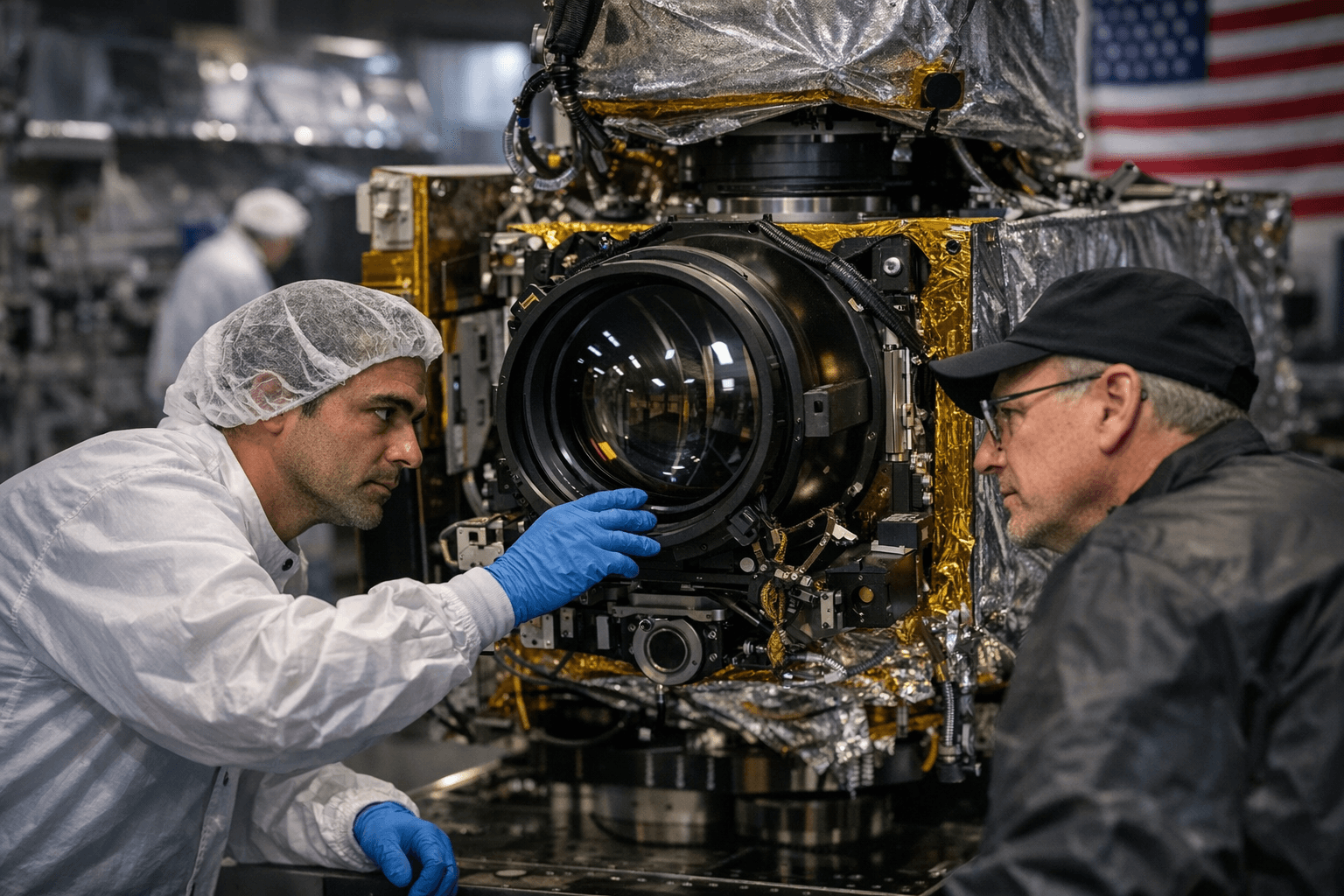
Spanish startup Xoople tapped L3Harris to build sensors for its satellite constellation, pairing $130M in fresh capital with one of defense's premier optical imaging contractors.

Xoople, the Madrid-based Earth intelligence startup, struck a deal with U.S. space and defense contractor L3Harris Technologies to build the sensors aboard its forthcoming satellite constellation, the company announced Monday alongside a $130 million Series B that brings its total capital raised to $225 million.
The pairing of a European commercial data startup with one of America's premier defense-grade sensor manufacturers signals how seriously the new generation of Earth observation companies is taking data fidelity as a competitive weapon. CEO and co-founder Fabrizio Pirondini said the sensors will collect optical data designed to deliver "a stream of data that is going to be two orders of magnitude better than existing monitoring systems," though he declined to say how many spacecraft Xoople plans to fly or share further technical specifications.
L3Harris, based in Melbourne, Florida, has built some of the most advanced commercial imaging systems currently in orbit and holds billions in contracts with the U.S. Space Development Agency for infrared missile-tracking satellites. Tying that pedigree to a commercial AI-data venture raises immediate questions about sensor export controls, fidelity thresholds, and who ultimately governs what the constellation can see, at what resolution, and for whom.
The Series B was led by Nazca Capital, with participation from MCH Private Equity, CDTI (a technology development fund backed by the Spanish government), Buenavista Equity Partners, and Endeavor Catalyst. CDTI's inclusion is notable: the fund also classifies Xoople as a Strategic Enterprise under its Innvierte programme, effectively giving Madrid a seat at the table for a constellation that could one day monitor crop yields, shipping lanes, military movements, and urban development across the globe.
Founded in 2019, Xoople spent its first seven years building its EarthAI platform around data sourced from government spacecraft while integrating with cloud providers including Microsoft Azure. Its commercial partners also include Esri, the dominant geospatial software provider. Those relationships position Xoople not merely as an imagery vendor, but as the infrastructure layer through which enterprise AI models consume ground truth about the physical world.
That ambition puts it in direct competition with Planet, BlackSky, Vantor, and Airbus, all of which already operate satellites and are building AI-focused data products. Pirondini acknowledged the crowded field but noted his company's differentiation lies in data quality rather than archive size. He declined to share a post-money valuation but said "we are in unicorn territory."
The L3Harris deal crystallizes the central tension in the commercial Earth observation market: the sensors precise enough to train the next generation of AI models are the same sensors capable of supporting intelligence applications. As that line blurs further, the question of which governments can constrain access, and under what regulatory frameworks, will likely matter as much as the technology itself.
This article was produced by Prism’s automated news system from verified source data, official records, and press releases, then run through automated quality and moderation checks before publishing. The system is built and supervised by the people who set the standards it runs under. Read our full AI policy.
Did this article answer your question?

