Young Latino Men Backed Trump, but Economic Frustration Could Drive Them Elsewhere
When Tyson shuttered its Lexington, Nebraska plant in January 2026, eliminating 3,200 jobs in a majority-Hispanic town, it jolted a politically disengaged generation into action.
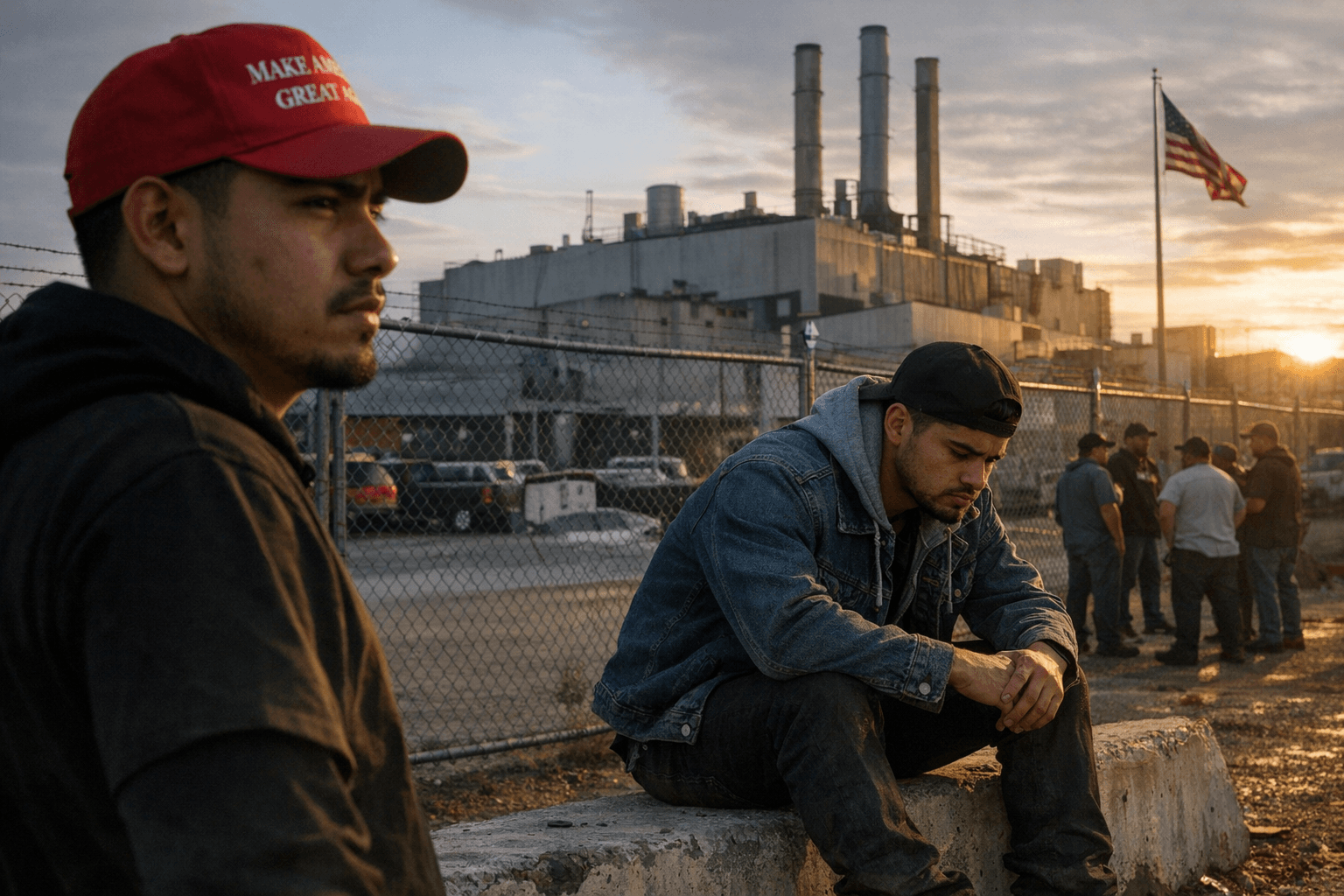
The Tyson beef processing plant in Lexington, Nebraska had employed thousands of workers for decades before it abruptly closed in late January 2026, taking roughly 3,200 jobs with it. In a town that is majority Hispanic, the shutdown did something beyond wrecking household budgets: it pulled people like Juan Laguna Jr. into politics for the first time.
Laguna Jr., 20, had never been politically engaged before his parents lost their jobs at the plant. The closure changed that calculus. He and his family began considering voting for the first time, drawn not by party loyalty or ideology but by the raw immediacy of economic displacement. His story has become a template for what organizers in Lexington are calling a new political awakening among young Latino residents.
That awakening is arriving at a complicated moment for both parties. In 2024, Donald Trump won approximately 47 percent of Latino men and 48 percent of Hispanic voters overall, according to AP projections and a Pew Research Center analysis, up dramatically from the 28 percent he drew in 2016. Republican strategists hailed the shift as a durable realignment. The story was never that simple.
By October 2025, the same Pew survey that documented Trump's 2024 gains found his approval declining across every major subgroup within the Latino community. A Navigator Research focus group, viewed by NOTUS, captured seven Latino voters who had backed Trump in 2024 and now expressed regret, citing rising costs, tariff-driven price increases, and aggressive immigration enforcement as their primary grievances. Latino small-business owners from South Texas to the Midwest reported higher input costs as Trump's tariff regime rippled through supply chains.
Mike Madrid, author of "The Latino Century," has argued that the 2024 results reflected something more volatile than a permanent shift. "Latinos are now a true swingy vote," Madrid said. "But they are not voting for aspirational, positive reasons; they are punishing whoever is in power."
That punitive instinct is precisely what Dan Osborn is counting on. The independent Senate candidate, a Navy veteran, industrial mechanic, and former president of Bakery, Confectionery, Tobacco Workers and Grain Millers International Union Local 50G, visited Lexington after the Tyson closure to appeal directly to Latino workers displaced by the shutdown. Osborn ran a remarkably competitive 2024 Senate race in Nebraska, closing to within seven points of Republican incumbent Deb Fischer despite operating without a party apparatus behind him. Polling at points showed him in a dead heat with Fischer; his final vote share was the strongest for any independent Senate candidate in Nebraska since George W. Norris won as an independent in 1936.
The Tyson closure has given Osborn exactly the kind of kitchen-table grievance that powered his 2024 insurgency. For a generation of young Latino men who backed Trump partly out of frustration with Democratic complacency on economic issues, a shuttered plant and $0 in severance represents a test of whether their political loyalty follows a party or a paycheck. In Lexington, the answer is still being written.
This article was produced by Prism’s automated news system from verified source data, official records, and press releases, then run through automated quality and moderation checks before publishing. The system is built and supervised by the people who set the standards it runs under. Read our full AI policy.
Did this article answer your question?

