Zelenskiy imposes sanctions on suppliers of components for Russian missiles and drones
Zelenskiy signed two decrees sanctioning 66 people and 62 companies tied to weapons components and crypto payments, aiming to choke Russia’s procurement and payment channels.
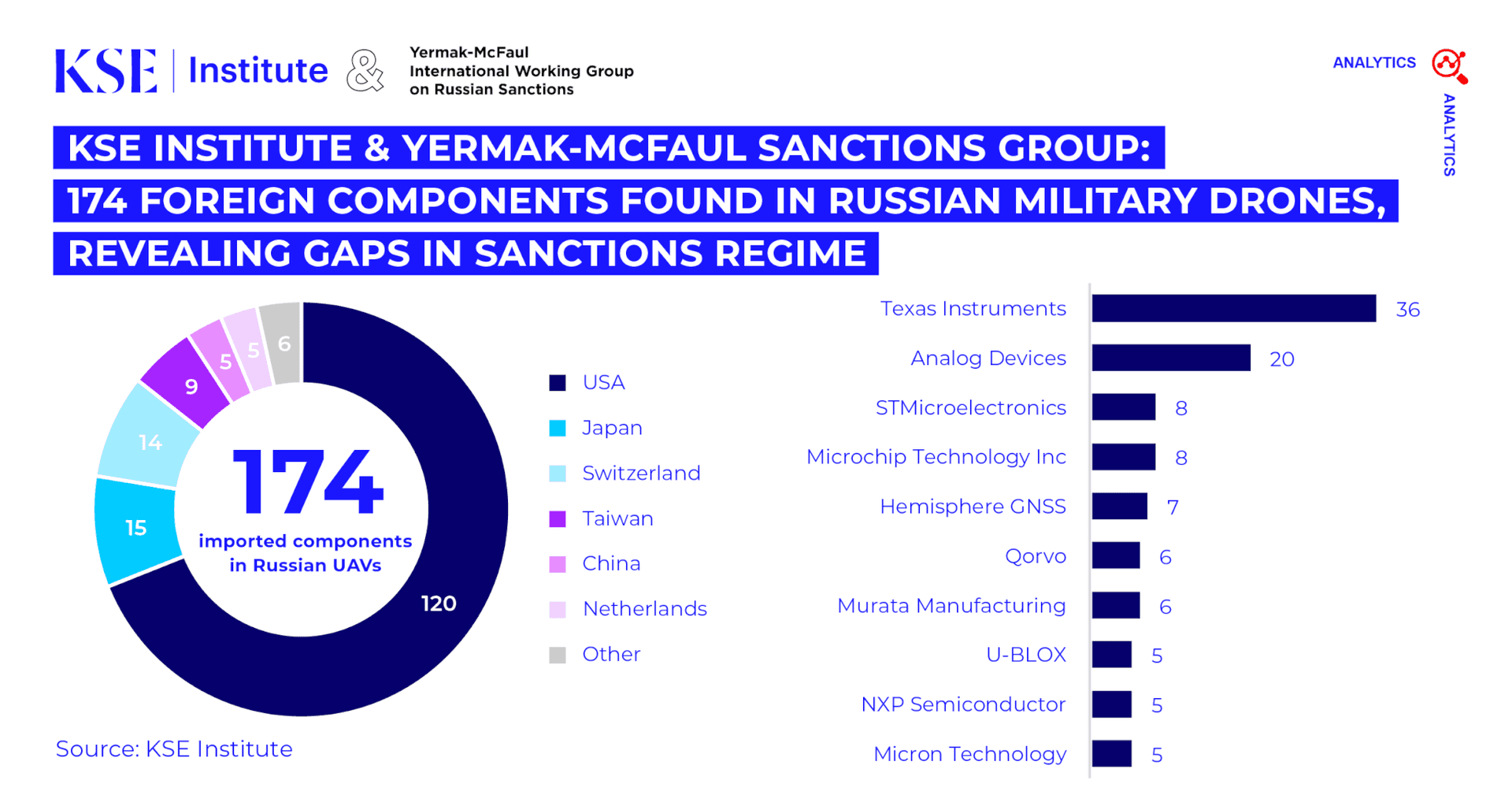
President Volodymyr Zelenskiy signed two decrees on February 8 imposing sanctions on foreign manufacturers, suppliers and financial structures linked to components used in Russian missiles and attack drones, and on crypto networks and payment operators that Kyiv says facilitate procurement and payments for Moscow’s war machine.
The measures target a total of 66 individuals and 62 legal entities, split across the two decrees: the first listing 24 people and 27 companies described as suppliers of materials and parts used in missile and drone production; the second naming 42 people and 35 entities operating in the financial and crypto spheres. The Office of the President drew up the lists under a decision of Ukraine’s National Security and Defense Council, and announced the moves on the presidential social channels.
Kyiv described the targets as geographically diverse, including citizens and entities linked to Russia, Hong Kong, Kyrgyzstan and the United Arab Emirates, and cited examples such as a Hong Kong-based firm, a branch of a Russian bank in Shanghai and several Chinese companies without publishing full corporate names. The sanctions also name a set of crypto structures, notably the A7 cryptocurrency ecosystem, which Kyiv says was used to pay for components for missile and drone production and which it links to the Russian bank Promsvyazbank and Moldovan oligarch Ilan Shor. An association described as the Association of Developers and Users of Technologies that Support the Russian Crypto Market and Industrial Accumulation of Virtual Currency was also listed, together with payment operators, crypto exchanges and holders tied to mining activity.
Explaining the rationale, Zelenskiy wrote on X, "Producing this weaponry would be impossible without critical foreign components, which the Russians continue to obtain by circumventing sanctions." He added on social channels, "We are introducing new sanctions precisely against such companies – component suppliers, as well as missile and drone manufacturers. I have signed the relevant decisions." The president said some items could be folded into the European Union’s 20th sanctions package as coordination with partners continues.

The timing follows an intensified wave of Russian strikes. Zelenskiy said that in the past week Russia had launched more than 2,000 attack drones, 1,200 guided aerial bombs and 116 missiles at Ukrainian towns and villages, and that a massive nocturnal strike on Feb. 7 involved over 400 drones and nearly 40 missiles. Ukrainian air defenses reported destroying 69 attacking drones since Saturday evening and recorded strikes at 13 locations. The strikes hit energy infrastructure and logistics nodes, producing regional power outages and blackouts in Kyiv lasting as long as 20 hours, Kyiv authorities reported.
Economically, the measures aim to disrupt supply chains and the clandestine payment routes that sustain weapons production. Targeting payment operators and crypto ecosystems raises the cost and complexity of procurement for sanctioned buyers and increases compliance risk for intermediary firms and banks. Inclusion in a coordinated EU package would magnify the effect by constraining access to European banking corridors and export markets.
Enforcement challenges remain: Kyiv has not published full decrees with the complete named lists and the legal mechanics for asset freezes or transaction bans, and tracing crypto flows like A7 will test both technical capacity and international cooperation. Still, the moves signal a sharper sanctions strategy that links kinetic escalation on the battlefield to stepped-up financial pressure aimed at degrading the supply and funding lines of Russia’s military-industrial complex.
This article was produced by Prism’s automated news system from verified source data, official records, and press releases, then run through automated quality and moderation checks before publishing. The system is built and supervised by the people who set the standards it runs under. Read our full AI policy.
Did this article answer your question?


