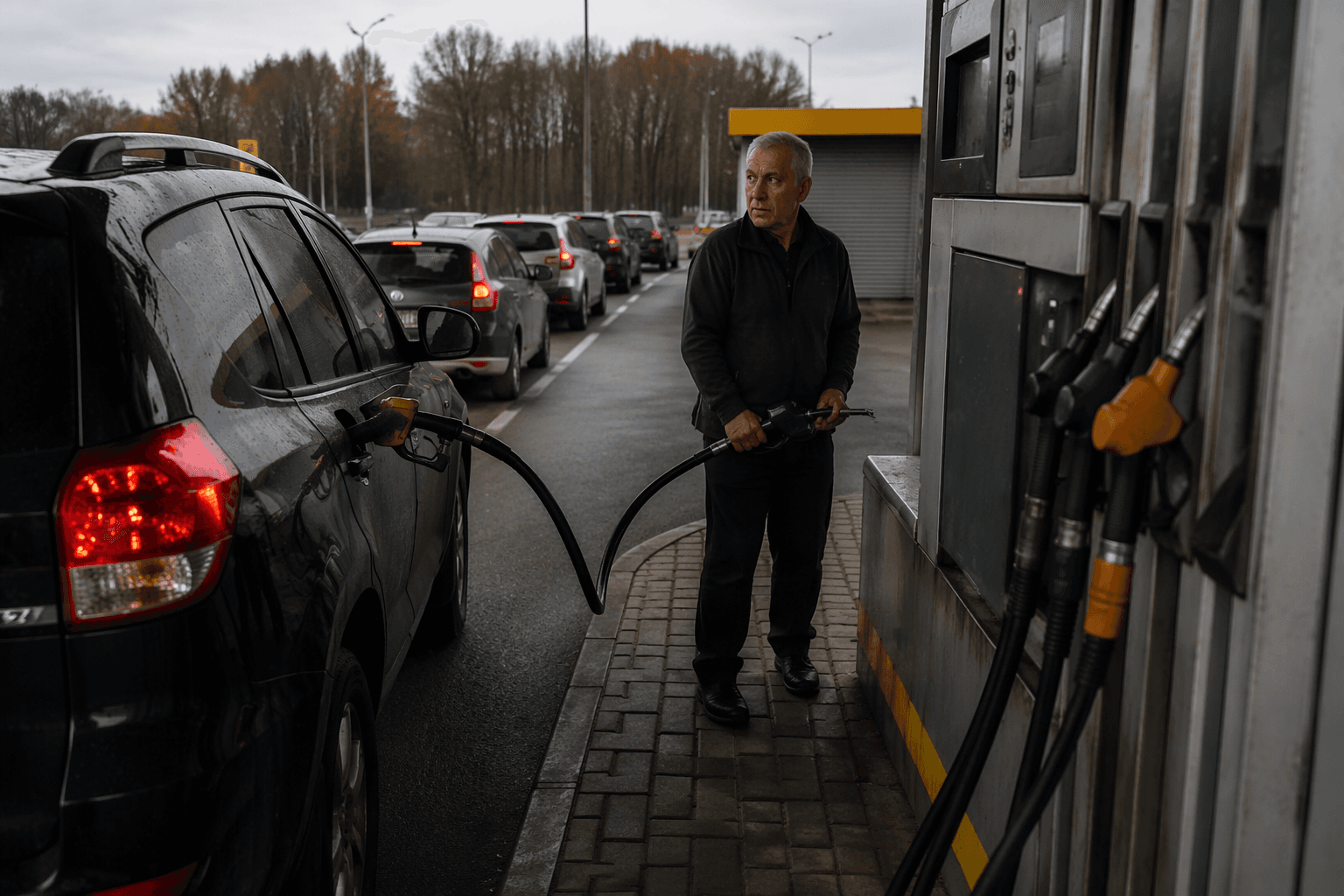
Zelenskiy Says Ukraine, U.S. Negotiators Moved Peace Talks Forward
President Volodymyr Zelenskiy says an about one hour discussion with U.S. envoys advanced a revised 20 point peace framework that Kyiv and Washington have been shaping. The announcement matters because major disagreements over territory and the Zaporizhzhia nuclear plant remain unresolved, pushing the most sensitive questions to leaders level diplomacy.
President Volodymyr Zelenskiy on Thursday described an approximately one hour discussion with U.S. negotiators that included special envoy Steve Witkoff and Jared Kushner as part of a burst of diplomacy aimed at moving a negotiated end to the war with Russia closer to reality. The remarks came as Kyiv publicly unveiled a streamlined 20 point draft that Zelenskiy said had been shaped through weeks of talks with U.S. and European partners.
Zelenskiy said negotiators “had reached a consensus on several points aimed at ending the war,” and that positions had been “brought significantly closer” after intensive consultations. He added that “nearly 90%” of Ukraine’s demands had been incorporated into working drafts. U.S. envoy Steve Witkoff earlier described discussions as “productive and constructive,” signaling a degree of alignment between Kyiv and Washington even as substantial gaps remain.
The 20 point draft is a reduced version of an earlier 28 point U.S. proposal. Zelenskiy published a number of its elements, beginning with an explicit reaffirmation of Ukraine’s sovereignty. The framework envisions a full non aggression agreement with a monitoring mechanism to sustain long term peace. Kyiv’s office described monitoring that would include space based unmanned systems to oversee the line of contact, provide early notification of violations and help resolve disputes before they escalate.
Security guarantees form a central pillar of the proposal. Zelenskiy said the draft preserves Ukraine’s path to the European Union and contemplates concrete force arrangements in which European units led by France and the United Kingdom would secure the country in the air, on land and at sea with a Washington backstop. Discussions have also examined a peacetime Ukrainian army at about 800,000 personnel, and contained provisions for energy security, finance and civil protection measures such as bomb shelters.
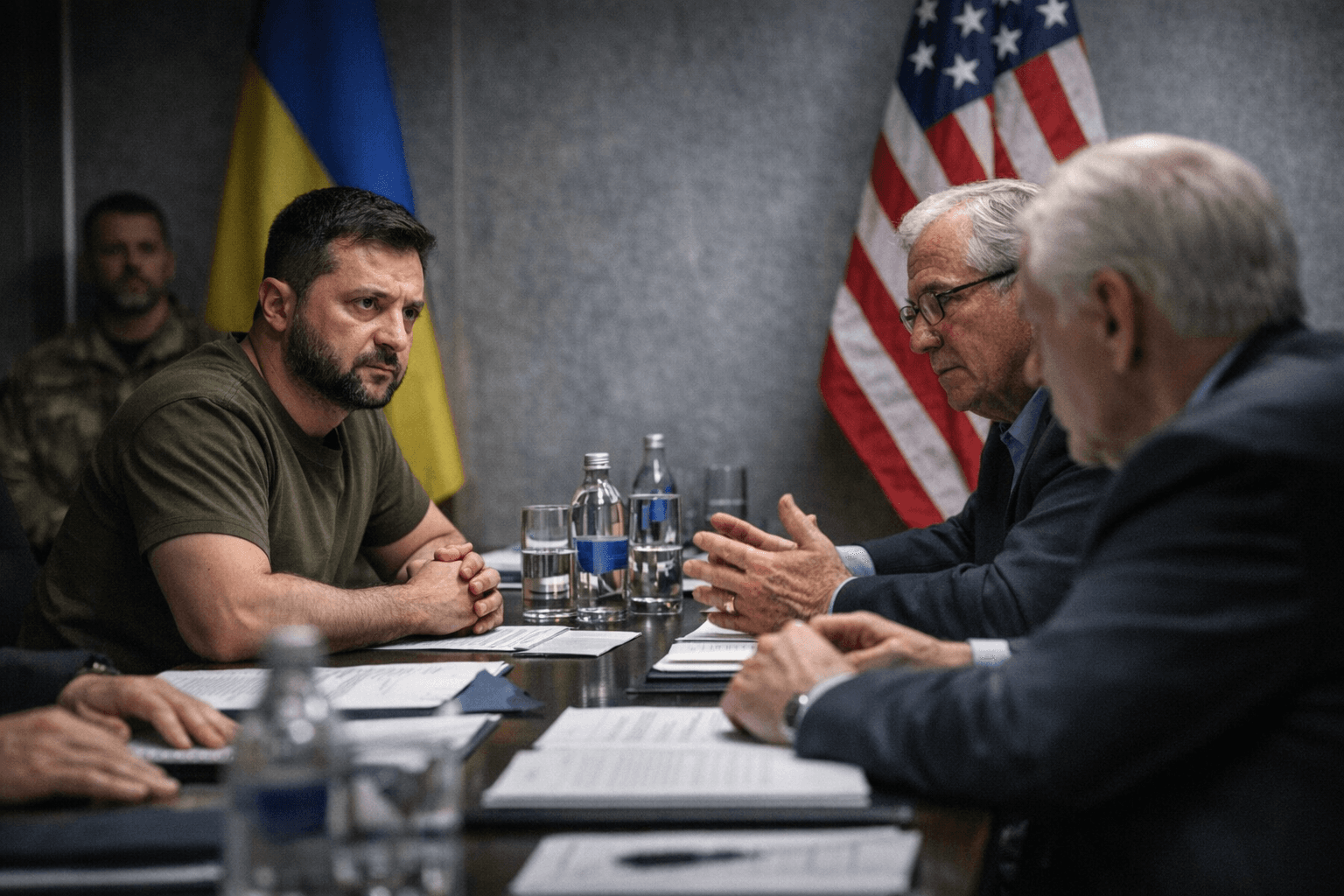
Yet the draft leaves the most politically explosive issues unresolved. Territorial control of the eastern industrial belt and swathes of Donetsk and Donbas remains the most difficult sticking point, Zelenskiy acknowledged, and he said those matters are destined for resolution between national leaders. Control and status of the Zaporizhzhia nuclear power plant emerged as a second major area of disagreement, with Kyiv, Washington and Moscow still far apart on operational and legal arrangements that would satisfy safety and sovereignty concerns.
Zelenskiy said he expects the U.S. side to engage directly with the Kremlin and urged a leaders level meeting with U.S. President Donald Trump to tackle the outstanding sensitive issues. European negotiators who participated in earlier rounds are likely to remain involved, and any movement on these questions will require careful calibration to international law, nuclear safety norms and deep domestic political sensitivities in Ukraine and Russia.
The revised framework represents a narrowing of the diplomatic space after weeks of negotiation, but it also makes clear that technical monitoring solutions and security architecture will not resolve basic questions of territorial control. The pathway now points toward summit level diplomacy, where the balance of political will, legal guarantees and international guarantees will ultimately determine whether this draft can progress from paper into durable peace.
This article was produced by Prism’s automated news system from verified source data, official records, and press releases, then run through automated quality and moderation checks before publishing. The system is built and supervised by the people who set the standards it runs under. Read our full AI policy.
Did this article answer your question?