Zelenskiy sends delegation to Washington for security guarantees and reconstruction
Zelenskiy's team is traveling to Washington to press the United States for binding security guarantees and a roughly $800 billion post-war recovery plan before Davos.
President Volodymyr Zelenskiy announced that a Ukrainian delegation is heading to Washington to seek U.S. commitments designed to deter future Russian aggression and to finalise a post-war "prosperity" package intended to unlock the financing Ukraine will need for reconstruction. He said Ukraine had "completed its part of the work" on both the security-guarantee texts and the recovery plan and expressed hope the resulting agreements could be signed on the sidelines of next week's World Economic Forum in Davos.
The visit elevates two linked negotiations: concrete security assurances from Washington that Kyiv hopes will act as a long-term deterrent, and a financing architecture to meet an estimated reconstruction bill of about $800 billion (roughly €688 billion). Zelenskiy described the Washington talks as an opportunity to secure clarity from the United States on Russia's position toward ongoing diplomatic efforts to end nearly four years of war.
Strategic differences with Washington are visible. U.S. officials have pressed Kyiv to agree to a peace framework that the United States would present to Moscow, while Kyiv and many European partners insist any settlement include durable protections to prevent renewed attack. Zelenskiy conceded cooperation with the United States but warned "we are just not on the same side on some issues," adding that "ultimatums are not, in my view, a workable model for democratic relations between countries."
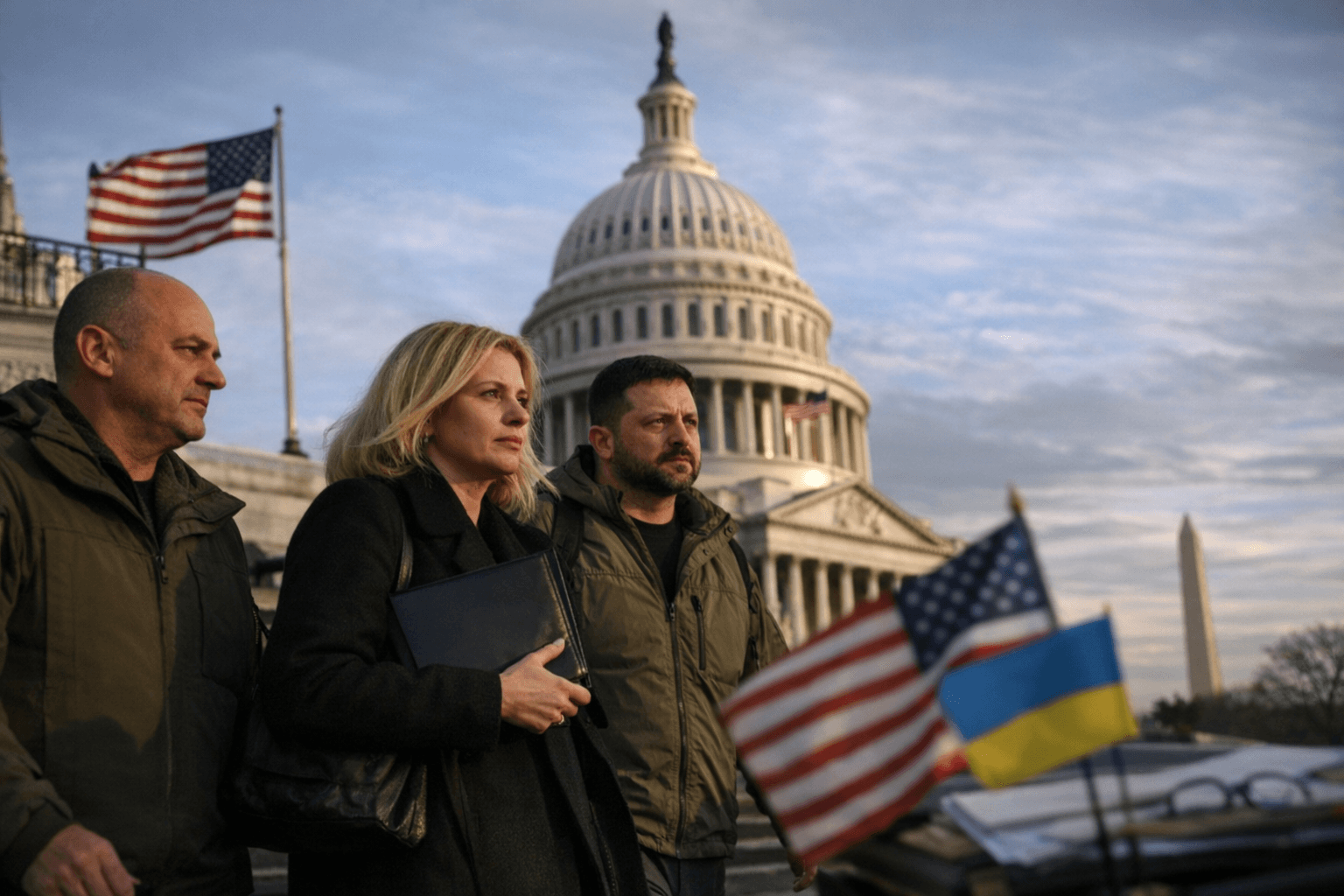
The timing of the trip is politically significant. Zelenskiy has publicly sought a meeting with U.S. President Donald Trump in Davos; Trump has signalled he may meet Zelenskiy and has suggested Russia could be ready for a peace deal, a view that contrasts with assessments from many European capitals. A Davos signing would deliver a high-profile political endorsement and could accelerate follow-on pledges from multilateral lenders, bilateral partners and private investors.
Beyond diplomacy, Zelenskiy underscored acute battlefield and humanitarian needs tied to the speed of assistance. He accused Russia of stalling peace efforts and pointed to recent strikes on energy infrastructure as evidence of Moscow's intent. He posted on social media: "Each of these strikes against our energy sector and our cities quite clearly shows Russia’s real interests and intentions: they are not interested in agreements, but in the further destruction of Ukraine." Reporting from Kyiv noted that until a new aid tranche arrived on Friday morning "several air defence systems had been left without missiles." Zelenskiy also warned, according to one account, "We need to fight for these (aid) packages with blood, with people’s lives."
The economic stakes are enormous. An $800 billion reconstruction bill is many times Ukraine's annual output and would be among the largest recovery efforts in modern history. That scale will test donor fiscal capacity, investor appetite and institutional capacity within Ukraine to absorb capital efficiently. Markets will watch for the composition of financing - grants versus loans, multilaterally backed guarantees, and measures to mobilise private capital - because each pathway carries different implications for sovereign debt, global liquidity and risk premia.
If Washington and Kyiv can bridge differences and set clear security and financing terms, the result could unlock a multiyear investment wave that reshapes Ukraine's infrastructure and trade links with Europe. Failure to reach accord before Davos would signal prolonged political wrangling, increasing the risk that reconstruction financing and battlefield resupply remain fragmented and slow.
This article was produced by Prism’s automated news system from verified source data, official records, and press releases, then run through automated quality and moderation checks before publishing. The system is built and supervised by the people who set the standards it runs under. Read our full AI policy.
Did this article answer your question?


