How Matt Guy and Randy Atha shaped cornhole’s first superstar era
Matt Guy and Randy Atha turned cornhole into a rivalry sport, and the King of Cornhole title gave fans a name to follow.
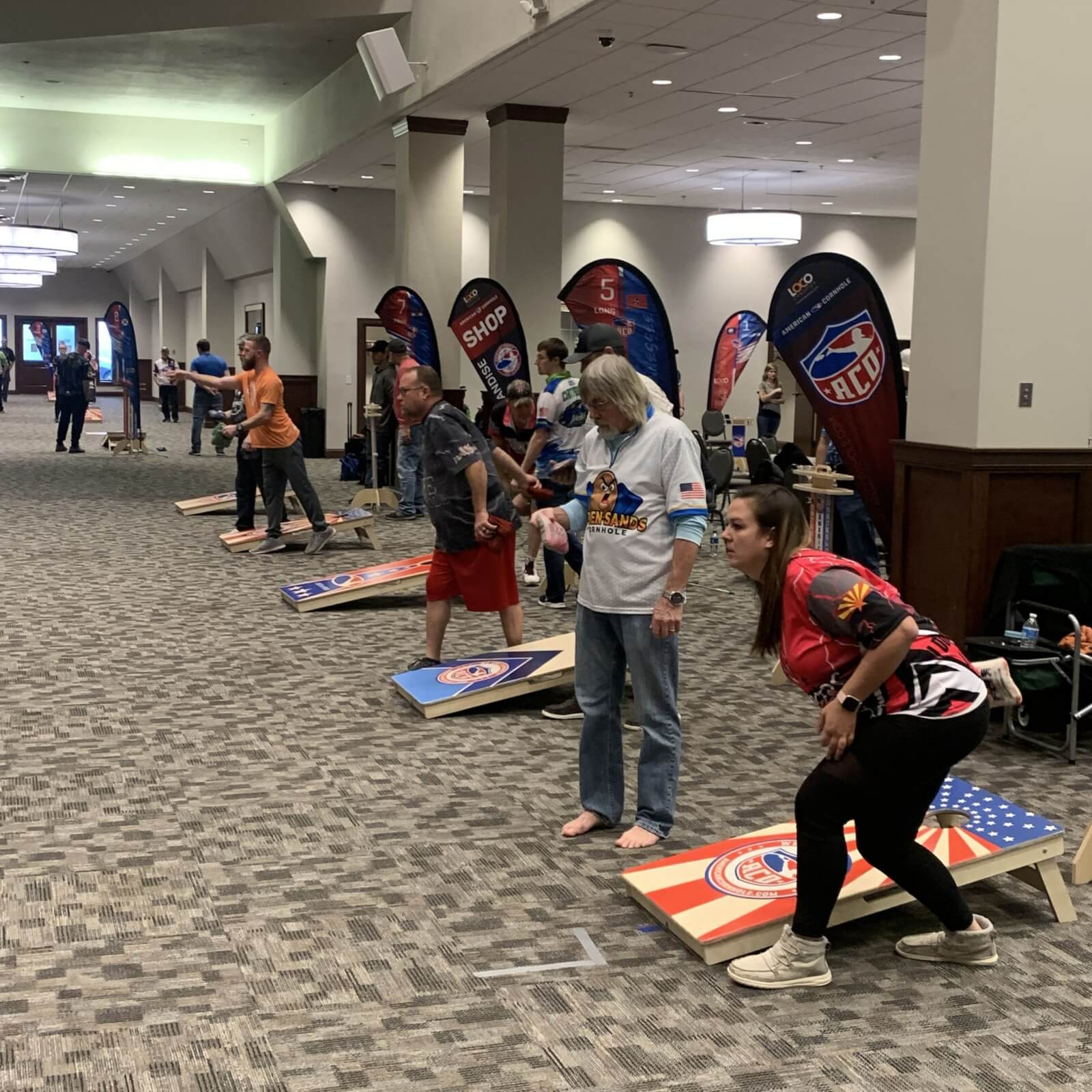
Matt Guy and Randy Atha did more than trade titles. They helped cornhole discover its first real superstar economy, where repeat winners, revenge arcs, and recognizable names mattered as much as the score on the board. The sport’s early rise was not built on anonymous brackets; it was built on a crown, a rivalry, and a player base that learned to follow the same faces over and over.
The first crown gave cornhole a center of gravity
The American Cornhole Organization was founded in 2005 by Frank Geers in Camp Dennison, Ohio, and it moved quickly to create a formal title structure. By December 2006, the ACO had staged its first ACO Nationals Championship in Northern Kentucky to crown the first ACO National King of Cornhole, giving the sport a public champion at the exact moment it was trying to define itself.
That decision mattered because it turned cornhole from a local game into a sport with a headline. Once the organization had a crown to defend, every match could be framed around a person instead of a bracket line. The ACO later said the King of Cornhole title evolved into the sport’s ultimate world championship, and it re-released legacy matches to preserve that era, a signal that the title race had become part of cornhole’s identity, not just its history.
The names attached to that legacy era tell the story clearly: Matt Guy, Randy Atha, Michael Bailey, and Chu Farfsing were not just winners, they were the first recognizable characters in a sport learning how to create stars.
Guy and Atha built the rivalry fans could track
Matt Guy’s early run gave cornhole its clearest superstar script. The ACO says Guy won the ACO Nationals in December 2006, became the reigning King of Cornhole, then lost the title to Randy Atha two weeks later. That kind of rapid turnover created instant drama, because the sport suddenly had a champion, a challenger, and a rematch cycle the audience could understand without needing deep context.
The payoff came in January 2008 in Las Vegas, where Guy and Atha met again in the final and Guy reclaimed the crown. The ACO frames that victory as the match that confirmed Guy as the best player in the world, which is exactly the kind of storyline that turns a niche competition into a personality-driven sport. Fans did not need to remember every entry in the bracket; they needed to remember who beat whom, who lost the crown, and who came back for revenge.
That was the real mechanism of early cornhole stardom. Titles created continuity, continuity created recognition, and recognition created fandom. Once a player could be identified by a crown, a rematch, or a legacy run, the sport had something stronger than a one-night champion. It had a name people could follow.
Old match footage became cornhole’s first highlight library
The ACO did not leave that era locked in memory. Its King of Cornhole Matches archive includes championship footage such as Randy Atha vs Bret Guy, along with other recorded rounds from the King of Cornhole bracket. That archive matters because it shows cornhole building a replay culture early, long before the modern sports world was saturated with clips, edits, and social-sharing loops.

For a growing sport, archived title fights do two jobs at once. They preserve the game’s most important moments, and they keep the same names in circulation. When old matches remain watchable, the champion’s reputation becomes repeatable, and repeat visibility becomes its own form of marketing. Matt Guy’s name, in particular, kept returning because the record attached him to both early triumph and long-term excellence.
One cornhole profile says Guy owns nine ACO World Singles Championships spanning 2006 through 2010, then 2015, 2016, 2019, and 2020, plus a 2016 World Doubles Championship with Bret Guy. That kind of sustained success gave the sport a central figure whose career could anchor both the legacy era and the modern era. In a young sport, that is how a star becomes larger than a tournament.
The modern title chase still runs on the old logic
The current King of Cornhole structure is a season-long points race that culminates at Worlds, with qualifying points available through majors, regional championships, league events, and the World Championships. That system shows how the early star model evolved into a full competitive calendar. The title is no longer just a trophy from a single weekend; it is the endpoint of a season built to reward consistency, repeat visibility, and name recognition.
The World Championships of Cornhole is a week-long event that crowns the King of Cornhole on the last Saturday in July, World Cornhole Day. The 2026 edition is scheduled for July 20-25 in Owensboro, Kentucky, and the event is free for spectators. Even the scale matters: a 2024 Owensboro host write-up said the championships were expected to draw between 800 and 1,000 enthusiasts, a reminder that cornhole’s biggest stages still feel intimate enough for faces and rivalries to stay legible.
That combination of a holiday, a crown, and a week-long championship gives cornhole something many new sports struggle to build. It has ritual.
Why names mattered more than isolated wins
Cornhole’s rise depended on more than one great final or one perfect bracket. It needed a structure that made the same people easy to recognize, then gave those people reasons to meet again. Guy versus Atha, Guy versus the field, and the archival replay of those title fights created a sports culture where the player became the product, and the product became the story.
That is why the first superstar era belonged to cornhole’s crowned names. The sport’s growth came from the repeatability of its champions, the visibility of its titles, and the simple fact that fans could remember who held the crown when the next title fight arrived.
This article was produced by Prism’s automated news system from verified source data, official records, and press releases, then run through automated quality and moderation checks before publishing. The system is built and supervised by the people who set the standards it runs under. Read our full AI policy.
Know something we missed? Have a correction or additional information?
Submit a Tip