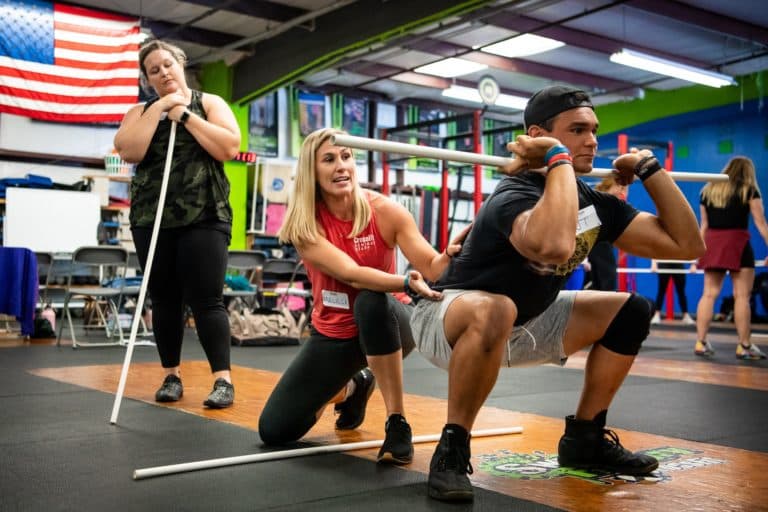
CrossFit explains how workout formats shape smarter programming
CrossFit’s latest rest-day note turns four workout formats into a lesson in pacing, recovery, and long-term durability.
CrossFit’s newest rest-day post does not leave the calendar empty so much as it fills it with intent. The message is simple but loaded: couplets, chippers, intervals, and five-round efforts are not interchangeable, because each one builds a different kind of athlete and asks for a different kind of recovery.
The first programming decision is the format
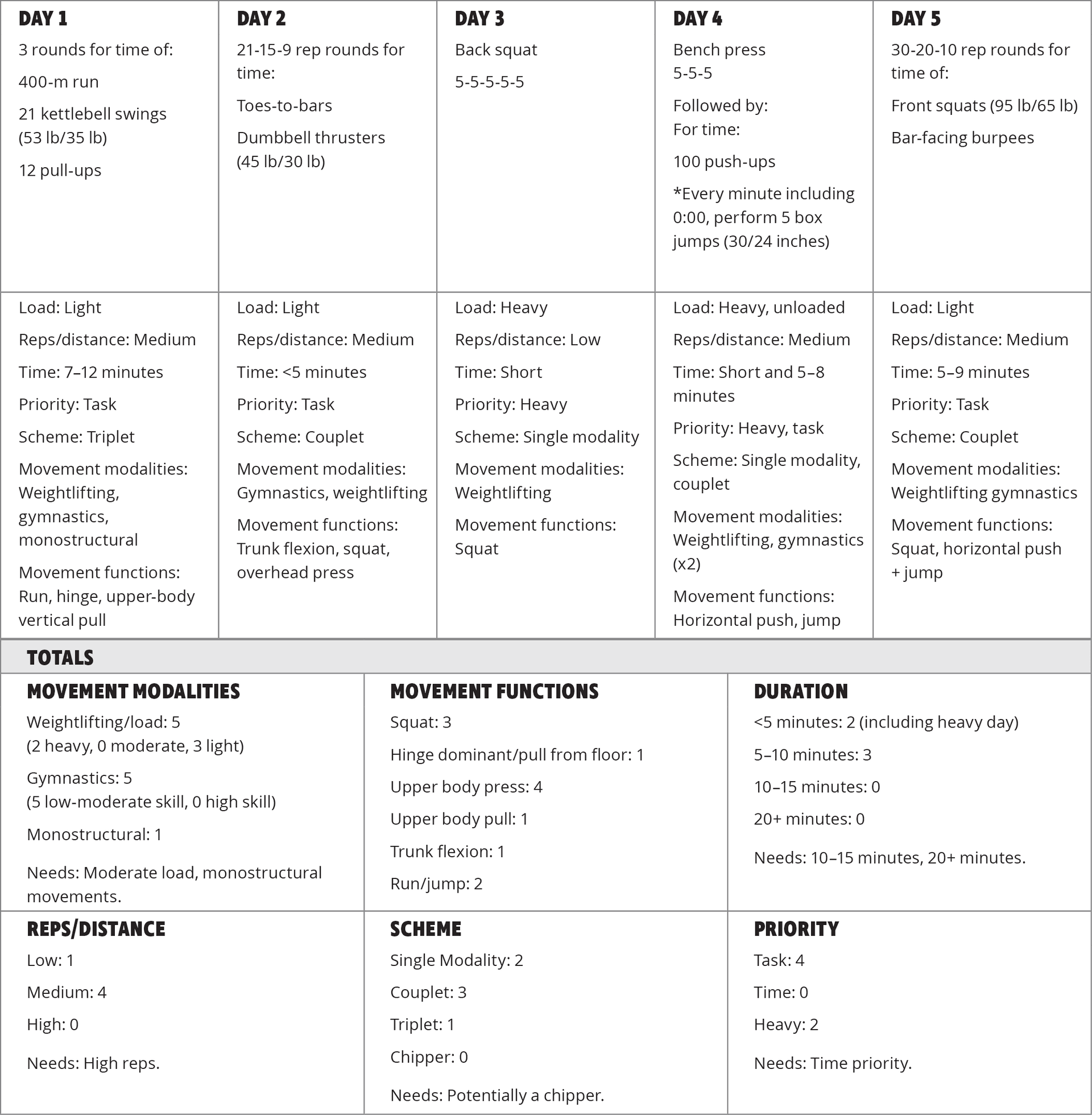
CrossFit’s own programming guidance starts with the structure of the workout, not the mood of the day. A 2019 CrossFit programming article says the first task is to determine the format, whether that means single modality, couplet, triplet, or chipper, and then decide the priority, whether task priority, time priority, or a heavy day. That sequence matters because format shapes the stimulus before the loading, the pace, or the score ever enter the picture.
The June 21 rest-day post takes that same logic and applies it to the training week as a whole. The point is not to make athletes tired for the sake of being tired. It is to choose a stressor that fits the adaptation a coach wants, so the athlete comes back more capable, not merely more beaten down.
Couplets teach rhythm and balance
A couplet works because two movements keep trading stress back and forth. That simple structure forces an athlete to manage pace, breathing, and movement quality without the camouflage of a larger menu of tasks. When the workout stays compact, every transition matters, and pacing discipline becomes visible quickly.
For long-term development, that is useful because a couplet exposes whether an athlete can stay organized under pressure. If one movement spikes the heart rate or one implements a grip demand that changes the whole rhythm, the athlete has to adjust without losing form. That kind of work builds balance between effort and control, which carries over into bigger sessions and longer competitive seasons.
Chippers train transitions, patience, and mental order
A chipper asks athletes to move through a long list of tasks and keep the head clear while fatigue accumulates unevenly. Unlike a couplet, where the pattern repeats, a chipper can challenge transitions as much as the work itself. The athlete has to keep track of what is next, how much remains, and how to avoid wasting energy on early surges.

That is why chippers are such a useful coaching tool. They test whether an athlete can manage mental clutter while dealing with the physical cost of a large, varied workload. In CrossFit terms, that kind of training matches the broader goal of building capacity that holds up across different time and movement demands, not just in a single clean burst.
Intervals build repeatable output
Intervals are different from both couplets and chippers because they create a repeatable pattern of effort and recovery. Instead of asking an athlete to solve one long problem, they ask the athlete to produce quality work, recover quickly, and do it again. That is a direct lesson in output management, and it has obvious value for both competition and general fitness.
The June 21 post frames that kind of structure as part of deliberate programming, not random hardship. Intervals let a coach target the athlete’s ability to restore power between efforts, which helps explain why they belong in a broader system that cares about long-term adaptation. When an athlete learns to recover on command, the result is not just fitness in the moment, but a better engine for the next training block.
Five-round efforts expose pacing mistakes
Five-round workouts live in the middle ground between repeatable structure and sustained suffering. They are familiar enough that athletes often think they know how to attack them, but the repetition can reveal pacing errors fast. If the first round is too hot, the middle rounds become survival; if the pace is too cautious, the workout loses its intended pressure.
That makes five-round efforts valuable as a coaching lens. They show how well an athlete can repeat good movement under fatigue and whether the plan matches the body’s ability to hold form. In a long-term development model, that is crucial because durability is not just about surviving one hard day. It is about repeating the right kind of work often enough to get better without breaking down.
Variance is the mechanism, not decoration
CrossFit has long defined fitness as “increased work capacity across broad time and modal domains,” and it has also described its methodology as “constantly varied functional movements executed at high intensity.” Those phrases are not marketing flourishes; they are the framework that makes the June 21 post make sense. The method depends on variance because different time domains and movement combinations produce different adaptations.
CrossFit also says it aims to build “broad, general, and inclusive fitness,” and it names 10 general physical skills: cardiorespiratory endurance, stamina, strength, flexibility, power, speed, coordination, accuracy, agility, and balance. The logic is plain enough. If the goal is broad capacity, then the program has to expose athletes to a broad range of stressors. A single style of workout cannot teach all 10 skills with equal force, which is why format selection is a coaching decision, not a cosmetic one.
Intensity still matters, but only inside the right structure
A 2024 CrossFit article makes the relationship even clearer: intensity drives results, while variance develops broad, general, inclusive fitness. That does not mean intensity is optional. It means intensity has to be placed inside a structure that can deliver the right adaptation at the right time.
CrossFit’s early template says the model allows “wide variance of mode, exercise, metabolic pathway, rest, intensity, sets and reps.” That language describes a system built to manipulate stress on purpose. The coach is not just chasing exhaustion, but choosing the exact kind of exhaustion that teaches the body something durable.
The bigger coaching takeaway
Seen together, the 2019 programming guidance, the 2024 emphasis on variance, and the June 21 rest-day post all point in the same direction. The daily workout is not random punishment. It is a planned stimulus that helps athletes become harder to break by building capacity, resilience, and adaptability over time.
CrossFit has been sharing daily workouts, articles, videos, and health content since 2001, and this kind of explanation sits right inside that long-running model. The best programming does not simply make athletes uncomfortable. It makes them more complete, by giving each format a job and letting the adaptation do the rest.
This article was produced by Prism’s automated news system from verified source data, official records, and press releases, then run through automated quality and moderation checks before publishing. The system is built and supervised by the people who set the standards it runs under. Read our full AI policy.
Know something we missed? Have a correction or additional information?
Submit a Tip