CrossFit June 24 workout demands discipline in descending ladder test
A simple descending ladder hides a pacing trap: go out too hard, and the bike and midline work turn the June 24 CrossFit test into a late-race grind.
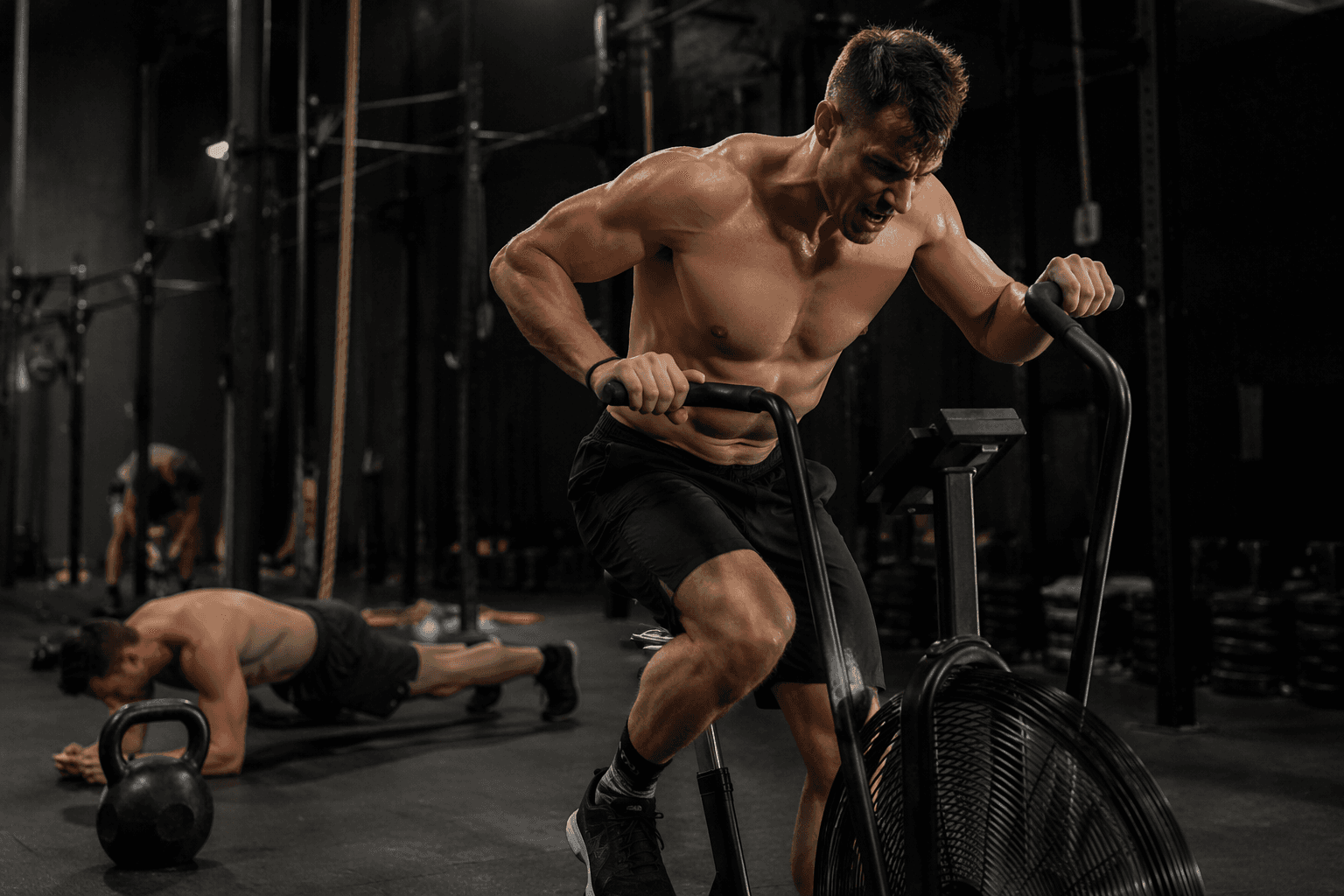
June 24’s CrossFit workout is a 30-20-10 ladder for time: front-rack reverse lunges, knees-to-elbows, and bike calories. It rewards clean transitions and punishes the athlete who opens too fast, loses position, and spends the back half trying to recover.
A descending ladder that tests discipline
The structure matters as much as the movements. As the reps fall each round, the workout should feel easier, but only for athletes who keep their first round under control and refuse to turn the opening set into a sprint. The stimulus note is clear: choose a lunge load that can be handled with no more than two breaks, keep the torso upright, and stay locked into a strong front rack.
The reverse lunge loads the legs unilaterally and asks for balance under a barbell, the knees-to-elbows hit grip and midline after the legs are already working, and the bike demands power when fatigue is already spreading through the lower body.
The workout details and scaling options
Rx is 95 pounds for women and 135 pounds for men. The intermediate version is 75 pounds for women and 115 pounds for men, with a 26-16-6 rep scheme. The beginner version drops to 20-10-5 and swaps hanging leg raises for knees-to-elbows, with 35 pounds for women and 45 pounds for men on the barbell.
The goal is not to survive the barbell by cutting quality or to fake a faster score by rushing ugly reps. The intended athlete keeps the lunge load honest enough to move well, keeps the upper body stacked in the front rack, and uses the bike to maintain pressure without detonating the legs before the final round is underway.
Where athletes lose time
The mistake pattern is usually the same. Athletes come in hot on the first set of lunges, lose their bracing, and start pausing after each rep to reset their torso. They then chase the clock on knees-to-elbows, which only worsens the grip and trunk fatigue, and arrive at the bike already under-recovered. Once that happens, the final calorie sets become damage control.
A sloppy transition from barbell to rig, or from rig to bike, costs more than people expect because the work is compressed into only three movements. The athlete who moves deliberately, breathes on purpose, and keeps the transitions tight preserves the workout’s intended rhythm.
Why each movement matters
Front-rack reverse lunges ask for more than leg strength. The front rack forces trunk stiffness, the reverse step demands control under load, and the unilateral pattern keeps one side from hiding behind the other. That makes the movement especially useful in a workout like this, because the barbell fatigue carries directly into the next station.
Knees-to-elbows are the middle stressor, and they arrive at the worst possible time. By the time the athlete reaches the rig, the legs are already loaded from the lunges, and the grip has to cooperate with the core rather than compete against it. For beginners, hanging leg raises keep the movement pattern in the same family while lowering the skill barrier.
The bike finishes the job. The stimulus note calls for an effort aggressive enough to complete the first calorie round in under two minutes, which is a useful checkpoint for intent without turning the workout into a dead sprint.
A daily workout with a long lineage
This session also sits inside a much bigger CrossFit habit. The Workout of the Day has been published on CrossFit.com every day since 2001, which makes the June 24 test part of a long-running public training model rather than a one-off programming spike.
The workout page and movement library pair the session with standard CrossFit references for the front-rack reverse lunge, knees-to-elbows, hanging leg raise, hanging knee raise, and the Rogue Echo Bike. These are coached movements with standards, not just placeholders in a conditioning circuit.
The wider season around the WOD
The June 24 test also lands inside the 2026 competitive calendar. The 2026 CrossFit Open began at 12 p.m. PT on Thursday, February 26, 2026, with workouts continuing on Thursdays and score submission closing Mondays at 5 p.m. PT. The top 25% of individual and age-group athletes move on to Quarterfinals.
That pipeline leads directly to the 2026 CrossFit Games, scheduled for July 24-26 at the SAP Center in San Jose, California. It will mark the 20th anniversary of the Games.
This article was produced by Prism’s automated news system from verified source data, official records, and press releases, then run through automated quality and moderation checks before publishing. The system is built and supervised by the people who set the standards it runs under. Read our full AI policy.
Know something we missed? Have a correction or additional information?
Submit a Tip