CrossFit explains the 10 physical skills behind real-world fitness
CrossFit’s newest explainer turns the 10 physical skills into a programming map. The lesson is practical: each workout pair builds readiness for the jobs life actually demands.
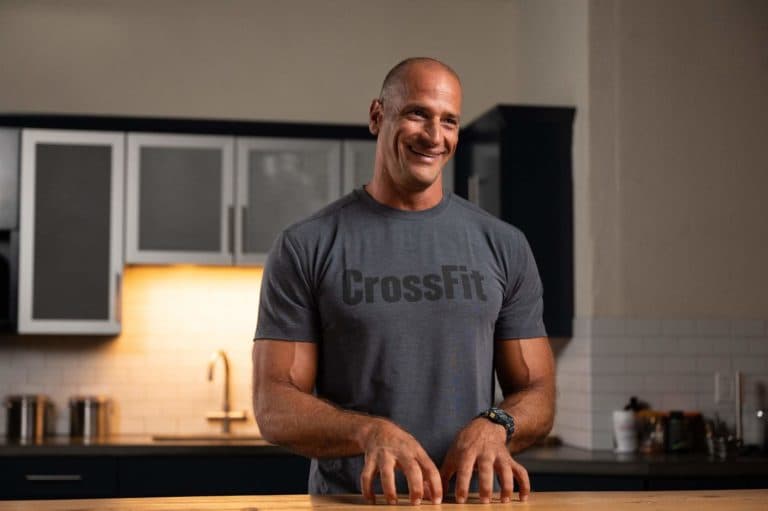
Stephane Rochet, CF-L3, used CrossFit’s July 11 training week to show how the gym’s 10 general physical skills play out in programming, from Open Workout 20.5 to a separate 3-rounds-for-time session of dumbbell box step-ups and 400-meter runs.
The list behind the programming
The 10 general physical skills first appeared in Greg Glassman’s 2002 article “What Is Fitness?” and the framework still defines what complete fitness should develop. Those skills are cardiorespiratory endurance, stamina, strength, flexibility, power, speed, coordination, accuracy, agility, and balance, and the goal is not to maximize one of them at the expense of the rest. Fitness is only complete when all 10 are developed toward optimum physical competence.
That idea also runs through CrossFit’s own education and archive. Jenn Hunter-Marshall, CrossFit’s Seminar Staff Head Trainer, taught the framework during a 2021 Level 1 Certificate Course at CrossFit South Philly. Glassman’s 2002 essay was the first meaningful definition of fitness, and the CrossFit Journal launched that same year.
Three layers, two kinds of adaptation
CrossFit’s July 11 article sorts the 10 skills into three layers. The top four, cardiorespiratory endurance, stamina, flexibility, and strength, are developed primarily through training. The middle two, power and speed, depend on both training and practice, with a heavy neurological component. The bottom four, coordination, agility, balance, and accuracy, come almost entirely from practice, which is why a movement can feel more like skill work than pure conditioning.
CrossFit does not treat the skills as isolated boxes. Better coordination can improve the strength you can express, better balance can unlock more power, and leaving one area underdeveloped creates a hole somewhere else. In practice, that is the logic behind asking an athlete to mix barbell work, gymnastics, and cyclical movement in one session instead of specializing too early in just one mode.
What those skills look like in a real training week
The week of July 11 made the framework visible in the workout feed. Saturday’s Open Workout 20.5 asked for 40 muscle-ups, 80 calories on the rower, and 120 wall-ball shots in a 20-minute cap, with scaled versions that swapped in chest-to-bar pull-ups or jumping pull-ups and reduced the wall-ball load for newer athletes. Monday followed with 3 rounds for time of 20 dumbbell box step-ups and a 400-meter run, plus a beginner option that cut the box height and shortened the run to 200 meters.
Muscle-ups ask for coordination, balance, accuracy, and power in the same rep; rowing and wall-balls drive cardiorespiratory endurance and stamina under fatigue; box step-ups and running add lower-body strength, coordination, and speed while the vest option raises the cost of every step. Each class is led by a coach who helps members move well and scale the workout to the right level.
Why breadth matters outside the whiteboard
CrossFit treats this as preparation for any contingency, not only the known ones. Paddleboarding, moving heavy furniture, and doing unexpected work after a storm all ask for different combinations of the 10 skills at once, which is why awkward or neurologically demanding movements are treated as a signal that a skill is underdeveloped rather than as a sign the program is random. Rochet says the skills can be measured with simple tools such as a stopwatch, scale, or measuring tape, which gives coaches a way to track whether the work is actually filling gaps.
CrossFit has more than 9,000 affiliates worldwide, and the model is coach-led, scalable, and built around measurable progress.
This article was produced by Prism’s automated news system from verified source data, official records, and press releases, then run through automated quality and moderation checks before publishing. The system is built and supervised by the people who set the standards it runs under. Read our full AI policy.
Did this article answer your question?