CrossFit Games evolved from open throwdown to qualifier system
CrossFit’s biggest change was the gate, not the test: an open throwdown at The Ranch hardened into a qualifier ladder built to separate access from legitimacy.
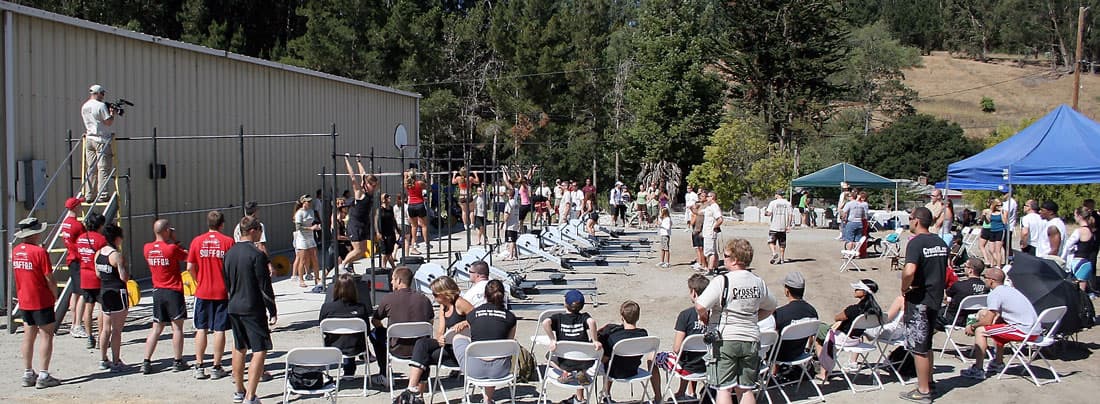
The first CrossFit Games looked less like a championship and more like a dare anyone could answer. In 2007, athletes showed up at The Ranch in Aromas, California, and the event welcomed all comers, even as scaled workouts sent anyone who modified into a separate lane and out of contention. That open-door setup gave CrossFit its myth, but it also exposed its first major problem: a sport cannot stay a true championship if entry is still the main test.
The open era was already bigger than a backyard throwdown
CrossFit’s own history makes one detail impossible to miss: the first Games already had an international edge. Two of the top three men flew in from Canada, a sign that the event was never just a local fitness meetup tucked away on Dave Castro’s family property. By 2008, the field had swelled to 287 competitors, and CrossFit capped the event at 300 on a first-come, first-serve basis.
That cap solved a logistics problem, but it did not solve the deeper issue. First-come enrollment still rewarded speed, travel money, and access to information more than it rewarded the ability to prove fitness under pressure. The Ranch was filling up, but the sport still had no serious filter for deciding who belonged on the floor.
Why open enrollment had to end
The shift began in the awkward space between community autonomy and centralized legitimacy. After the 2007 Games, Dave Castro posted that affiliates could run their own local competitions to decide who they would pay to send, but CrossFit would not yet call those events formal qualifiers. That distinction mattered, because it preserved the feel of local experimentation while delaying the creation of a true national or international ladder.
By 2009, CrossFit stopped treating the Games like an open invitation. The season moved to qualification, and athletes now had to earn a place rather than merely claim one. For a growing sport, that change solved the fairness problem that open enrollment could never touch: if the goal is to find the fittest, then the method of entry has to be more selective than being early enough to sign up.
The tradeoff was immediate. The old model kept the community tone of a garage-gym throwdown, but it could not guarantee that the deepest field or the strongest individual reached the final test. The new model brought order, but it also introduced bureaucracy, travel burdens, and a more formal sense of hierarchy.
Regionals turned CrossFit into a ladder
The 2009 season was the only individual CrossFit Games season built as a two-step process, Regionals and then the Games. CrossFit’s own archive says those qualifying events spread around the country and world in May 2009, giving the sport its first structured middle tier. That middle tier solved the scale problem, because one weekend at The Ranch could no longer absorb a field that was growing beyond an open throwdown.
It also changed the meaning of the Games themselves. Once Regionals existed, the final stage was no longer just a place to show up and survive. It became the endpoint of a pipeline, the last exam after a season of elimination. That shift brought CrossFit closer to the logic of established elite sport, where the right to compete on the biggest stage has to be earned through successive tests.

CrossFit continued tightening the structure. By 2011, the system had standardized around 17 Regions, and the top 60 men, 60 women and 30 teams from each region advanced to Regionals. The language of the sport changed with the format: broader participation at the base, sharper cuts at the top, and a more explicit attempt to balance access with competitive fairness.
The Open widened the front door while the cut got steeper
The 2011 season introduced the CrossFit Open, and that was the clearest sign yet that the sport wanted mass participation without surrendering elite control. More than 26,000 athletes entered the Open in 2011, up from 6,000 in 2010. That jump matters because it shows how CrossFit solved one of its biggest identity problems: how to preserve the feeling that anyone can enter while still filtering the field hard enough to make the final event credible.
The Open became the sport’s broadest public touchpoint, a digital and global first step that fit CrossFit’s community roots. Regionals then acted as the pressure valve, turning an enormous pool of athletes into a manageable and more defensible elite field. What looked like a technical scheduling change was actually a business and cultural redefinition, because CrossFit was building a competition structure that could support growth, media attention, affiliate participation, and championship legitimacy all at once.
That structure also revealed the sport’s central tension. The wider the Open got, the more important the cut became. The more CrossFit embraced scale, the more it needed a formal system to argue that the athletes who advanced were not just the best networked, the best funded, or the luckiest with timing, but the best under the rules.
The Ranch still holds the sport’s origin story
The physical home of that shift still exists. CrossFit says The Ranch hosted the Games from 2007 through 2009, until the event outgrew Castro’s family property. In the warehouse space, the original hopper and the first Games leaderboard are still there, with handwritten scores from the earliest competitors.
That matters because The Ranch is more than a nostalgic backdrop. It is the place where CrossFit moved from a culture of immediate participation to a system of measured advancement. The old warehouse preserves both versions of the sport at once: the improvised beginning, where anyone could walk in, and the future of the Games, where every stage had to prove it could sort the field more fairly than the last.
CrossFit’s identity now rests on that tension. The sport began as an open test of who could show up and endure, then evolved into a qualification system designed to prove who deserved the final stage. Every format change since has lived inside that same debate, and the Games still carry both impulses in the same breath: the crowd-first community that built them, and the regulated elite structure required to crown a true champion.
This article was produced by Prism’s automated news system from verified source data, official records, and press releases, then run through automated quality and moderation checks before publishing. The system is built and supervised by the people who set the standards it runs under. Read our full AI policy.
Did this article answer your question?